Seaweed farm asian
1344×768 · AVIF · CC BY 4.0
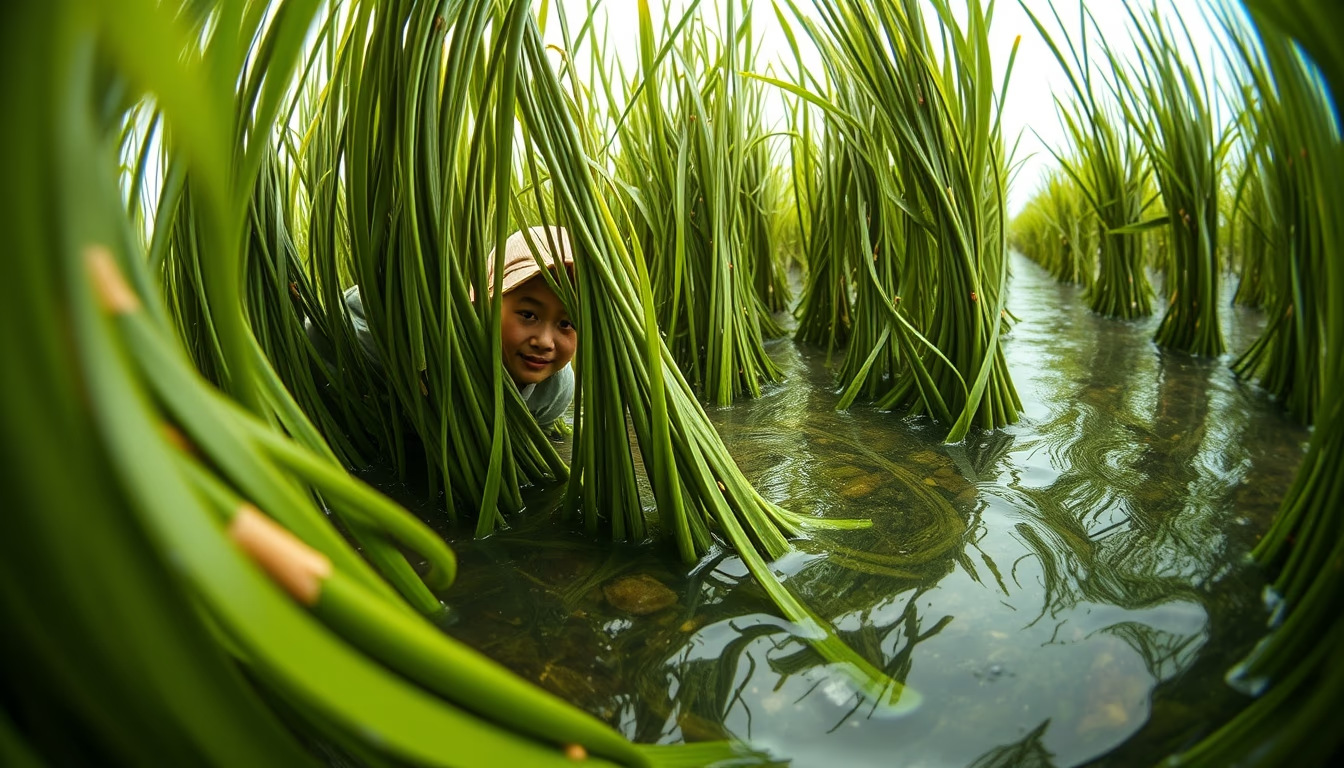
Seaweed farming in Asia is a centuries-old practice that supports millions of coastal families and generates billions of dollars annually.
About this subject
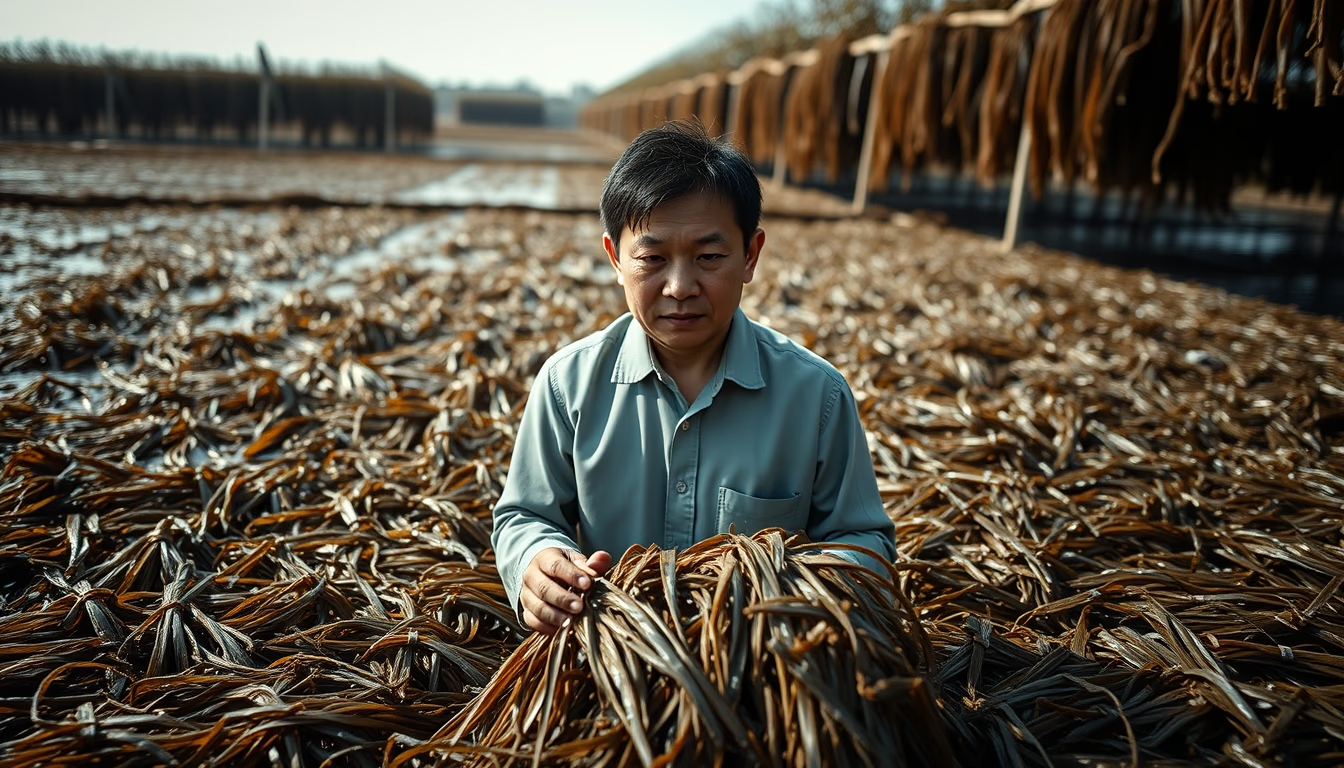
Seaweed aquaculture in Asia is the backbone of global seaweed production, accounting for over 95% of the world's volume. China, Indonesia, the Philippines, South Korea, and Japan lead cultivation, with species such as Laminaria japonica (kelp), Porphyra (nori), and Gracilaria being the most farmed. The traditional method involves attaching seedlings to ropes or nets suspended on floats in shallow coastal waters, usually sheltered bays or among reefs. This simple technique requires low initial investment and intensive labor, making it accessible to low-income communities.
Seaweed farming goes beyond subsistence: it generates direct and indirect jobs in processing, drying, and export. In Indonesia, for instance, the sector employs about 1 million families. The global seaweed market was worth US$14.7 billion in 2020, with continuous growth projected. Uses are diverse: human food (salads, sushi, seasonings), food thickeners (carrageenan and agar-agar), cosmetics, organic fertilizers, and biofuels. Countries like Japan and South Korea have a long culinary tradition with seaweed, while China invests heavily in high-tech offshore farms.
Beyond the economic impact, seaweed aquaculture offers significant environmental benefits. Seaweeds absorb carbon dioxide and dissolved nutrients, helping combat eutrophication and ocean acidification. They provide habitat for fish and invertebrates, promoting local biodiversity. In regions like Fujian province (China), seaweed farms are integrated with offshore wind farms, optimizing ocean space use. The practice is also considered one of the most sustainable forms of aquaculture, as it requires no feed or chemical fertilizers.
However, the sector faces challenges: climate change (rising water temperatures, storms), plastic pollution and agricultural runoff, and competition for space with other coastal activities. Diseases and pests, such as ice-ice in red algae, can devastate harvests. Despite this, organic certification initiatives and strain improvement promise increased resilience. The Food and Agriculture Organization (FAO) highlights seaweed aquaculture as a key tool for food security and climate change mitigation in Southeast Asia.
Frequently Asked Questions
Which are the main seaweed-producing countries in Asia?
China, Indonesia, the Philippines, South Korea, and Japan lead production. China alone accounts for over 50% of global output.
How is seaweed farming carried out?
The common method uses seedlings attached to ropes or nets suspended on floats in shallow, sheltered waters. Harvest takes place after a few months, manually or mechanically.
What are the environmental benefits of seaweed farming?
Seaweeds absorb CO2 and nutrients, reduce eutrophication, provide marine habitat, and require no feed or fertilizers. It is considered a sustainable aquaculture practice.
Direct URL
https://pub-c7d6a6ea828543ac903a74a341ccb2e1.r2.dev/imagens/seaweed-farm-asian-fish-eye-wide-angle-fresh10.avifHow to credit
Include a visible link back to UtilizAí. Copy one of the snippets below:
<a href="https://xn--utiliza-eza.com/en/midia/imagens/seaweed-farm-asian-fish-eye-wide-angle-fresh10">Seaweed farm asian</a> by <a href="https://xn--utiliza-eza.com">UtilizAí</a>, licensed under <a href="https://creativecommons.org/licenses/by/4.0/">CC BY 4.0</a>.
[Seaweed farm asian](https://xn--utiliza-eza.com/en/midia/imagens/seaweed-farm-asian-fish-eye-wide-angle-fresh10) by [UtilizAí](https://xn--utiliza-eza.com), CC BY 4.0
License: CC-BY-4.0