Seaweed farm asian
1344×768 · AVIF · CC BY 4.0
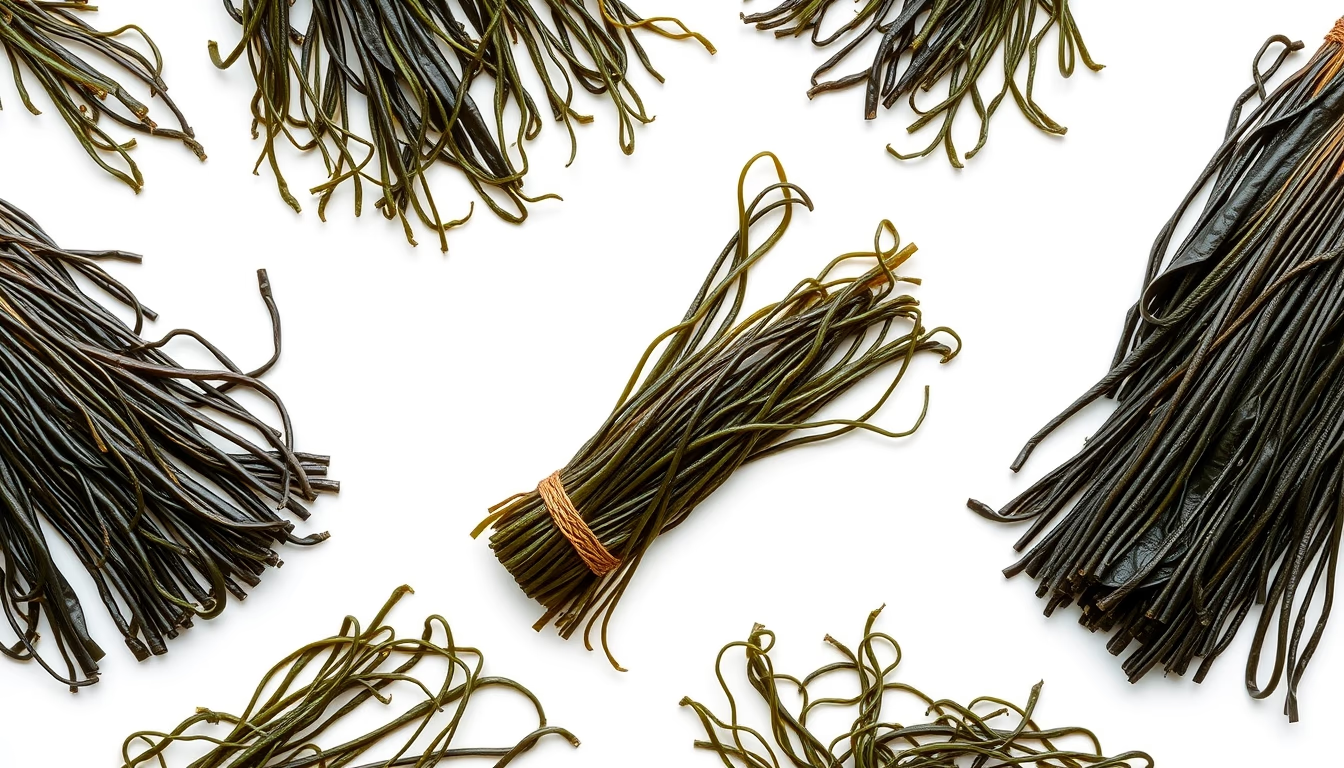
Seaweed farming in Asia: an ancient practice that now sustains millions of farmers and drives the blue economy.
About this subject
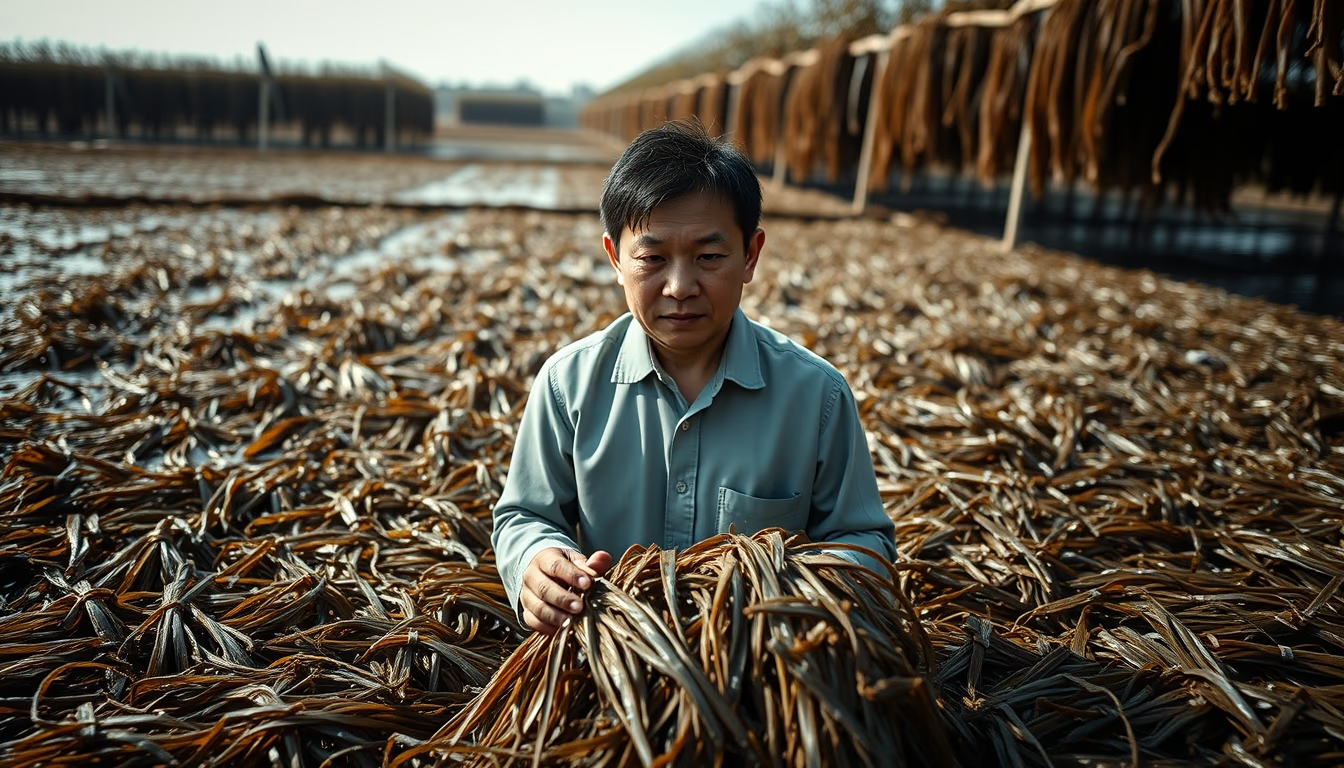
Seaweed farming, or macroalgae cultivation, is an ancient practice in Asia, particularly in China, Indonesia, the Philippines, and South Korea. Asia accounts for over 98% of global seaweed production, with Indonesia leading at approximately 40% of the total. The most cultivated species are Kappaphycus alvarezii (eucheuma) and Gracilaria, used for extracting carrageenan and agar, respectively. These hydrocolloids are vital in the food industry (thickeners, jellies), cosmetics (creams, toothpaste), and pharmaceuticals (capsules, stabilizers).
Seaweed mariculture is noted for its low environmental footprint: it requires no fertilizers, freshwater, or feed; instead, it absorbs nutrients (nitrogen and phosphorus) and CO2, helping to mitigate coastal eutrophication and ocean acidification. Studies indicate that seaweed farms can sequester up to 1.5 tons of carbon per hectare annually. Additionally, they serve as nursery habitats for fish and crustaceans, enhancing local biodiversity.
In Asia, farming is often small-scale and manual. In the Zanzibar archipelago (Tanzania), techniques were adapted from Asian methods, but the production hub remains in Southeast Asia. China has cultivated seaweed for over 1,700 years, producing species like Laminaria japonica (kombu) and Undaria pinnatifida (wakame), used in soups and salads. South Korea is renowned for gim (Porphyra), used in kimbap and sushi.
Fun fact: seaweeds are considered a superfood of the future due to high iodine, fiber, and vitamin content. However, challenges such as diseases (ice-ice, bacterial blight) and climate variability threaten production. Research into genetic improvement and integrated multi-trophic aquaculture (IMTA) aims to enhance farm resilience.
Frequently Asked Questions
Which Asian countries are the largest seaweed producers?
Indonesia, China, the Philippines, and South Korea lead production. Indonesia accounts for about 40% of global output, followed by China with 30%.
How does seaweed farming benefit the environment?
Seaweed absorbs nitrogen, phosphorus, and CO2, reducing eutrophication and ocean acidification. It also acts as a carbon sink and provides habitat for marine life.
What are the commercial uses of farmed seaweed?
They are used to extract carrageenan (thickener) and agar (gelling agent) for food, cosmetics, and pharmaceuticals. Seaweeds like kombu and wakame are eaten fresh in Asian cuisine.
Direct URL
https://pub-c7d6a6ea828543ac903a74a341ccb2e1.r2.dev/imagens/seaweed-farm-asian-commercial-product-photography-fresh1.avifHow to credit
Include a visible link back to UtilizAí. Copy one of the snippets below:
<a href="https://xn--utiliza-eza.com/en/midia/imagens/seaweed-farm-asian-commercial-product-photography-fresh1">Seaweed farm asian</a> by <a href="https://xn--utiliza-eza.com">UtilizAí</a>, licensed under <a href="https://creativecommons.org/licenses/by/4.0/">CC BY 4.0</a>.
[Seaweed farm asian](https://xn--utiliza-eza.com/en/midia/imagens/seaweed-farm-asian-commercial-product-photography-fresh1) by [UtilizAí](https://xn--utiliza-eza.com), CC BY 4.0
License: CC-BY-4.0