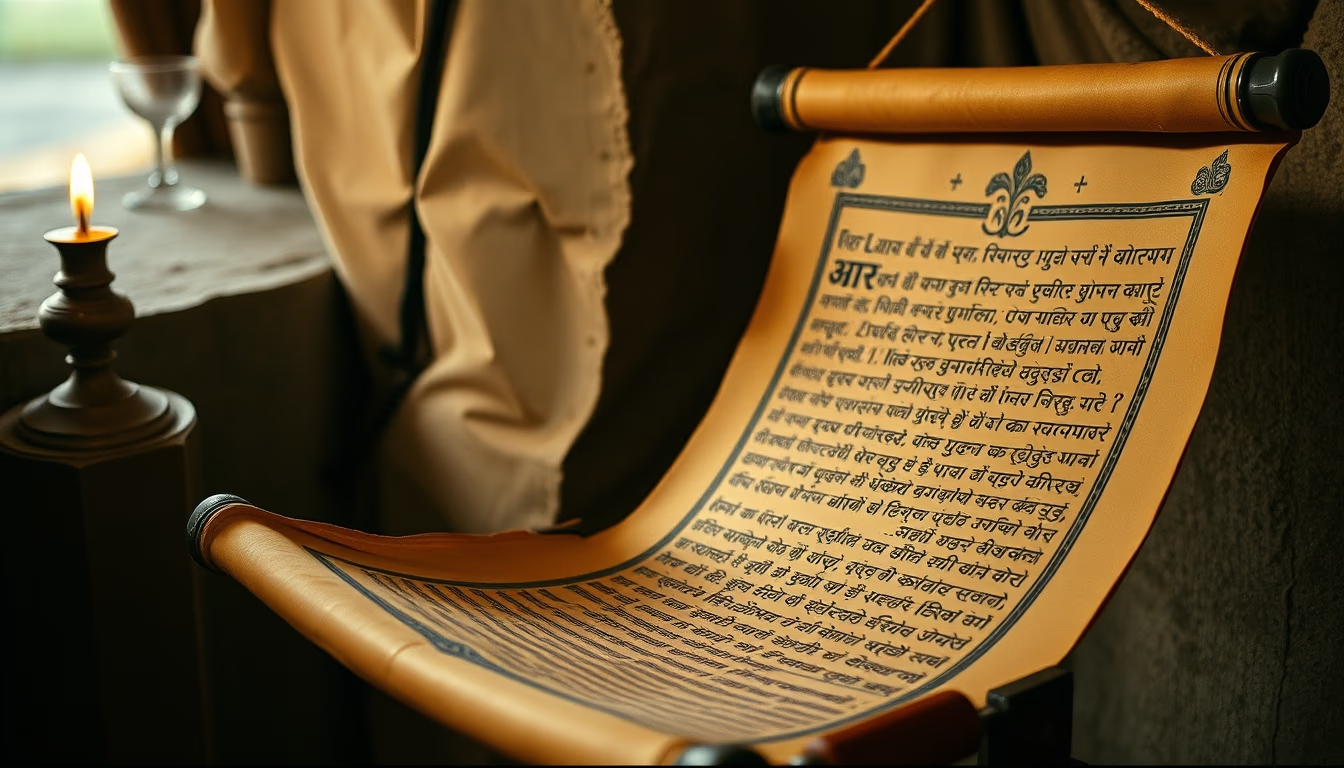
Sanskrit ancient scroll
1344×768 · AVIF · CC BY 4.0
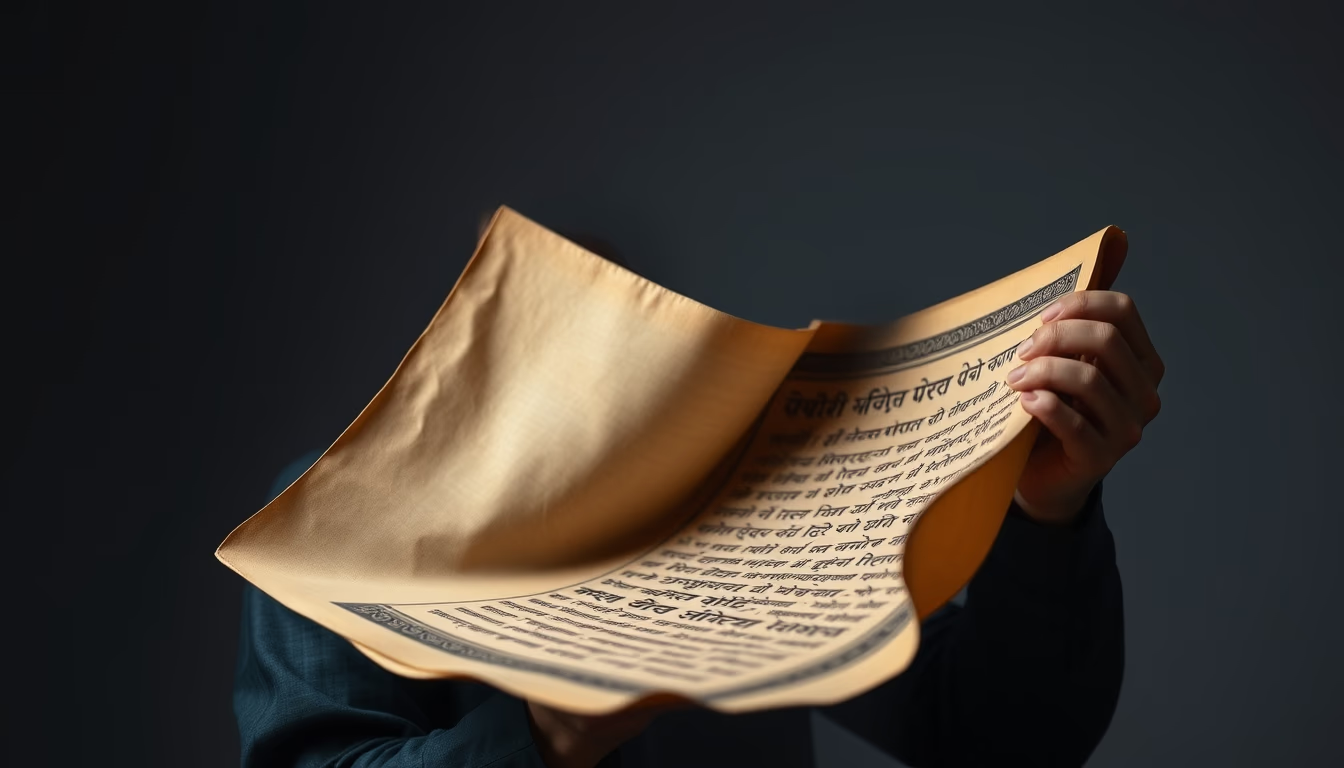
Sanskrit manuscripts on palm leaf or birch bark preserve millennia-old texts of the Vedas, Upanishads, and scientific treatises, revealing the scholarly culture of ancient India.
About this subject
Sanskrit manuscripts represent one of the largest collections of ancient documents, with examples dating back to the first millennium BCE. They were primarily written on palm leaves (talapatra) or birch bark (bhurja), organic materials that required specific preparation and writing techniques. Leaves were cut, dried, smoothed, and often treated with oils to enhance durability. Writing was done with a metal stylus or vegetable ink, in Brahmi or Devanagari scripts depending on region and period.
The content of these manuscripts ranges from fundamental religious texts such as the Vedas, Brahmanas, and Upanishads to scientific works on mathematics, astronomy, medicine (Ayurveda), and grammar, like Panini's Ashtadhyayi. Many philosophical treatises from Nyaya, Vedanta, and Mimansa schools also survived thanks to these supports. Parallel oral transmission ensured textual fidelity, with specialized scribes copying manuscripts in monasteries and royal courts. The thematic diversity demonstrates the breadth of knowledge produced in classical India.
Today, thousands of Sanskrit manuscripts are dispersed in libraries and private collections across India, Nepal, Tibet, and Western institutions. Digitization efforts, coordinated by projects such as the National Mission for Manuscripts, aim to preserve and make accessible this fragile heritage. Natural degradation of organic materials, combined with adverse climatic conditions, makes conservation urgent. Paleographic and codicological study of these manuscripts continues to reveal details about South Asia's intellectual history and its connections with other cultures.
Frequently Asked Questions
What is a Sanskrit manuscript?
It is a text written in Sanskrit, the classical language of India, on supports such as palm leaves or birch bark, usually dating from before the modern era and preserved in historical collections.
What materials were Sanskrit manuscripts written on?
The most common materials are palm leaves (talapatra) and birch bark (bhurja). Cloth, metal, or paper were also used in later periods.
Why are Sanskrit manuscripts important for modern knowledge?
They are primary sources for studying ancient Indian religion, philosophy, science, and literature, and are crucial for historical linguistics and preserving millennia-old textual traditions.
Direct URL
https://pub-c7d6a6ea828543ac903a74a341ccb2e1.r2.dev/imagens/sanskrit-ancient-scroll-studio-editorial-portrait-fresh8.avifHow to credit
Include a visible link back to UtilizAí. Copy one of the snippets below:
<a href="https://xn--utiliza-eza.com/en/midia/imagens/sanskrit-ancient-scroll-studio-editorial-portrait-fresh8">Sanskrit ancient scroll</a> by <a href="https://xn--utiliza-eza.com">UtilizAí</a>, licensed under <a href="https://creativecommons.org/licenses/by/4.0/">CC BY 4.0</a>.
[Sanskrit ancient scroll](https://xn--utiliza-eza.com/en/midia/imagens/sanskrit-ancient-scroll-studio-editorial-portrait-fresh8) by [UtilizAí](https://xn--utiliza-eza.com), CC BY 4.0
License: CC-BY-4.0