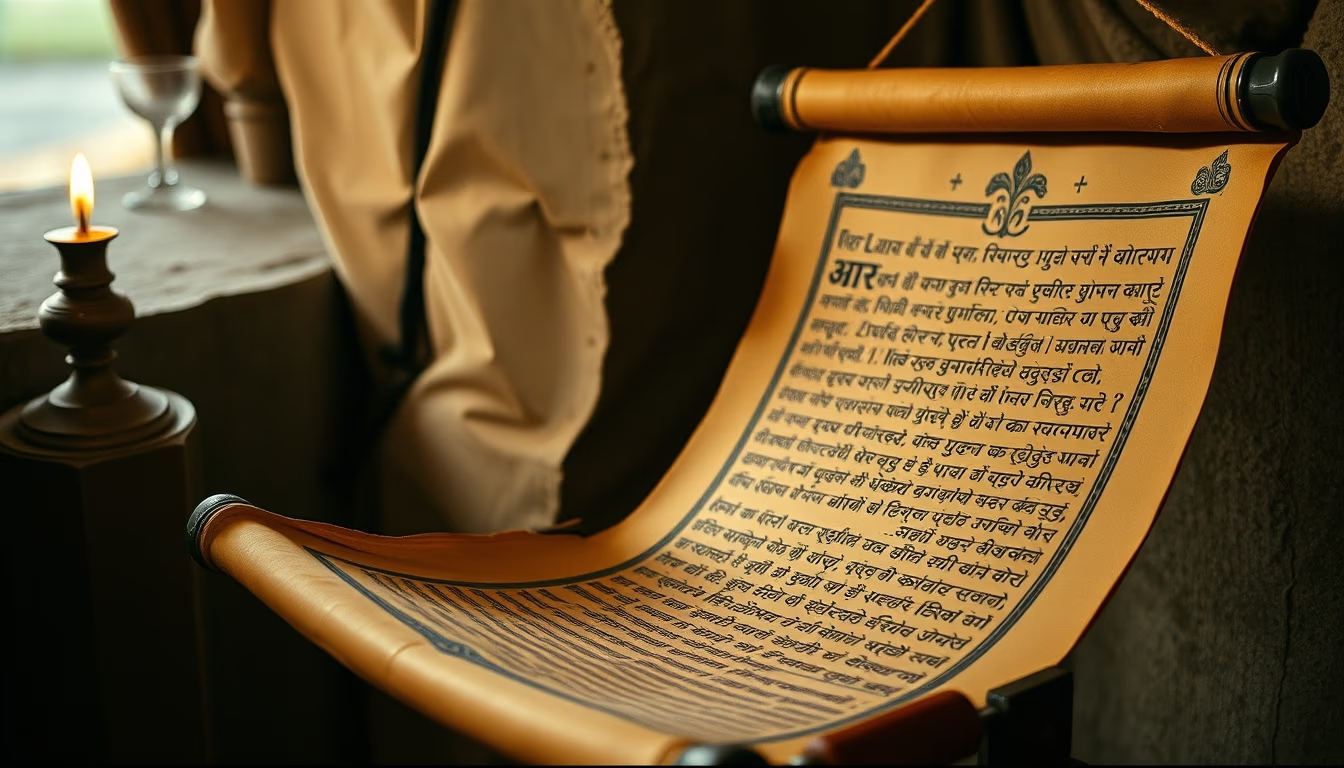
Sanskrit ancient scroll
1344×768 · AVIF · CC BY 4.0

An ancient Sanskrit scroll, a millenary testament of Indian civilization and its rich tradition of calligraphy and philosophy.
About this subject
Sanskrit is a classical language of India, considered the liturgical language of Hinduism, Buddhism, and Jainism. Dating back over 3,500 years, it is the oldest attested Indo-European language, with texts ranging from the Vedas (c. 1500 BCE) to the Upanishads and epics like the Mahabharata and Ramayana. Sanskrit scrolls, generally made from palm leaves or birch bark, were the primary medium for knowledge transmission before paper. These manuscripts were written with a stylus and natural ink, often adorned with illuminations. The oldest known Sanskrit manuscript is the Spitzer Manuscript from the 1st century BCE, containing excerpts of philosophical texts. Sanskrit calligraphy is a refined art form, employing scripts such as Devanagari, Grantha, and Siddham. Each letter is considered sacred, and precision in strokes was essential to avoid errors in rituals and recitations. Copying manuscripts was a religious merit-making activity. Today, thousands of Sanskrit manuscripts are scattered across libraries in India and abroad, many still uncatalogued. Digitization initiatives, such as the project of the National Museum of India, aim to preserve this heritage. The study of Sanskrit remains relevant for linguistics, history, and philosophy, also influencing contemporary calligraphy.
Frequently Asked Questions
What is Sanskrit?
Sanskrit is a classical language of India, one of the oldest Indo-European languages, used in religious, philosophical, and literary texts of Hinduism, Buddhism, and Jainism.
How were Sanskrit scrolls made?
They were primarily made from palm leaves or birch bark. The leaves were dried, cut, and written on with a metal or wooden stylus using natural inks.
Why is Sanskrit calligraphy important?
Sanskrit calligraphy is considered a sacred art, where the precision of strokes was crucial for the correct transmission of religious and philosophical texts, preventing errors in rituals.
Direct URL
https://pub-c7d6a6ea828543ac903a74a341ccb2e1.r2.dev/imagens/sanskrit-ancient-scroll-magazine-editorial-fresh13.avifHow to credit
Include a visible link back to UtilizAí. Copy one of the snippets below:
<a href="https://xn--utiliza-eza.com/en/midia/imagens/sanskrit-ancient-scroll-magazine-editorial-fresh13">Sanskrit ancient scroll</a> by <a href="https://xn--utiliza-eza.com">UtilizAí</a>, licensed under <a href="https://creativecommons.org/licenses/by/4.0/">CC BY 4.0</a>.
[Sanskrit ancient scroll](https://xn--utiliza-eza.com/en/midia/imagens/sanskrit-ancient-scroll-magazine-editorial-fresh13) by [UtilizAí](https://xn--utiliza-eza.com), CC BY 4.0
License: CC-BY-4.0