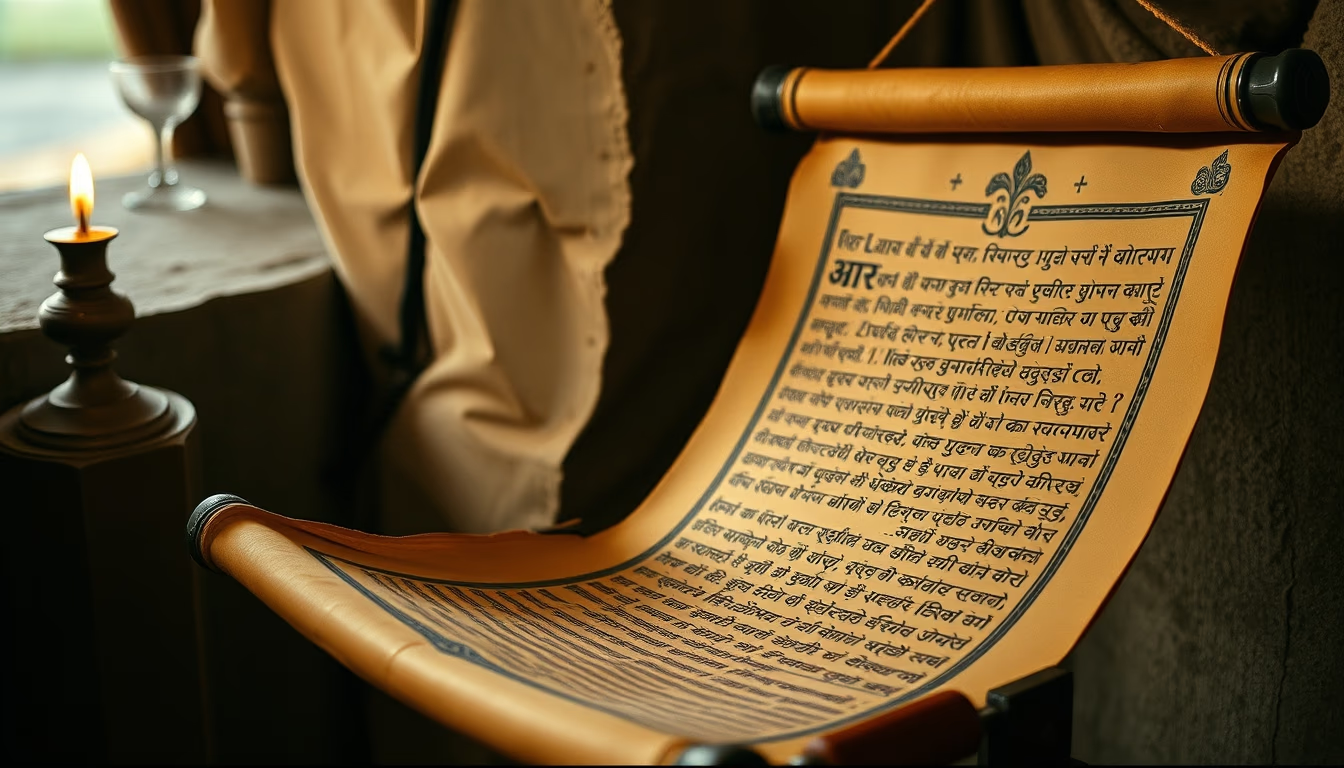
Sanskrit ancient scroll
1344×768 · AVIF · CC BY 4.0
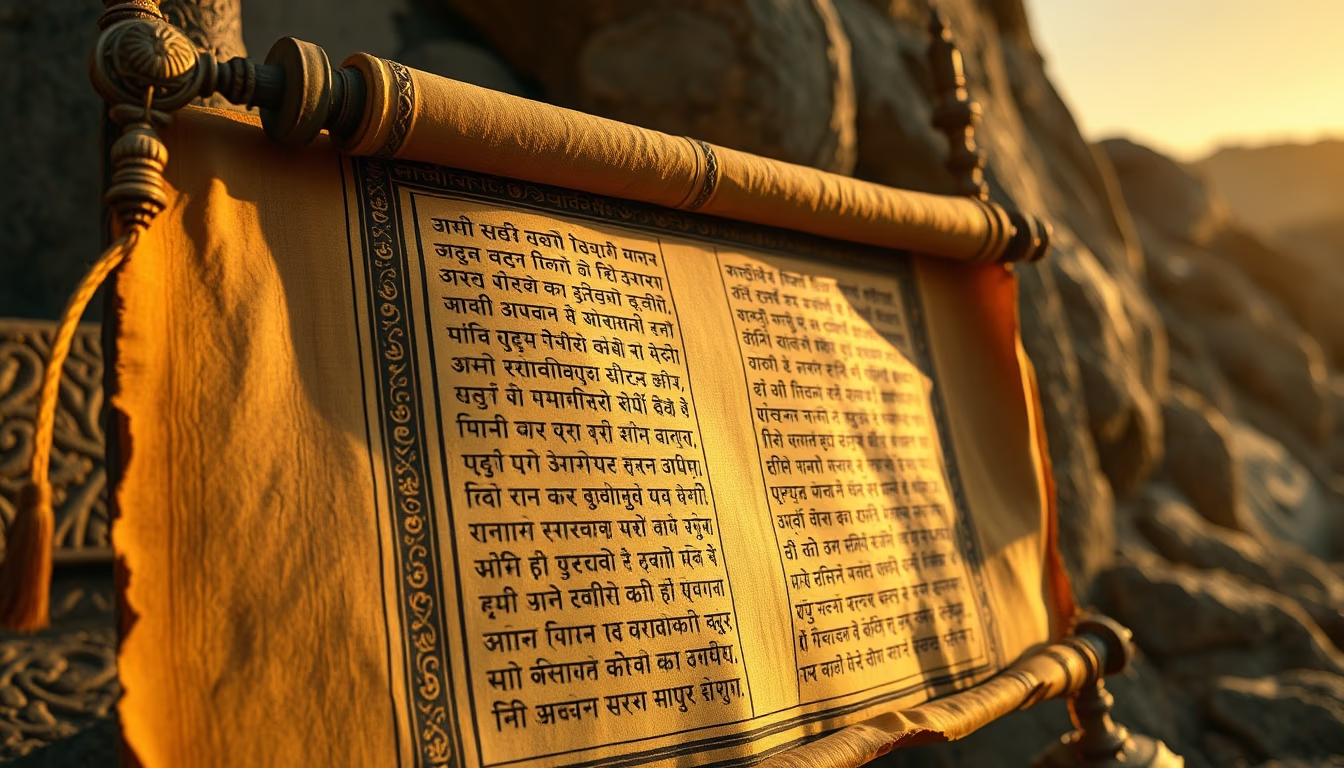
Sanskrit manuscripts on palm leaves or birch bark preserve millennia-old texts from India, including the Vedas and philosophical treatises.
About this subject
Sanskrit, the classical language of India, was recorded for centuries on organic supports such as palm leaves (talapatra) and birch bark (bhurja). The oldest manuscripts date back to the 1st century BCE, found in regions of Central Asia like the Tarim Basin. These scrolls or loose folios were written with metal or bamboo styluses, using carbon-based inks and natural pigments. Sanskrit calligraphy varies by region: Devanagari predominates in the north, while Grantha, Tamil, or Sinhalese scripts were used in the south.
The production of Sanskrit manuscripts flourished between the 5th and 15th centuries CE, especially under the Gupta and Pala empires. Buddhist monasteries, Hindu temples, and royal courts maintained libraries (sarasvati bhandara) where trained scribes reproduced religious, literary, medical (Ayurveda), mathematical, and astronomical texts. The Rigveda (c. 1500 BCE) was transmitted orally for centuries before being committed to writing. Each school of knowledge developed its own calligraphic standards.
Preserving these manuscripts is challenging due to India's tropical climate, which accelerates deterioration of organic supports. Pests like termites and fungi also threaten collections. Institutions like the Bhandarkar Oriental Research Institute (Pune) and the Asiatic Society (Kolkata) hold significant holdings. Digitization projects, such as the National Mission for Manuscripts (founded in 2003), have already cataloged over 4 million folios. UNESCO has recognized several Sanskrit manuscripts as documentary heritage of humanity.
Sanskrit calligraphy is not only a textual vehicle but also an art form. The elegant shapes of Devanagari letters, with their characteristic horizontal line (shirorekha), exhibit rhythm and balance. Illuminated manuscripts often include floral ornaments and miniatures. Paleographic study allows dating and locating texts, revealing intellectual trade routes between India, Tibet, China, and Southeast Asia. Today, Sanskrit is experiencing a digital revival, with Unicode fonts enabling online writing and the printing of critical editions.
Frequently Asked Questions
What materials were Sanskrit manuscripts written on?
The main supports were palm leaves (talapatra) and birch bark (bhurja). Paper, cloth, and metal plates were also used in later periods.
Why are Sanskrit manuscripts important for Indian culture?
They preserve fundamental texts of Hinduism, Buddhism, and Jainism, along with treatises on science, medicine, mathematics, and philosophy. They form the basis of classical Indian knowledge.
How is digital preservation of Sanskrit manuscripts being carried out?
Projects like the National Mission for Manuscripts digitize and catalog folios, making them available online. International institutions also collaborate to create accessible databases.
Direct URL
https://pub-c7d6a6ea828543ac903a74a341ccb2e1.r2.dev/imagens/sanskrit-ancient-scroll-cinematic-wide-shot-fresh7.avifHow to credit
Include a visible link back to UtilizAí. Copy one of the snippets below:
<a href="https://xn--utiliza-eza.com/en/midia/imagens/sanskrit-ancient-scroll-cinematic-wide-shot-fresh7">Sanskrit ancient scroll</a> by <a href="https://xn--utiliza-eza.com">UtilizAí</a>, licensed under <a href="https://creativecommons.org/licenses/by/4.0/">CC BY 4.0</a>.
[Sanskrit ancient scroll](https://xn--utiliza-eza.com/en/midia/imagens/sanskrit-ancient-scroll-cinematic-wide-shot-fresh7) by [UtilizAí](https://xn--utiliza-eza.com), CC BY 4.0
License: CC-BY-4.0