Sandstone red layered
1344×768 · AVIF · CC BY 4.0

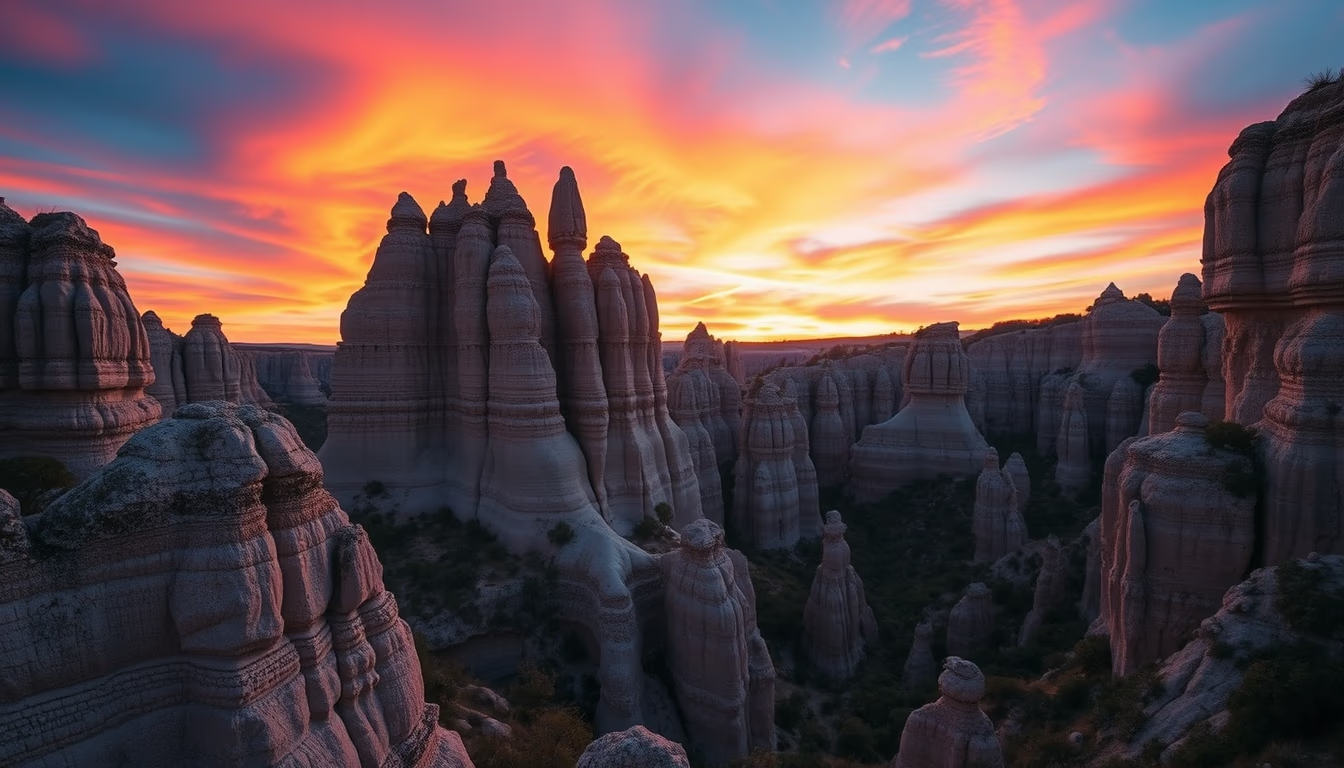
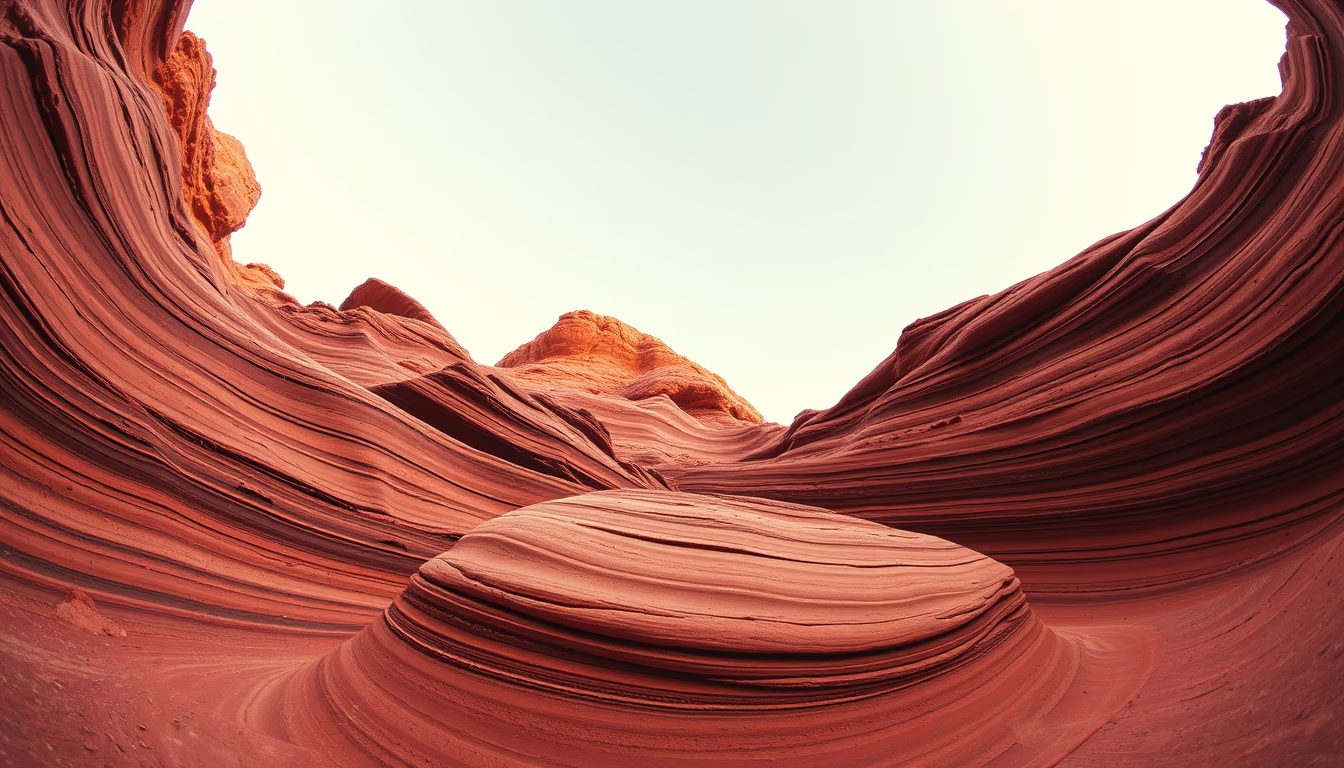
Layers of red sandstone reveal millions of years of geological history, with hues ranging from orange to burgundy.
About this subject
Red sandstone is a sedimentary rock formed by the compaction of sand grains over geological eras. Its characteristic color comes from the presence of iron oxide, especially hematite, which acts as a natural pigment. This type of rock is common in arid and semi-arid regions, where iron oxidation is more intense. Notable examples include the red sandstone fjords in Canada’s Gros Morne National Park, the formations in Utah, USA, such as the iconic Monument Valley peaks, and the landscapes of inland Australia, like Kings Canyon National Park.
In Brazil, red sandstone appears in areas such as Chapada Diamantina and Sete Cidades National Park, where wind and water carved rock formations create stunning scenery. Cross-bedding visible in many of these rocks indicates the direction of winds or water currents that deposited the sediments. These layers may contain fossils of ancient organisms, providing clues about past ecosystems.
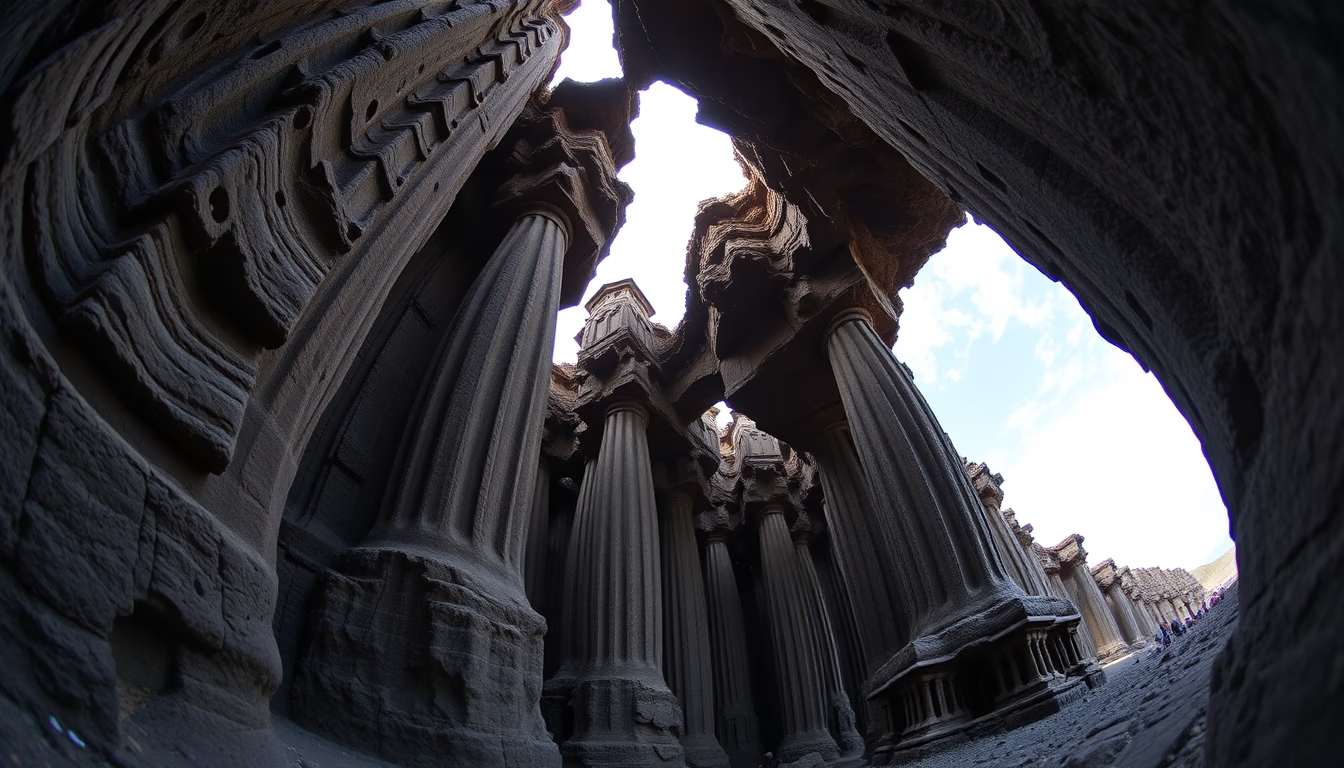
Culturally, red sandstone was used by ancient civilizations in construction of monuments and dwellings. In the southwestern United States, ancestral Pueblo people built cliff houses in red sandstone cliffs. In Jordan, the city of Petra was carved into red sandstone, with its monumental facades displaying color variations from pink to deep red. Today, red sandstone is valued as an ornamental stone for cladding and sculptures, due to its durability and aesthetic appeal.
Geologically, layers of red sandstone provide a visual record of Earth’s climatic and environmental changes. The presence of iron oxide indicates oxidizing conditions during deposition, common in continental settings like deserts and alluvial plains. Variations in layer thickness and color may reflect seasonal cycles or catastrophic events, such as sandstorms. These aspects make red sandstone an important subject for geologists and a tourist attraction worldwide.
Frequently Asked Questions
What causes the red color in sandstone?
The red color in sandstone is caused by the presence of iron oxide, mainly hematite (Fe2O3). This mineral forms in oxidizing environments, such as deserts, where sand grains are coated with a thin film of iron that oxidizes over time.
Where can I find red sandstone formations in Brazil?
In Brazil, red sandstone formations are found in national parks such as Chapada Diamantina (Bahia) and Sete Cidades National Park (Piauí). These areas exhibit colorful layers and natural sculptures carved by erosion.
Is red sandstone used in construction?
Yes, red sandstone is used as an ornamental stone for cladding, flooring, and sculptures. Its durability and beauty make it popular in architectural projects, although it is less resistant than granites and marbles.
Direct URL
https://pub-c7d6a6ea828543ac903a74a341ccb2e1.r2.dev/imagens/sandstone-red-layered-studio-editorial-portrait-fresh2.avifHow to credit
Include a visible link back to UtilizAí. Copy one of the snippets below:
<a href="https://xn--utiliza-eza.com/en/midia/imagens/sandstone-red-layered-studio-editorial-portrait-fresh2">Sandstone red layered</a> by <a href="https://xn--utiliza-eza.com">UtilizAí</a>, licensed under <a href="https://creativecommons.org/licenses/by/4.0/">CC BY 4.0</a>.
[Sandstone red layered](https://xn--utiliza-eza.com/en/midia/imagens/sandstone-red-layered-studio-editorial-portrait-fresh2) by [UtilizAí](https://xn--utiliza-eza.com), CC BY 4.0
License: CC-BY-4.0