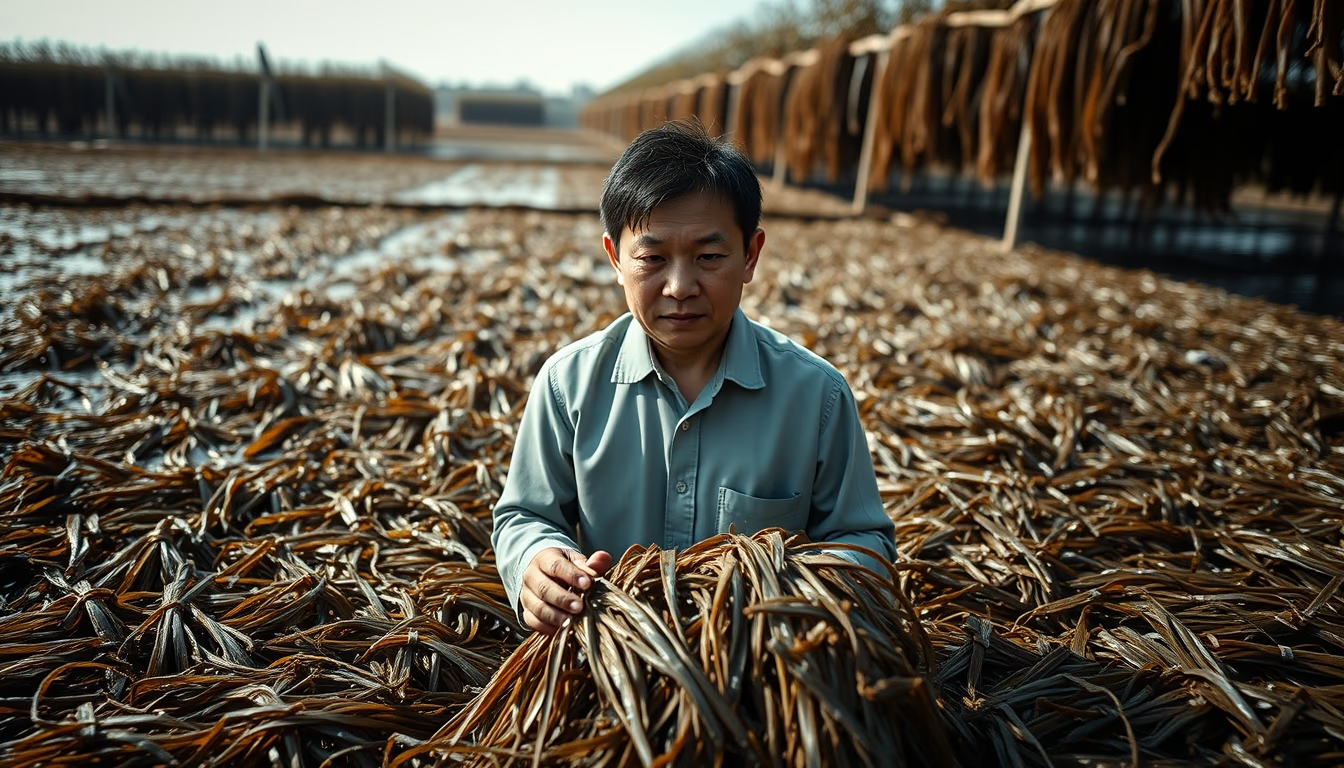
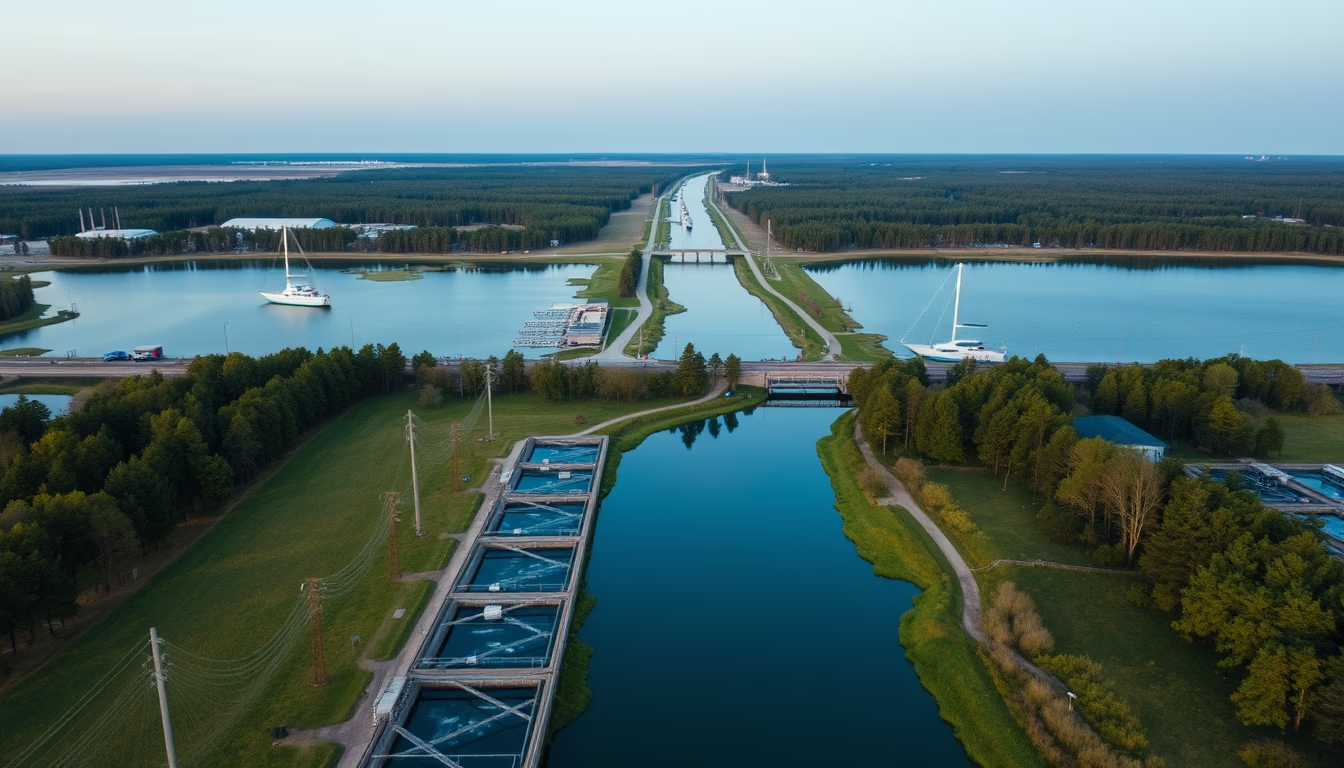
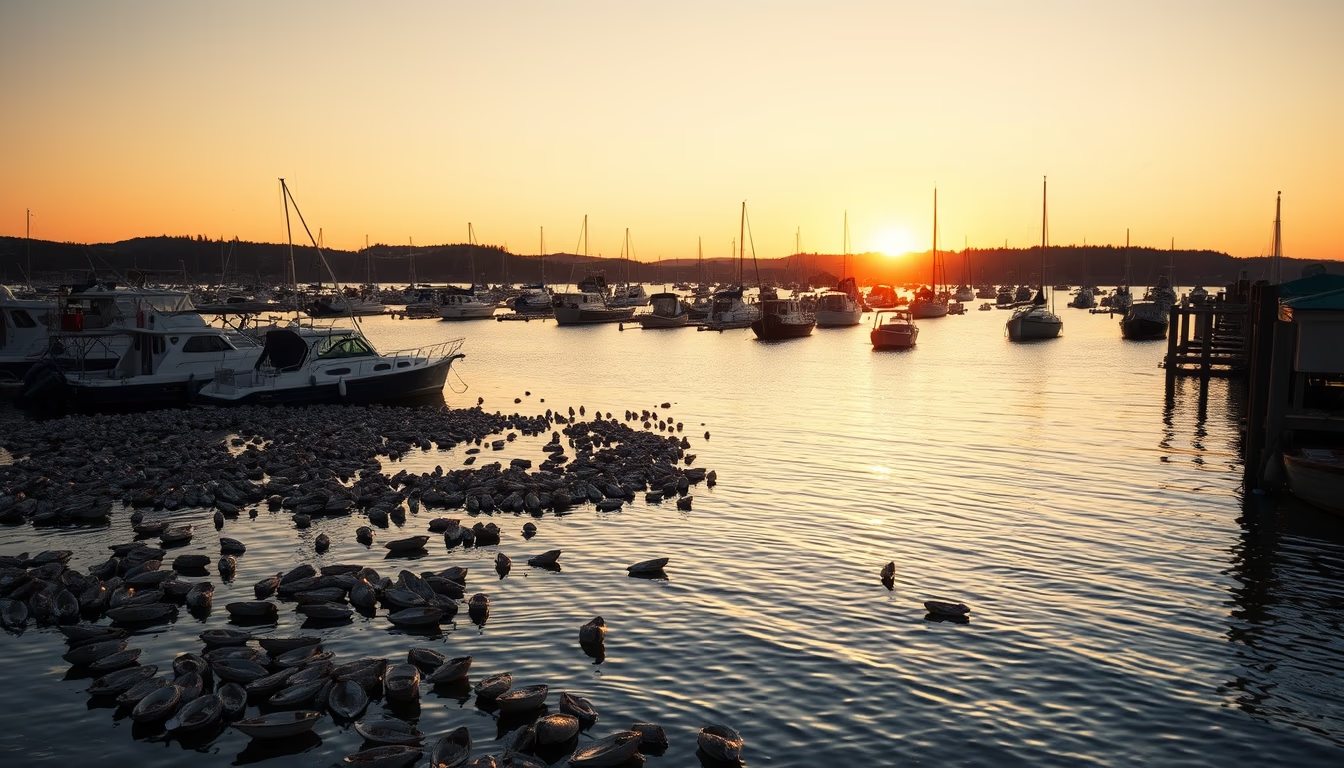
Salmon farm offshore
1344×768 · AVIF · CC BY 4.0
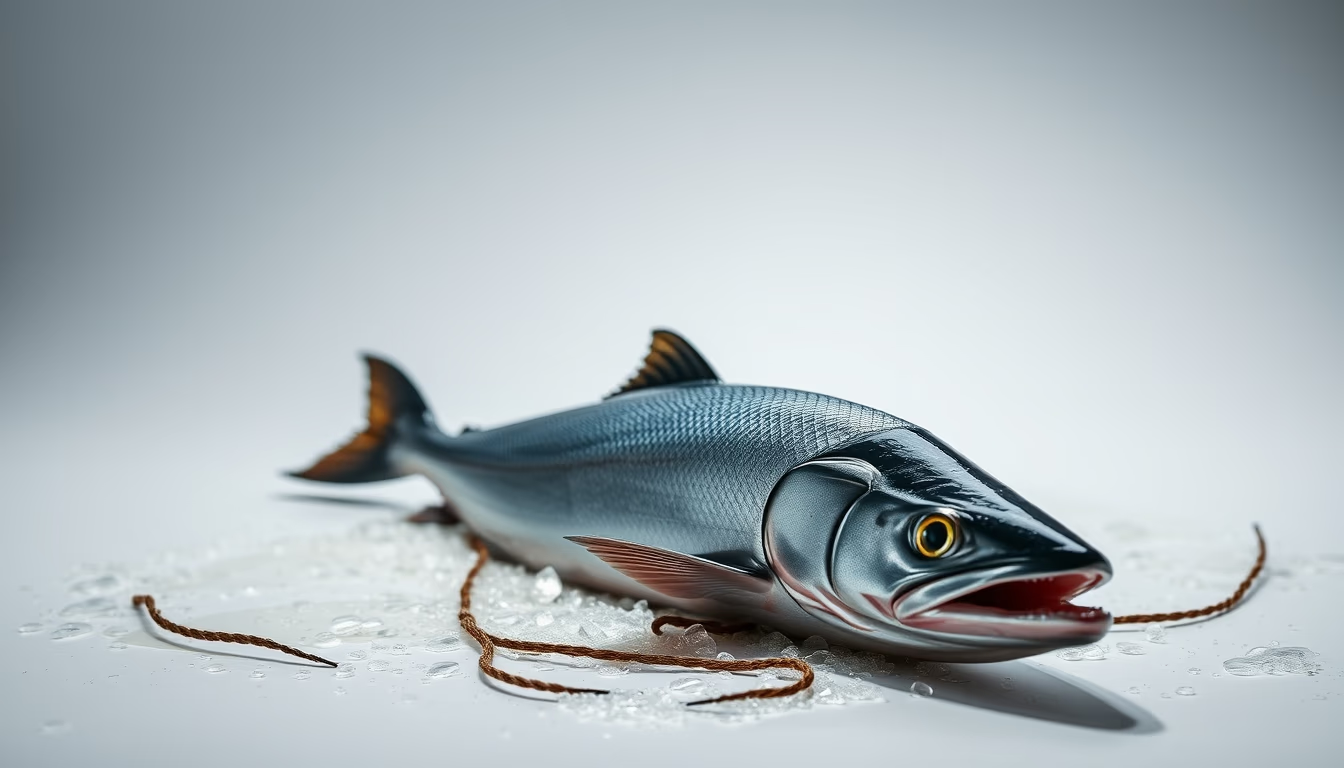
Offshore salmon farming: raising salmon in open ocean with advanced technology and environmental challenges.
About this subject
Offshore salmon farming involves raising salmon in submersible cages located in the open ocean, away from coastal areas. This approach aims to reduce environmental impacts associated with coastal aquaculture, such as waste accumulation and disease spread. Stronger ocean currents help disperse waste and maintain better water quality for the fish. Automated feeding and remote monitoring systems are essential for operating under these harsh conditions, with structures designed to withstand waves and storms.
Countries like Norway, Canada, Chile, and Scotland lead global offshore salmon production. Farms use circular steel cages or reinforced nets, often anchored to the seafloor. Production capacity per unit can reach thousands of tons, making the model economically attractive. However, installation and maintenance costs are high, requiring significant investment in infrastructure and logistics.
Despite progress, offshore salmon farming faces environmental challenges. Escaped salmon can hybridize with wild populations, altering local genetics. Sea lice, a common parasite in farms, also affect wild salmon. The use of antibiotics and chemicals for disease control raises concerns about resistance and bioaccumulation. In response, the industry invests in closed containment systems, recirculation systems, and non-chemical treatments, such as cleaner fish.
From an economic perspective, salmon is one of the most consumed seafoods globally, with growing demand for sustainable protein. Offshore salmon farming offers expansion potential, but its success depends on balancing productivity, animal welfare, and marine ecosystem conservation. Strict regulations and certifications like the Aquaculture Stewardship Council (ASC) aim to ensure responsible practices.
Frequently Asked Questions
What differentiates offshore from coastal salmon farming?
Offshore takes place in the open ocean with submerged cages, strong currents, and less localized impact. Coastal farming occurs near shore in calmer waters, with higher risk of concentrated pollution.
What are the main environmental risks of offshore salmon farming?
Risks include escapes that breed with wild salmon, spread of sea lice, and antibiotic use. Innovations like closed cages and natural treatments aim to mitigate these issues.
Is offshore salmon considered sustainable?
It depends on practices. Certifications like ASC and operations with low chemical use and low escape rates are more sustainable. The offshore model has potential but requires strict management.
Direct URL
https://pub-c7d6a6ea828543ac903a74a341ccb2e1.r2.dev/imagens/salmon-farm-offshore-studio-still-life-fresh14.avifHow to credit
Include a visible link back to UtilizAí. Copy one of the snippets below:
<a href="https://xn--utiliza-eza.com/en/midia/imagens/salmon-farm-offshore-studio-still-life-fresh14">Salmon farm offshore</a> by <a href="https://xn--utiliza-eza.com">UtilizAí</a>, licensed under <a href="https://creativecommons.org/licenses/by/4.0/">CC BY 4.0</a>.
[Salmon farm offshore](https://xn--utiliza-eza.com/en/midia/imagens/salmon-farm-offshore-studio-still-life-fresh14) by [UtilizAí](https://xn--utiliza-eza.com), CC BY 4.0
License: CC-BY-4.0