Salmon farm offshore
1344×768 · AVIF · CC BY 4.0

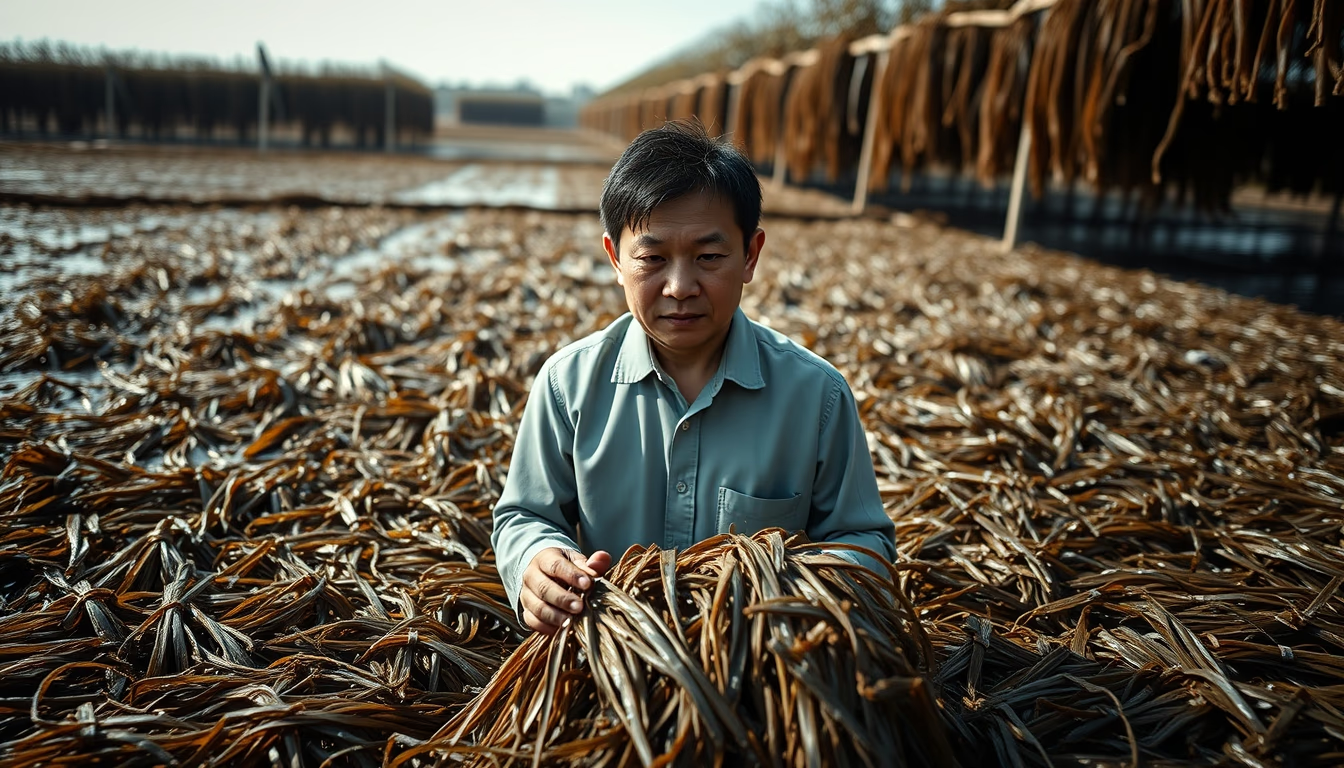
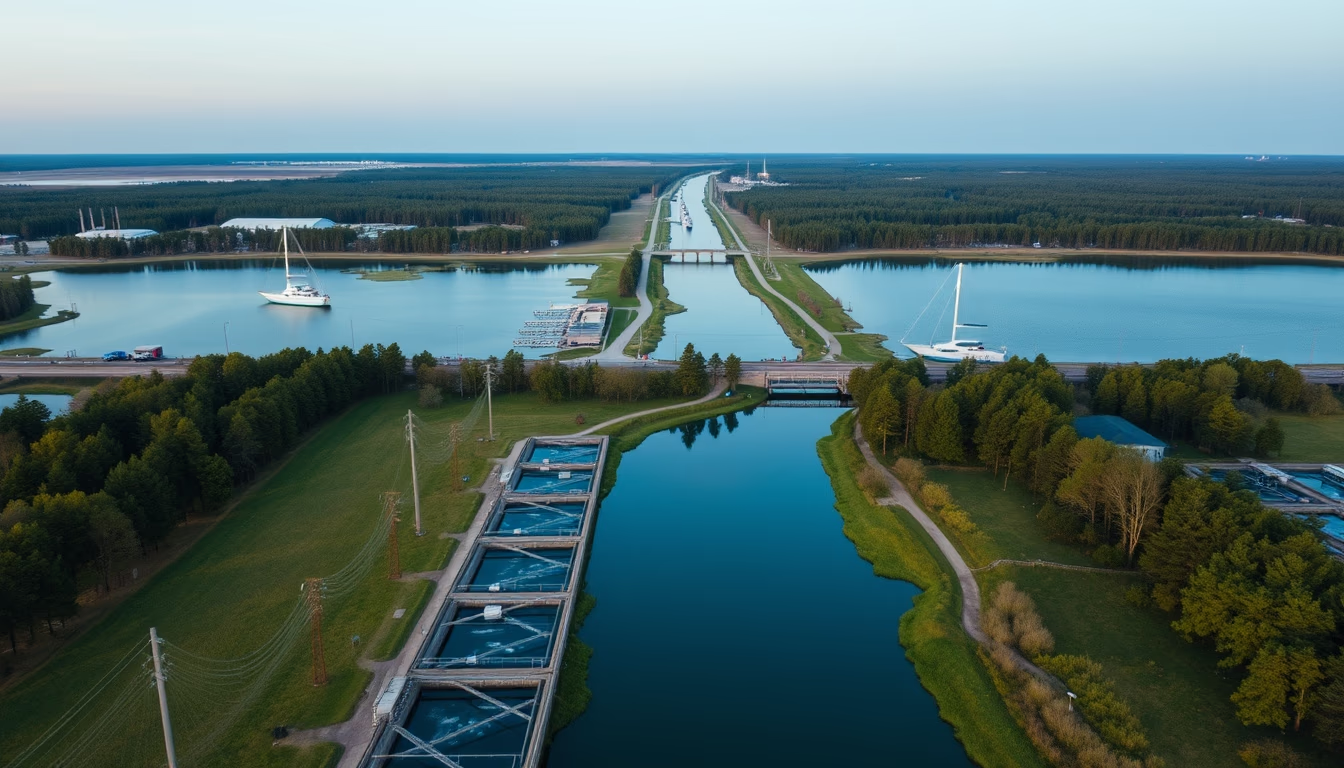
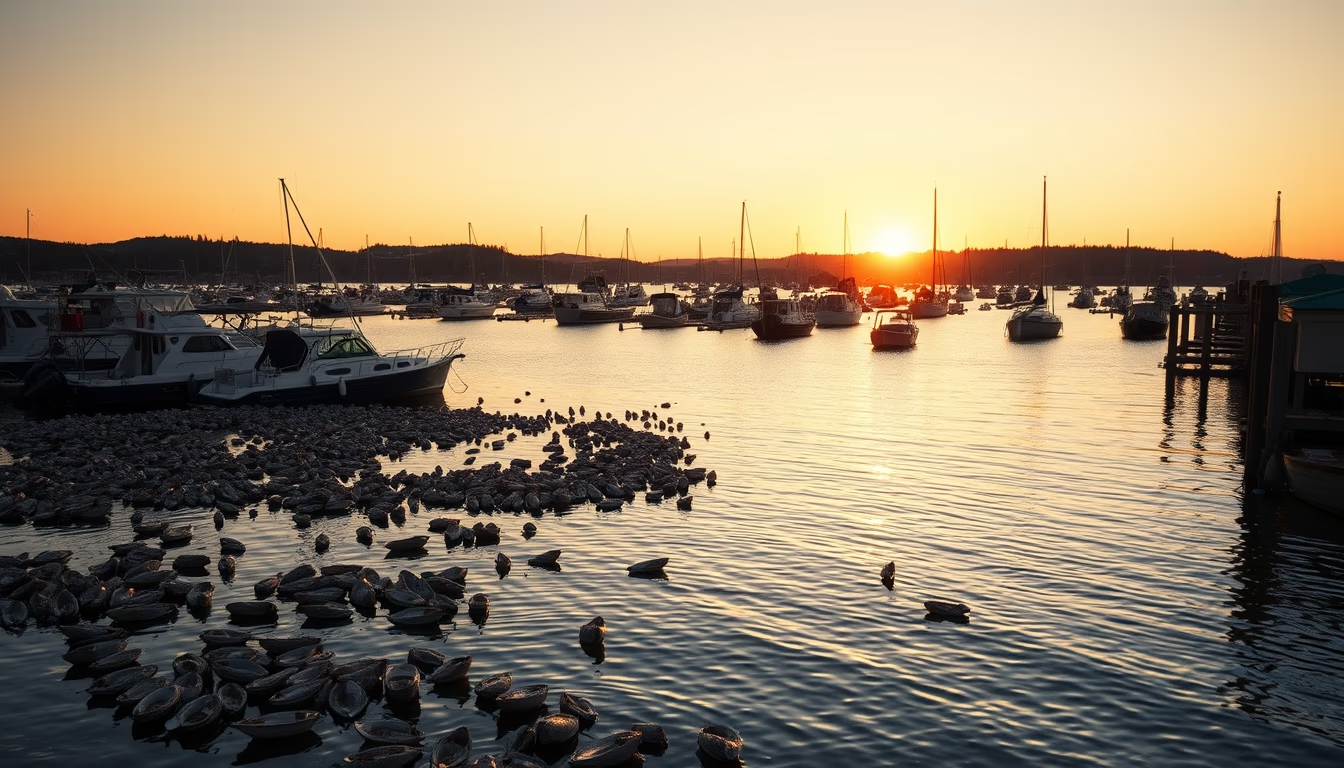
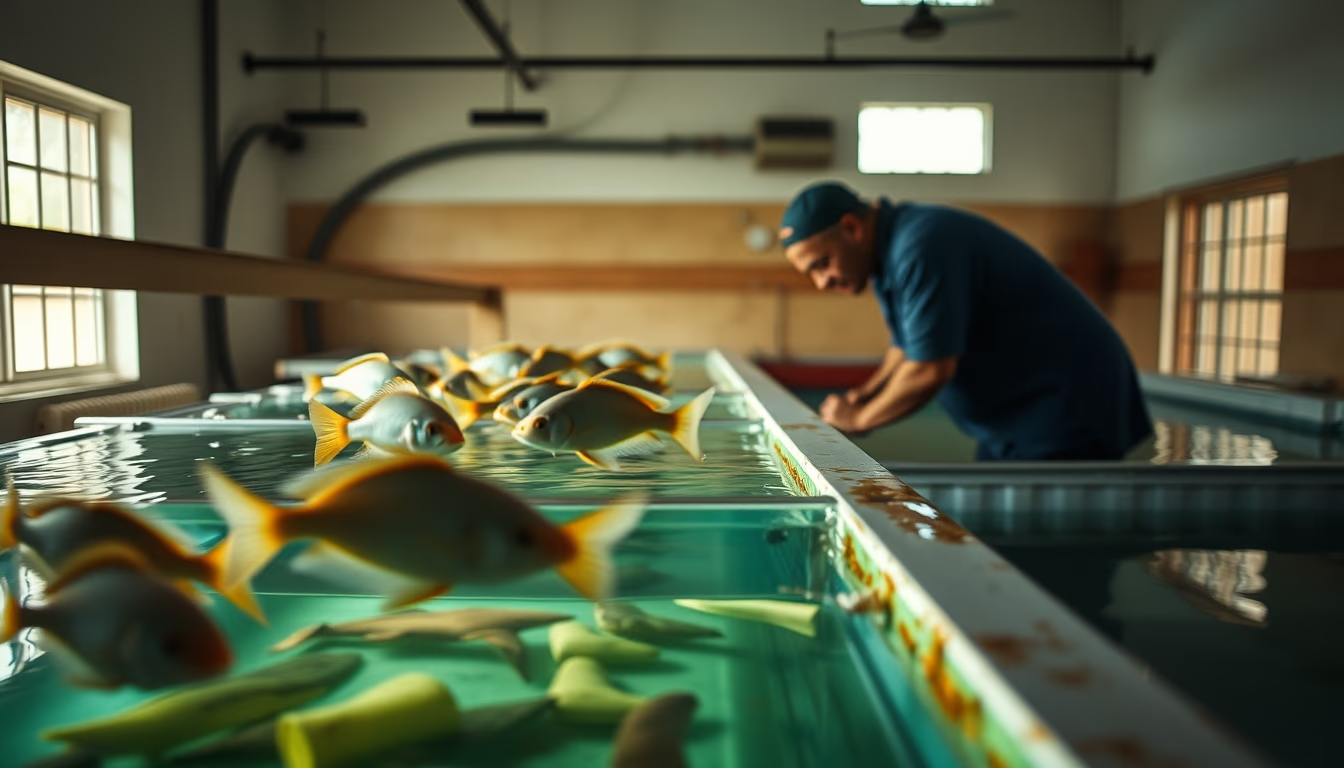
Offshore salmon farming uses submersible cages in open ocean to raise salmon, reducing coastal impacts and boosting sustainable production.
About this subject
Offshore salmon farming is an evolution of traditional coastal farms, where salmon are raised in submersible cages installed in open ocean, kilometers from shore. This technology, exemplified by SalMar's Ocean Farm 1 in Norway (capacity of 1.5 million fish) and projects in Chile, Canada, and Scotland, aims to overcome space limitations and environmental issues of coastal areas. The cages, made of steel and strong nets, are partially submerged to withstand waves and currents, anchored to the seabed.
Key advantages include faster dilution of organic waste and lower incidence of parasites like sea lice, thanks to greater water circulation. Companies such as Salmon Evolution in Norway have invested in closed offshore systems that filter effluents. Additionally, the remote location reduces conflicts with other coastal uses like tourism and artisanal fisheries.
Technical challenges include strong currents requiring robust structures, and high logistics and energy costs for automated feeding and remote monitoring. Oxygen sensors, underwater cameras, and surface drones enable real-time control. Environmentalists point to risks of feces accumulation on the seabed, though studies show better dispersion in deep waters. Salmon escape is another concern, with escape-proof cage designs under development.
The sector is expanding, with the Food and Agriculture Organization (FAO) projecting that offshore aquaculture will account for 40% of global salmon production by 2030. Certifications such as ASC (Aquaculture Stewardship Council) and Best Aquaculture Practices ensure socio-environmental standards. Countries like Norway (world's largest producer), Chile, Canada, and Scotland lead in adopting this technology, seen as key to meeting growing demand for marine protein without depleting wild stocks.
Frequently Asked Questions
How does an offshore salmon farm work?
An offshore farm uses submersible cages anchored to the ocean floor in open sea. Salmon are fed automatically by remotely controlled systems, and sensors monitor oxygen, temperature, and currents. The structure allows greater water flow, reducing waste accumulation and parasites.
What are the environmental impacts of offshore salmon farming?
Main impacts are accumulation of feces and uneaten feed on the seabed, though dispersal is greater in deep waters. There is risk of fish escape competing with native species. However, lower density and remote location reduce local pollution and disease transmission compared to coastal farms.
Where are the main offshore salmon farms located?
Largest operations are in Norway (e.g., Ocean Farm 1 and SalMar farms), Chile (Los Lagos and Aysén regions), Canada (British Columbia and Newfoundland), and Scotland (Shetland Islands and Hebrides). Pilot projects also exist in Panama, China, and the United States.
Direct URL
https://pub-c7d6a6ea828543ac903a74a341ccb2e1.r2.dev/imagens/salmon-farm-offshore-high-fashion-editorial-fresh10.avifHow to credit
Include a visible link back to UtilizAí. Copy one of the snippets below:
<a href="https://xn--utiliza-eza.com/en/midia/imagens/salmon-farm-offshore-high-fashion-editorial-fresh10">Salmon farm offshore</a> by <a href="https://xn--utiliza-eza.com">UtilizAí</a>, licensed under <a href="https://creativecommons.org/licenses/by/4.0/">CC BY 4.0</a>.
[Salmon farm offshore](https://xn--utiliza-eza.com/en/midia/imagens/salmon-farm-offshore-high-fashion-editorial-fresh10) by [UtilizAí](https://xn--utiliza-eza.com), CC BY 4.0
License: CC-BY-4.0