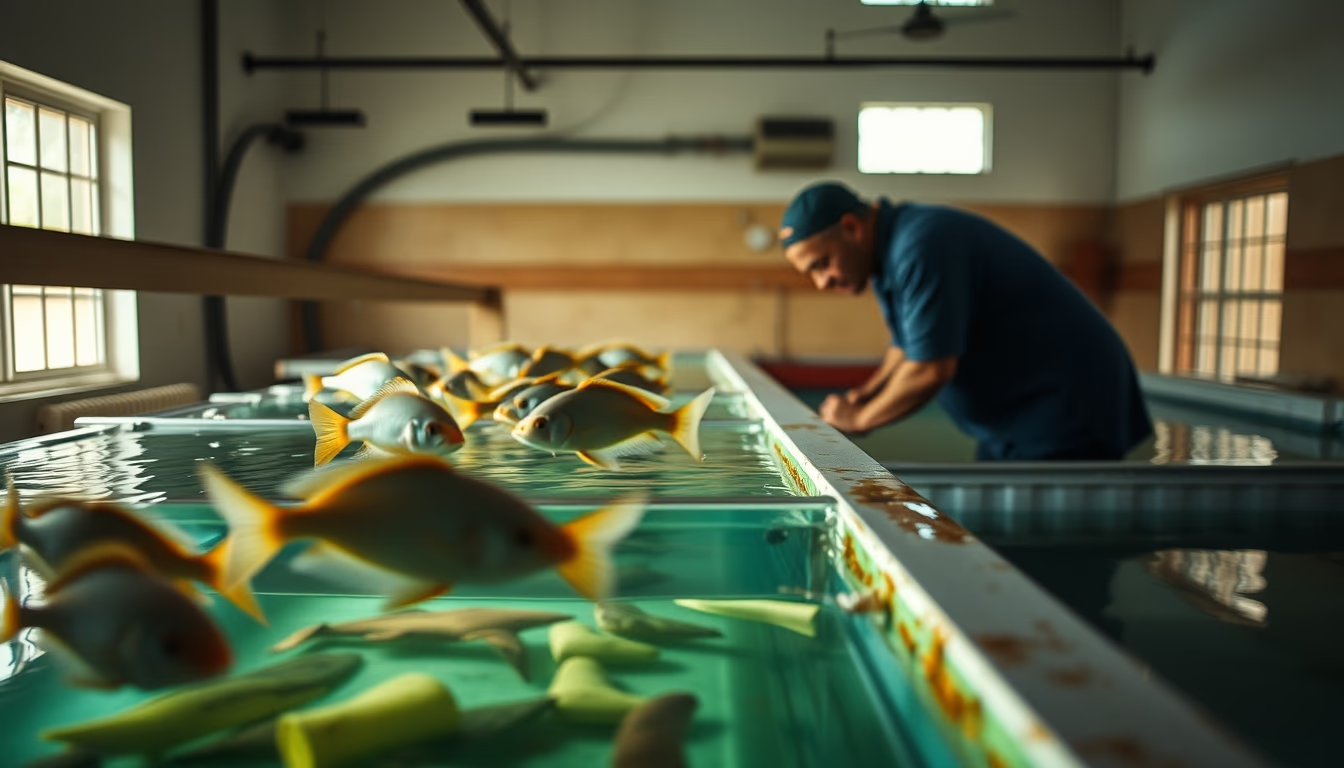
Salmon farm offshore
1344×768 · AVIF · CC BY 4.0
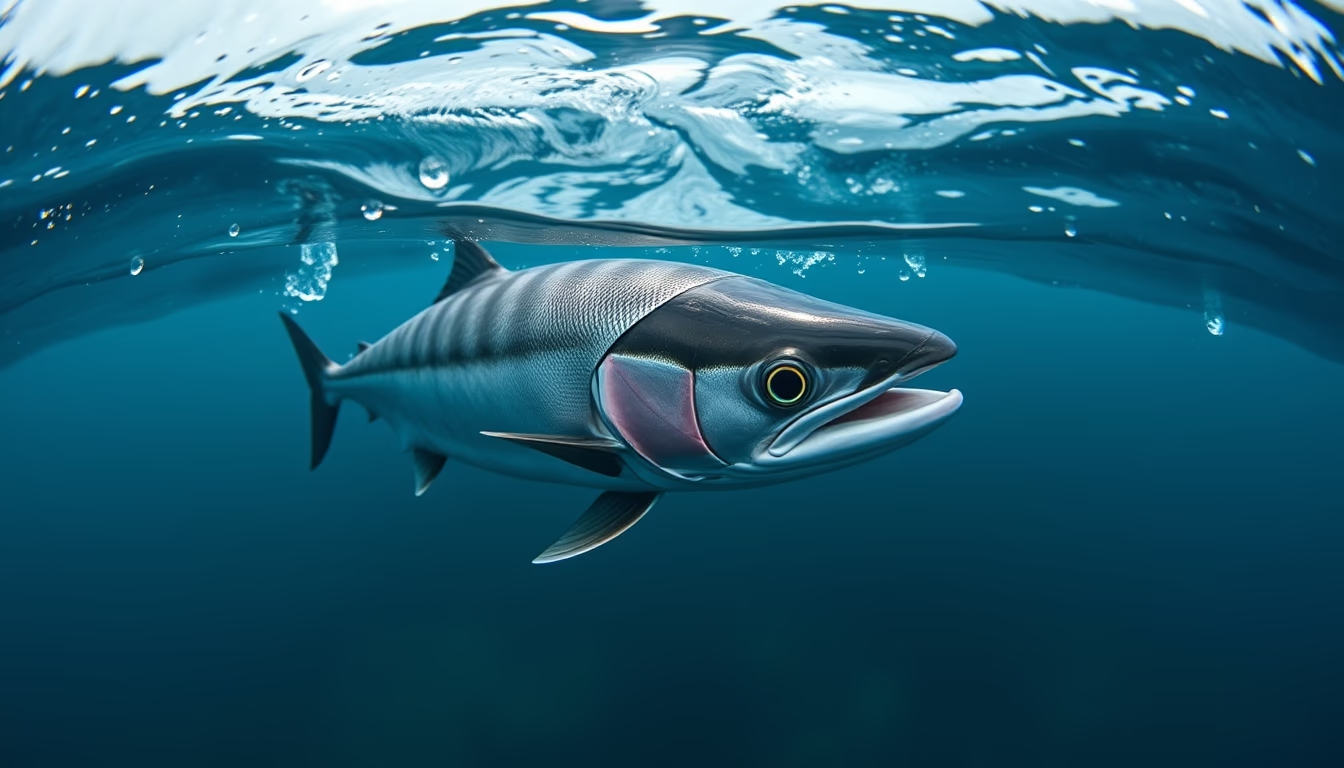
Offshore salmon farming is an advanced aquaculture technique that aims to reduce environmental impacts and expand sustainable production.
About this subject
Offshore salmon farming represents a significant evolution in salmon production, moving cultivation from coastal areas to the open sea. This approach emerged as a response to overcrowding and health issues faced in nearshore farms, especially in countries such as Norway, Chile, Scotland and Canada. Stronger currents and deeper ocean waters provide more natural conditions, reducing sea lice infestations and improving flesh quality. Large submersible structures, like the Norwegian Ocean Farm 1, can withstand storms and minimize fish escapes.
Environmental management is a key pillar of this activity. To control parasites without chemicals, cleaner fish such as wrasse are used, along with physical barriers like snorkel cages. Organic waste disperses better offshore, but challenges remain: integrated multi-trophic aquaculture (IMTA) combines salmon farming with algae and mollusks to absorb nutrients, closing production loops. Escape prevention requires high-strength nets and robust anchoring systems, plus monitoring via underwater sensors and artificial intelligence.
Economically, salmon is one of the most valuable aquaculture products in global trade, with over 2.5 million tons produced annually. Offshore expansion opens new frontiers but demands high investment in technology and environmental licensing. In Brazil, salmon are not commercially farmed due to tropical climate; however, lessons from offshore salmon farming apply to culturing other fish in open waters, such as cobia and pompano. The industry is moving toward automation with feeding robots, animal welfare sensors and inspection drones, making production more efficient and sustainable.
Frequently Asked Questions
What are the main challenges of offshore salmon farming?
Key challenges include sea lice control, escape prevention, waste management and storm resistance. Innovative solutions involve cleaner fish, submersible cages and advanced monitoring systems.
How does offshore aquaculture differ from coastal aquaculture?
Offshore aquaculture operates in deeper waters with higher water exchange, reducing parasite and waste concentration. It requires more robust and expensive structures but allows larger scale and lower local environmental impact.
Why is salmon important in the global market?
Salmon is one of the most traded aquaculture products, with strong demand in Europe, the US and Japan. Norway and Chile are top producers, and offshore expansion can sustainably increase supply.
Direct URL
https://pub-c7d6a6ea828543ac903a74a341ccb2e1.r2.dev/imagens/salmon-farm-offshore-fish-eye-wide-angle-fresh17.avifHow to credit
Include a visible link back to UtilizAí. Copy one of the snippets below:
<a href="https://xn--utiliza-eza.com/en/midia/imagens/salmon-farm-offshore-fish-eye-wide-angle-fresh17">Salmon farm offshore</a> by <a href="https://xn--utiliza-eza.com">UtilizAí</a>, licensed under <a href="https://creativecommons.org/licenses/by/4.0/">CC BY 4.0</a>.
[Salmon farm offshore](https://xn--utiliza-eza.com/en/midia/imagens/salmon-farm-offshore-fish-eye-wide-angle-fresh17) by [UtilizAí](https://xn--utiliza-eza.com), CC BY 4.0
License: CC-BY-4.0