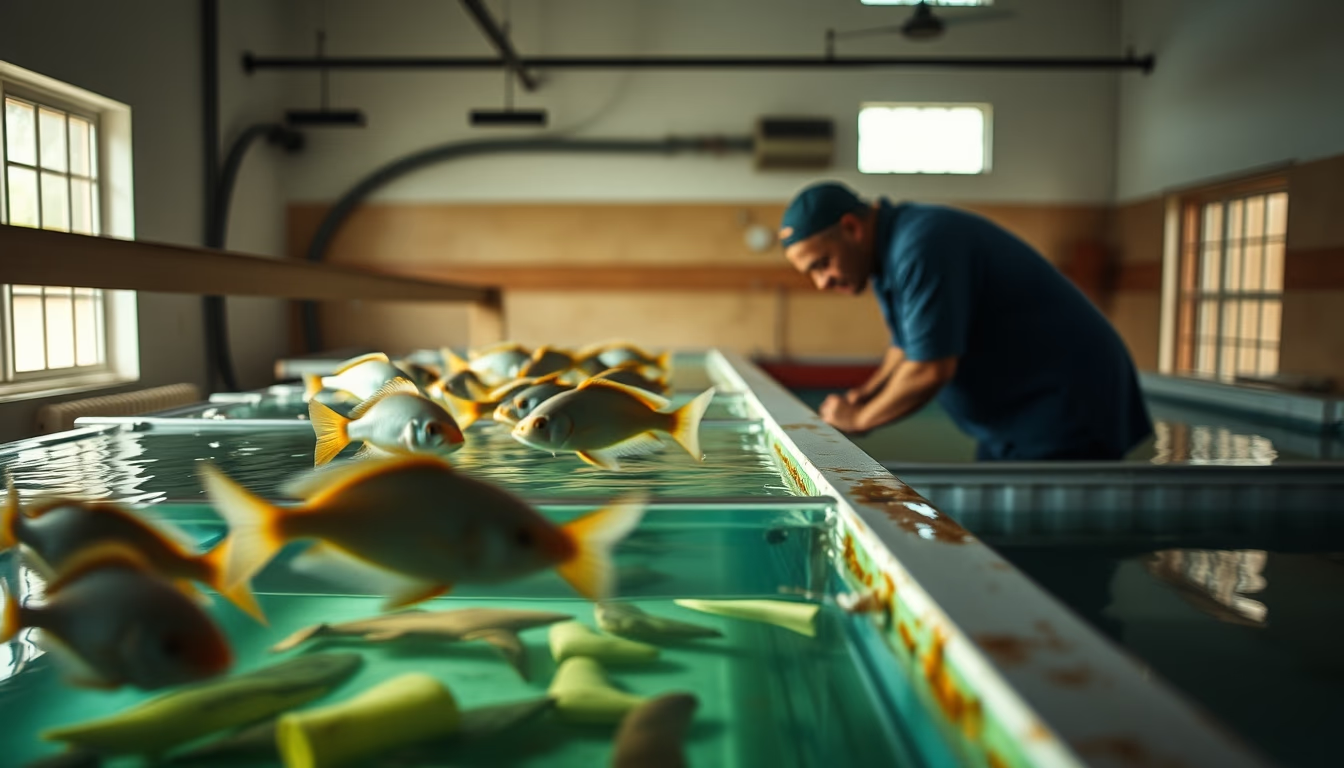
Salmon farm offshore
1344×768 · AVIF · CC BY 4.0
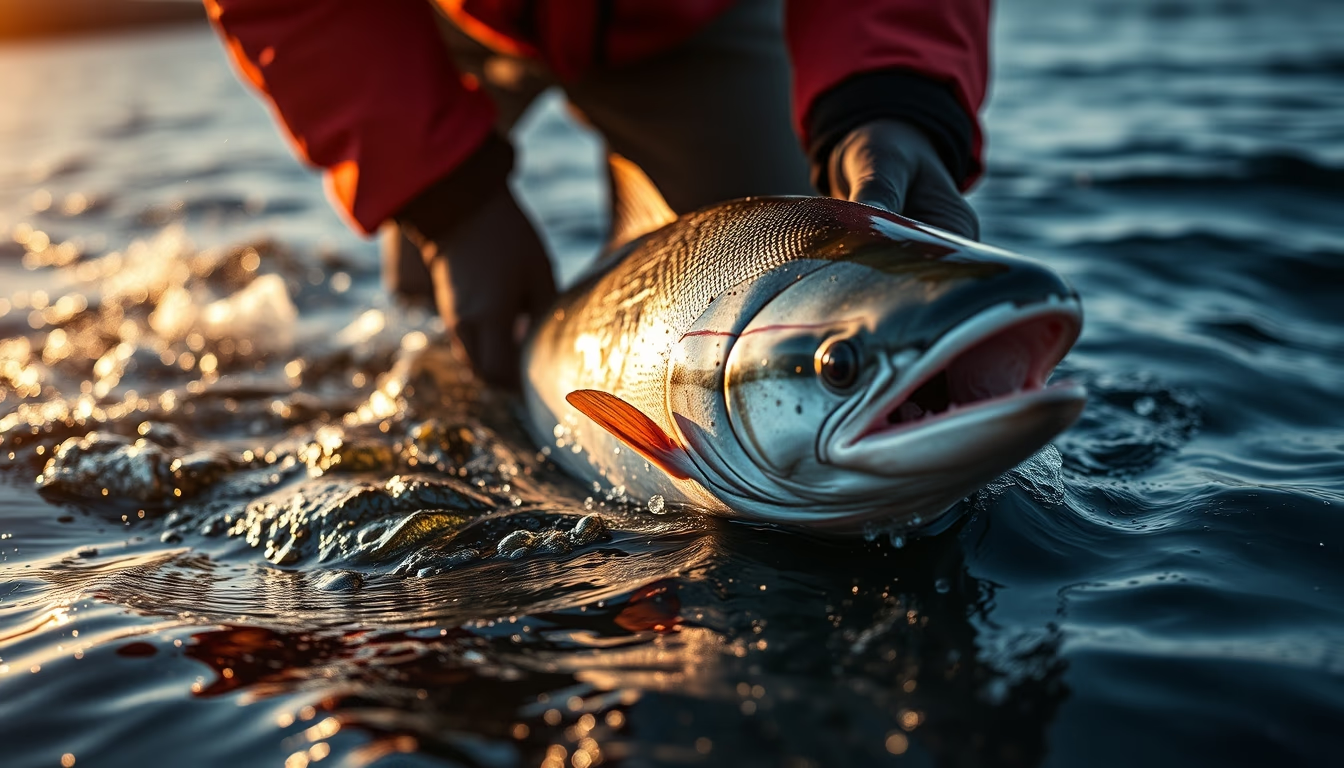
Offshore salmon farming uses submerged structures in open ocean to raise fish with lower environmental impact and improved animal welfare.
About this subject
Offshore salmon farming is a major evolution in global aquaculture. Unlike traditional coastal net pens, these farms are installed in deep, exposed waters where ocean currents are stronger and oxygen renewal is constant. Countries like Norway, Chile, and Scotland lead this technology, using submersible systems that withstand waves up to 15 meters and resist storms.
The main environmental benefit is the reduction of organic and chemical waste concentration on the seabed. In open ocean, waste disperses quickly, minimizing local eutrophication. Furthermore, the distance from the coast avoids conflicts with other activities such as tourism and artisanal fishing. Offshore farms also reduce the incidence of sea lice, parasites that historically affect coastal production.
Operationally, feeding is automated by remote monitoring systems that adjust feed based on fish behavior. Underwater sensors measure temperature, salinity, and oxygen levels in real time, enabling rapid interventions. Harvesting is done by pumps that transport live salmon to factory ships, ensuring freshness and welfare.
Despite advances, challenges remain: high infrastructure costs and the need for energy for dynamic anchoring systems limit expansion to developing countries. However, with increasing global demand for sustainable protein, offshore salmon farming is expected to grow, driven by innovations in corrosion-resistant materials and artificial intelligence for predictive management.
Frequently Asked Questions
What is the difference between coastal and offshore salmon farming?
Coastal farming uses fixed net pens in sheltered areas near the shore, while offshore farming employs submersible structures in open ocean, exposed to strong currents and waves, with lower environmental impact and better waste dispersion.
Is salmon from offshore farms healthier?
Yes, because the open ocean environment reduces stress and parasite incidence, decreasing the need for antibiotics. Also, feeding is controlled by sensors that optimize nutrition.
Which countries are the main producers of offshore salmon?
Norway, Chile, and Scotland are leaders. Norway developed technologies like Ocean Farm 1, while Chile expanded operations in Patagonia. Scotland invests in systems resistant to the North Atlantic.
Direct URL
https://pub-c7d6a6ea828543ac903a74a341ccb2e1.r2.dev/imagens/salmon-farm-offshore-fine-art-photography-fresh6.avifHow to credit
Include a visible link back to UtilizAí. Copy one of the snippets below:
<a href="https://xn--utiliza-eza.com/en/midia/imagens/salmon-farm-offshore-fine-art-photography-fresh6">Salmon farm offshore</a> by <a href="https://xn--utiliza-eza.com">UtilizAí</a>, licensed under <a href="https://creativecommons.org/licenses/by/4.0/">CC BY 4.0</a>.
[Salmon farm offshore](https://xn--utiliza-eza.com/en/midia/imagens/salmon-farm-offshore-fine-art-photography-fresh6) by [UtilizAí](https://xn--utiliza-eza.com), CC BY 4.0
License: CC-BY-4.0