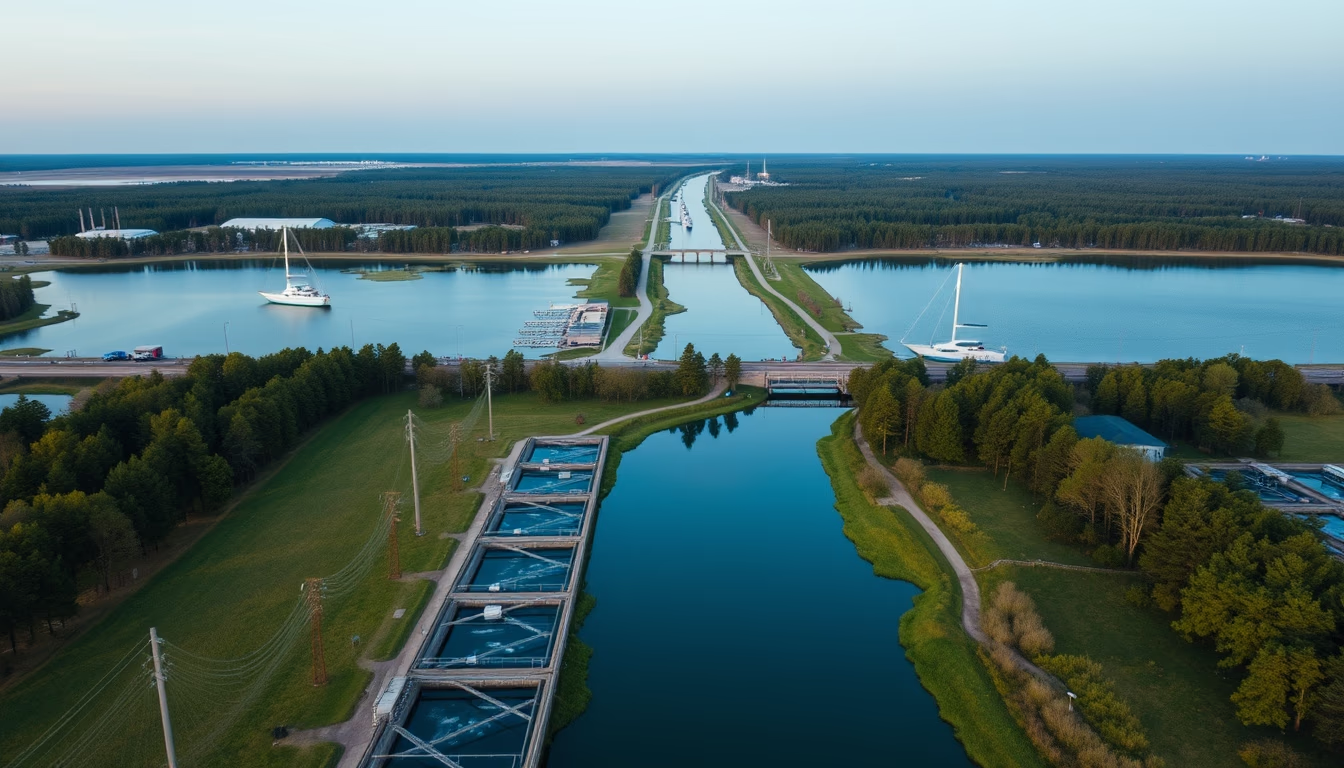
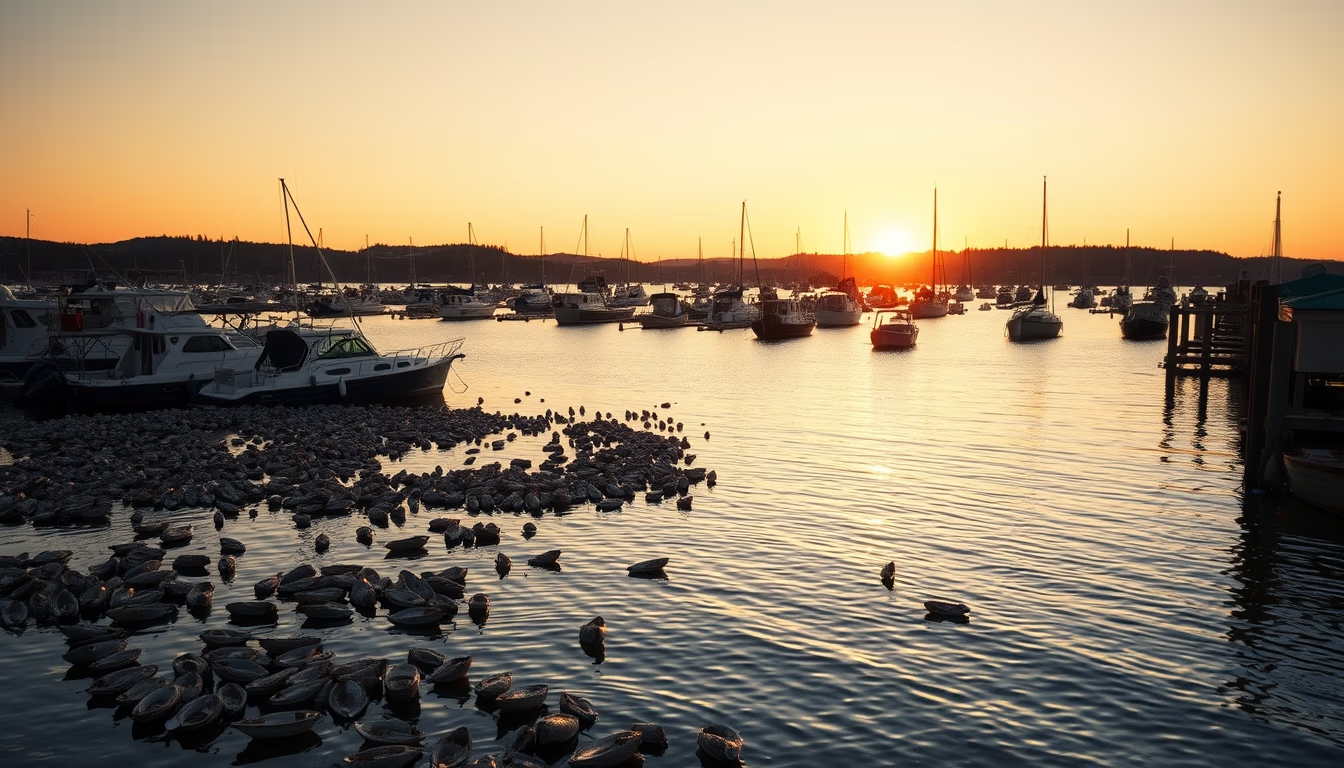
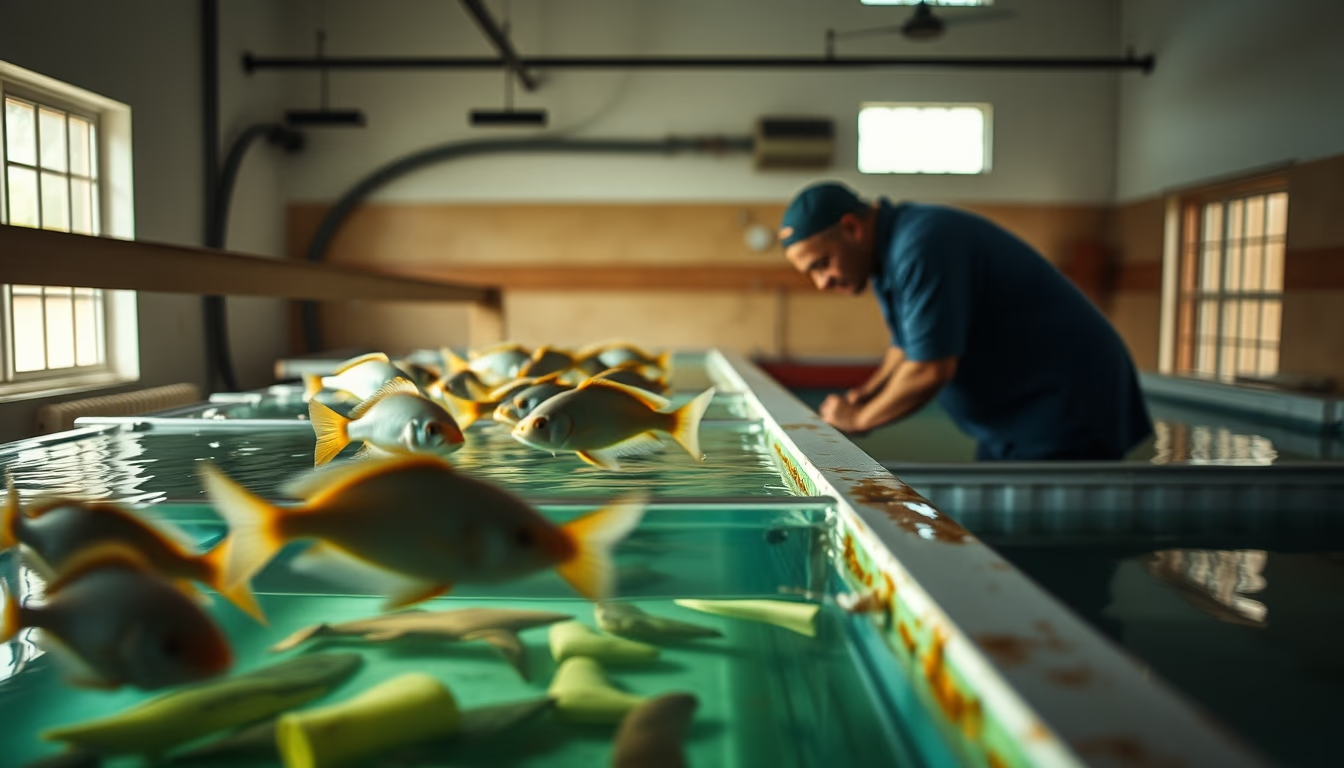
Salmon farm offshore
1344×768 · AVIF · CC BY 4.0
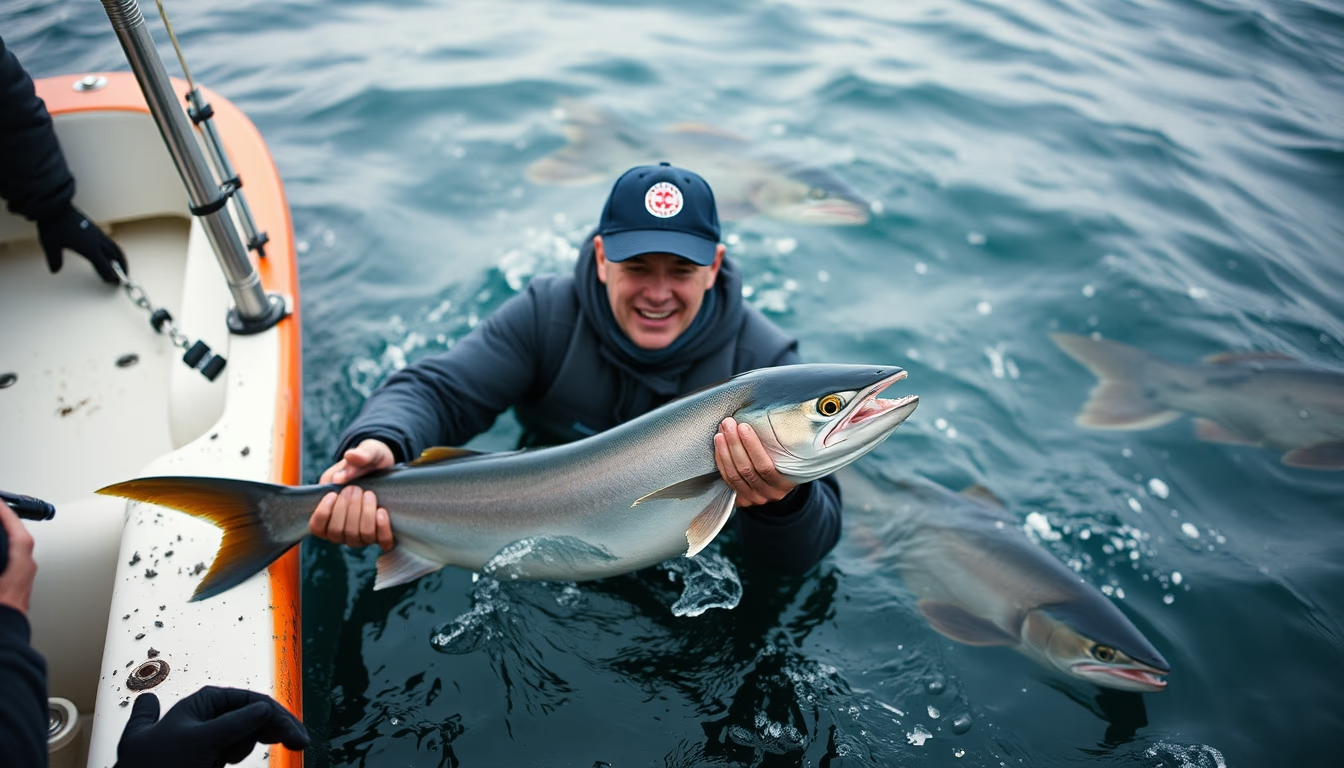
Offshore salmon aquaculture represents a technological frontier in marine protein production, combining sustainability and innovation.
About this subject
Offshore salmon farming involves raising salmon in submersible cages or net pens located in open ocean waters, away from the coast. This model emerged as a response to environmental and health issues of traditional coastal aquaculture, such as waste accumulation, sea lice proliferation, and fish escapes. By placing farms in deep, high-current waters, waste is dispersed naturally, reducing seabed impact and disease transmission.
Advanced offshore systems use submersible cages made of steel and high-strength nets, capable of withstanding waves up to 15 meters. Feeding is automated via pneumatic systems or underwater robots, and monitoring is done by cameras and sensors measuring oxygen, temperature, and salinity in real time. Each unit can produce between 2,000 and 10,000 tonnes of salmon per cycle, comparable to large land-based farms. Leading countries include Norway, Canada, Chile, and Scotland.
Environmentally, offshore aquaculture significantly reduces coastal eutrophication and genetic escape risks to wild populations. However, challenges remain: installation costs are high (up to USD 100 million per project), feeding and harvesting logistics are complex, and antibiotic use is still necessary in some cases. Organizations like the Aquaculture Stewardship Council (ASC) certify farms that follow strict animal welfare and environmental management standards.
Economically, salmon is one of the most valuable seafoods worldwide, with global consumption exceeding 2.5 million tonnes annually. Offshore production expands supply without pressuring wild stocks, creating specialized jobs in engineering, marine biology, and offshore logistics. While salmon farming is not viable in tropical waters, the model inspires projects for native species such as sea bass and grouper in regions like Brazil, adapting the same open-ocean technologies.
Frequently Asked Questions
What is the typical depth of an offshore salmon farm?
Submersible cages are installed between 30 and 60 meters deep, in areas with strong currents to ensure water renewal and waste dispersion.
What are the main challenges of offshore salmon aquaculture?
Key challenges include high installation costs, logistics of feeding and harvesting in open seas, and managing diseases such as sea lice in oceanic environments.
Is offshore salmon production more sustainable than traditional farming?
Yes, the offshore model reduces coastal impacts like eutrophication and escapes, but it still relies on feed made from fishmeal and fish oil, raising concerns about input sustainability.
Direct URL
https://pub-c7d6a6ea828543ac903a74a341ccb2e1.r2.dev/imagens/salmon-farm-offshore-film-grain-authentic-fresh12.avifHow to credit
Include a visible link back to UtilizAí. Copy one of the snippets below:
<a href="https://xn--utiliza-eza.com/en/midia/imagens/salmon-farm-offshore-film-grain-authentic-fresh12">Salmon farm offshore</a> by <a href="https://xn--utiliza-eza.com">UtilizAí</a>, licensed under <a href="https://creativecommons.org/licenses/by/4.0/">CC BY 4.0</a>.
[Salmon farm offshore](https://xn--utiliza-eza.com/en/midia/imagens/salmon-farm-offshore-film-grain-authentic-fresh12) by [UtilizAí](https://xn--utiliza-eza.com), CC BY 4.0
License: CC-BY-4.0