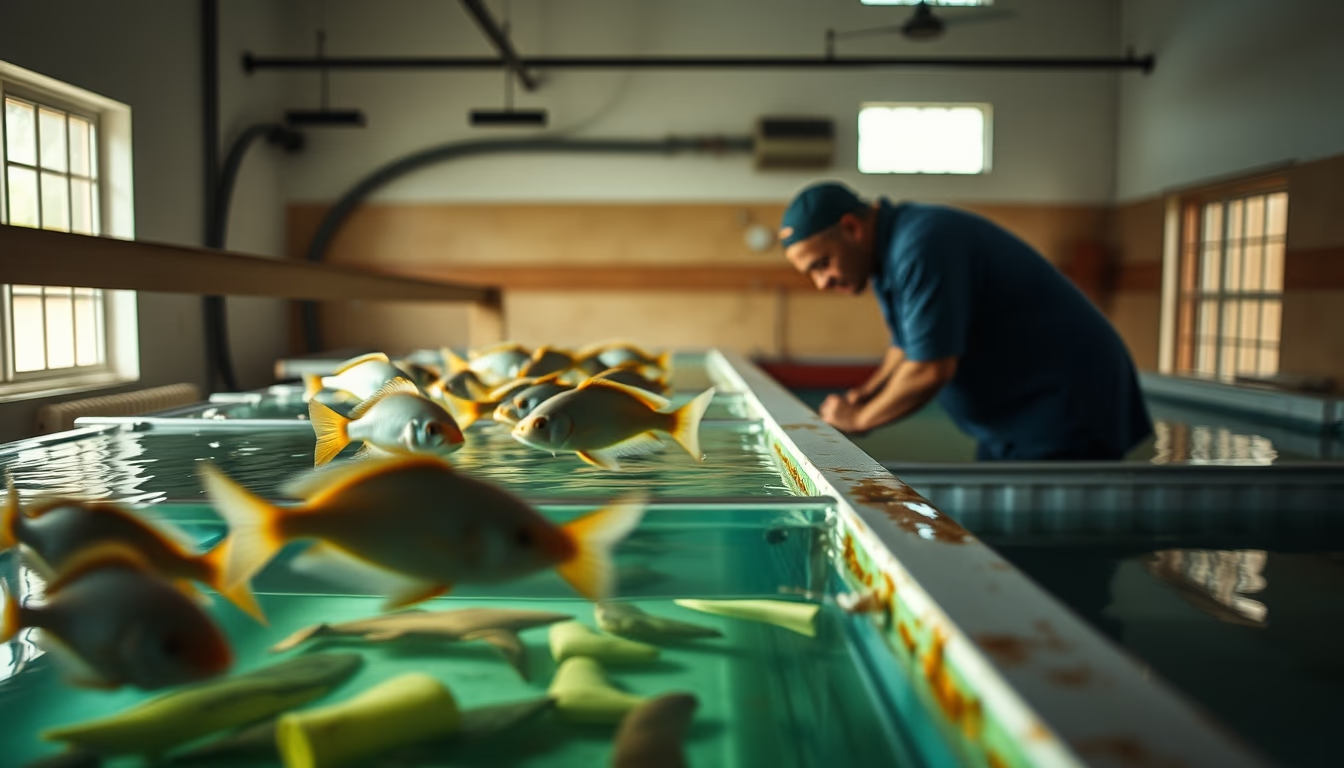
Salmon farm offshore
1344×768 · AVIF · CC BY 4.0
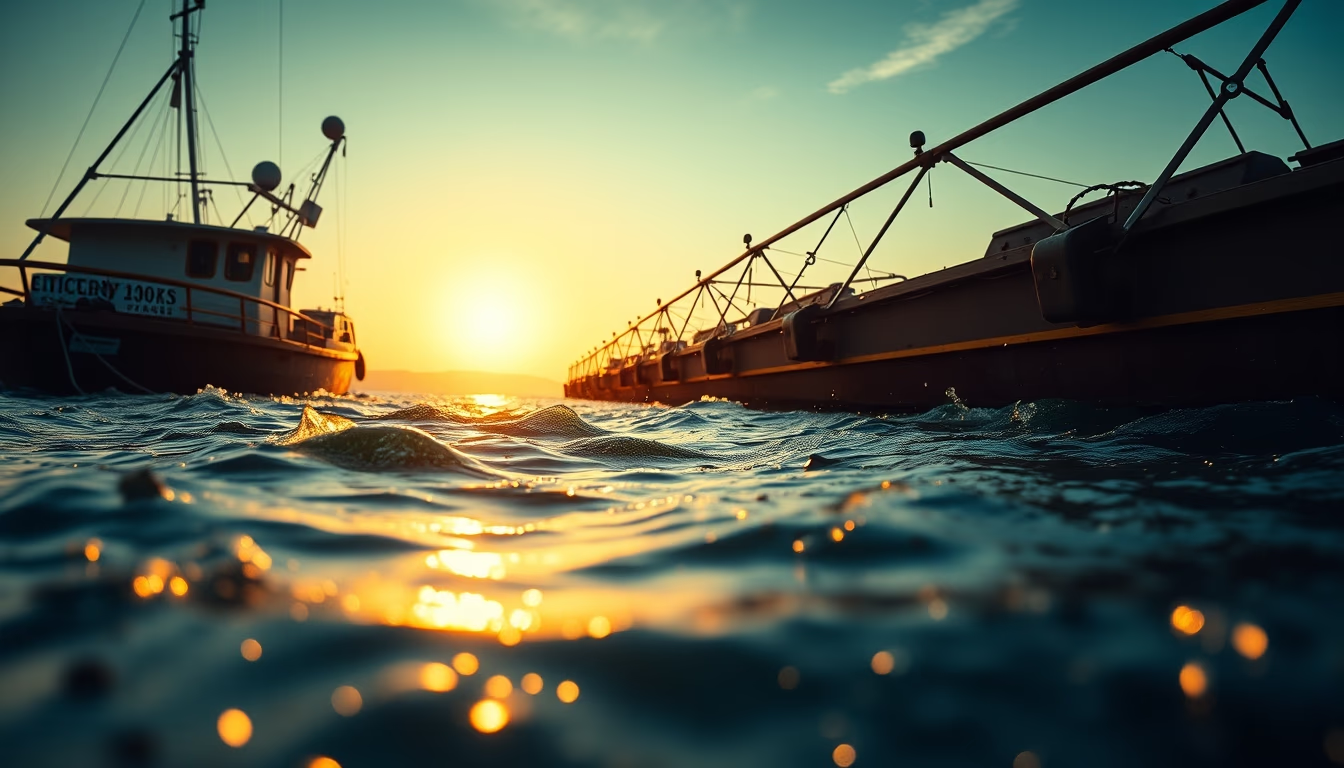
Offshore salmon farming involves raising salmon in submerged cages in open ocean waters, a leading technology in global aquaculture.
About this subject
Offshore salmon farming is a form of aquaculture that cultivates Atlantic salmon (Salmo salar) in submerged cages located in open ocean waters, typically several kilometers from the coast. This practice enables larger production volumes in deeper waters with better water circulation and waste dilution. The main hubs of this activity are Norway, Chile, Canada, Scotland, and the Faroe Islands, with Norway accounting for over 50% of global production.
Offshore cages are floating or submersible structures made of steel or high-density polyethylene nets, capable of withstanding strong waves and currents. Feeding is automated via compressed air systems or feed barges, and monitoring uses underwater sensors and drones. A single farm can produce thousands of tons per cycle, which lasts 18 to 24 months. Continuous innovation aims to reduce environmental impact, such as enclosed cages to prevent escapes and accumulation of parasites.
Despite economic benefits, offshore salmon farming faces significant environmental challenges. Antibiotic use to control bacterial diseases, fish escapes that can interbreed with wild populations, and organic pollution on the seabed are recurring issues. Additionally, sea lice (Lepeophtheirus salmonis) cause hundreds of millions of dollars in annual losses. To mitigate these problems, the industry invests in cleaner fish (lumpfish, wrasse), vaccines, and cages with physical barriers.
Economically, offshore salmon farming generates direct and indirect jobs, especially in remote coastal regions. Norway exports about 1.2 million tons of salmon annually, generating over 8 billion euros. Countries like Chile and Canada also heavily depend on this activity. In Brazil, production is nascent, but there is potential in cold southern waters, such as Santa Catarina and Rio Grande do Sul, with experimental open-sea projects underway.
Frequently Asked Questions
What is offshore salmon farming?
It is the rearing of salmon in submerged cages in the open ocean, far from the coast, using advanced technology for feeding and monitoring to achieve high productivity with less coastal impact.
What are the main environmental challenges of this activity?
They include fish escapes that can hybridize with wild populations, organic pollution on the seabed, antibiotic use, and sea lice infestations, which require measures such as vaccines and cleaner fish.
Where is offshore salmon farming most practiced?
The largest producers are Norway, Chile, Canada, Scotland, and the Faroe Islands. Norway leads with over half of global production, while Brazil has experimental projects in the South.
Direct URL
https://pub-c7d6a6ea828543ac903a74a341ccb2e1.r2.dev/imagens/salmon-farm-offshore-cinematic-wide-shot-fresh1.avifHow to credit
Include a visible link back to UtilizAí. Copy one of the snippets below:
<a href="https://xn--utiliza-eza.com/en/midia/imagens/salmon-farm-offshore-cinematic-wide-shot-fresh1">Salmon farm offshore</a> by <a href="https://xn--utiliza-eza.com">UtilizAí</a>, licensed under <a href="https://creativecommons.org/licenses/by/4.0/">CC BY 4.0</a>.
[Salmon farm offshore](https://xn--utiliza-eza.com/en/midia/imagens/salmon-farm-offshore-cinematic-wide-shot-fresh1) by [UtilizAí](https://xn--utiliza-eza.com), CC BY 4.0
License: CC-BY-4.0