Salar de uyuni reflection
1344×768 · AVIF · CC BY 4.0
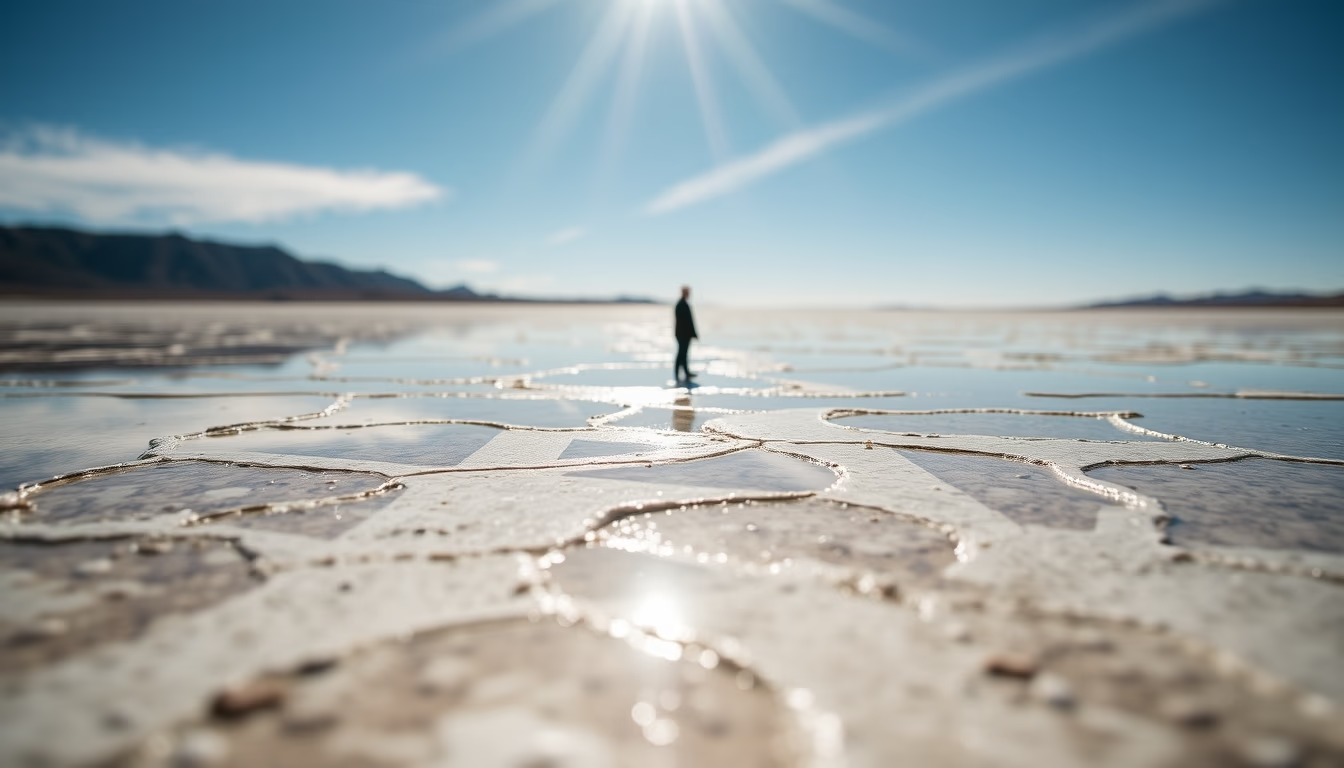
Salar de Uyuni in Bolivia is the world's largest salt flat, famous for its natural mirror effect during the rainy season.
About this subject
Salar de Uyuni, located in southwestern Bolivia on the Andean Altiplano at an altitude of approximately 3,656 meters, is the world's largest salt flat, covering over 10,500 square kilometers. It formed from prehistoric lakes that dried up, leaving a salt crust ranging from 2 to 10 meters thick. Beneath this crust lies a brine rich in lithium, containing about 70% of global reserves of this metal, essential for electric vehicle batteries.
During the rainy season (November to March), a thin layer of water covers the salt flat, creating the famous mirror effect that perfectly reflects the sky, turning the area into a unique visual spectacle. This phenomenon attracts tourists from around the world, especially in January and February when the water reaches its maximum depth of about 20 centimeters. The site is also used for satellite calibration due to its flat, reflective surface.
Culturally, the region is inhabited by Aymara communities, who extract salt by hand and consider the salt flat sacred. In the center of the desert, Fish Island (Isla Incahuasi) is a rocky formation covered with giant cacti and marine fossils dating back millions of years. Local wildlife includes Andean flamingos that feed on crustaceans in adjacent lagoons. Salar de Uyuni is one of the most iconic tourist destinations in South America.
Frequently Asked Questions
What is the best time to visit Salar de Uyuni to see the mirror effect?
The best time is during the rainy season from November to March, especially January and February, when water covers the surface up to 20 centimeters and the mirror effect is most perfect.
How did Salar de Uyuni form?
Salar de Uyuni formed from the successive evaporation of prehistoric lakes such as Lake Minchin, leaving a thick salt crust and a lithium-rich brine underneath.
Is Salar de Uyuni important for battery production?
Yes, it holds about 70% of global lithium reserves, a metal essential for electric vehicle batteries and electronic devices.
Direct URL
https://pub-c7d6a6ea828543ac903a74a341ccb2e1.r2.dev/imagens/salar-de-uyuni-reflection-tilt-shift-miniature-p9.avifHow to credit
Include a visible link back to UtilizAí. Copy one of the snippets below:
<a href="https://xn--utiliza-eza.com/en/midia/imagens/salar-de-uyuni-reflection-tilt-shift-miniature-p9">Salar de uyuni reflection</a> by <a href="https://xn--utiliza-eza.com">UtilizAí</a>, licensed under <a href="https://creativecommons.org/licenses/by/4.0/">CC BY 4.0</a>.
[Salar de uyuni reflection](https://xn--utiliza-eza.com/en/midia/imagens/salar-de-uyuni-reflection-tilt-shift-miniature-p9) by [UtilizAí](https://xn--utiliza-eza.com), CC BY 4.0
License: CC-BY-4.0