Runes viking stone
1344×768 · AVIF · CC BY 4.0
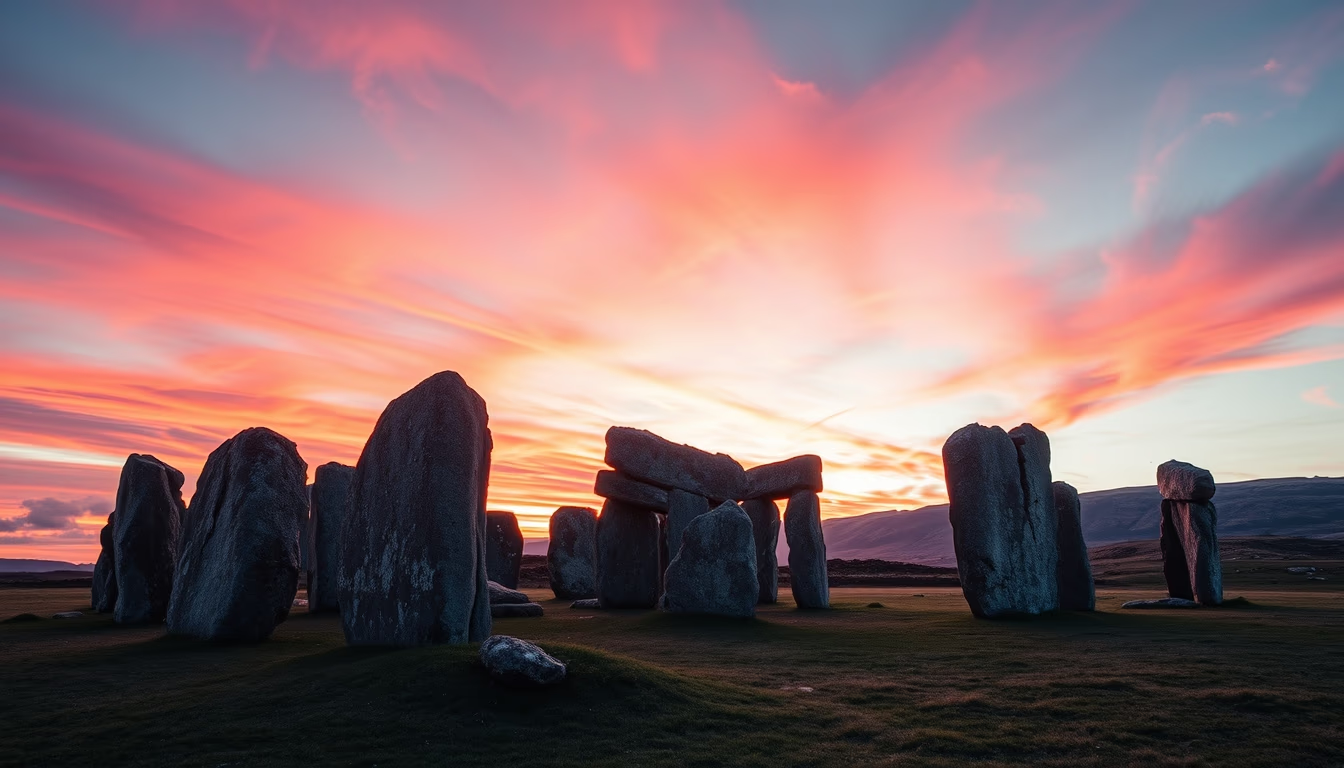
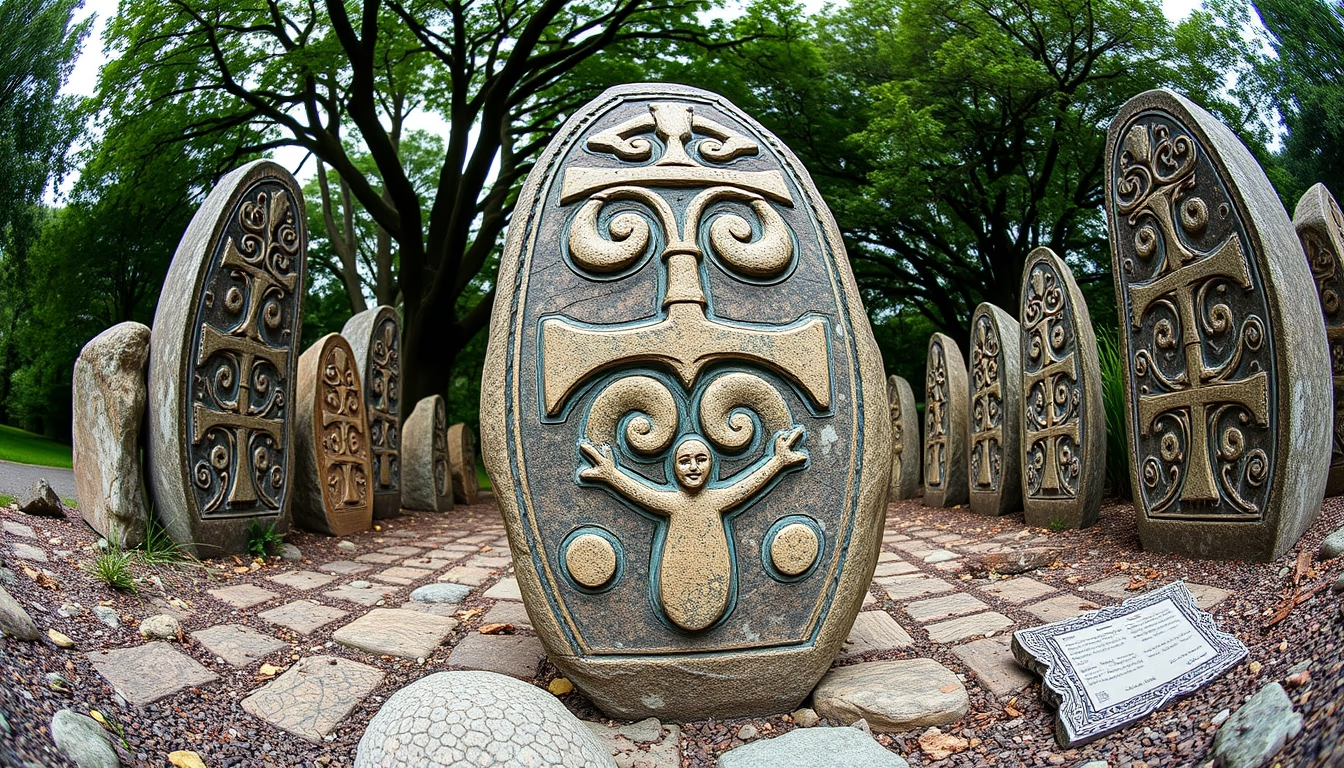
Viking rune stones are stone monuments with runic inscriptions, erected in Scandinavia between the 4th and 12th centuries.
About this subject
Viking rune stones are among the most iconic legacies of the Viking Age. They served as memorials for the deceased, property markers, or records of important events. Most of the approximately 2,500 known stones are found in Sweden, with high concentrations in Uppland and Södermanland. Denmark and Norway have fewer but equally significant examples.
The script used was the runic alphabet, known as Futhark, which evolved over time: the Elder Futhark (24 runes) and the Younger Futhark (16 runes) during the Viking Age. Inscriptions often honor warriors killed in battle or describe expeditions and bridge constructions. A famous example is the Rök Stone in Sweden, which contains the longest known runic inscription, featuring ancient poetic meter and references to Norse mythology.
Culturally, these stones reflect the transition from paganism to Christianity in Scandinavia. Many later stones combine Christian symbols, such as crosses, with runes, showing religious syncretism. Rune stones are invaluable primary sources for linguists and historians, providing insights into Old Norse language and the power strategies of Viking elites.
Interestingly, the most famous rune stone is located in Jelling, Denmark: erected by King Harald Bluetooth in honor of his parents and the conversion of the Danes to Christianity. Beyond Scandinavia, rune stones appear in places like the Isle of Man and the Orkney Islands, attesting to Viking expansion. The carving technique required metal tools and great skill, making each stone a unique work of art and communication.
Frequently Asked Questions
What do Viking runes mean?
Runes are letters of the runic alphabet, used by Germanic peoples, especially Vikings, for inscriptions on stone, wood, and metal. Each rune had a name and symbolism, but its primary meaning was phonetic.
Where can rune stones be found?
Most are in Sweden, Denmark, and Norway. There are also examples in Viking-influenced areas such as the British Isles, Isle of Man, and Greenland.
How are rune stones dated?
Dating relies on rune forms (evolution of the Futhark), artistic style, archaeological context, and sometimes the historical text mentioned in the inscription.
Direct URL
https://pub-c7d6a6ea828543ac903a74a341ccb2e1.r2.dev/imagens/runes-viking-stone-long-exposure-fresh17.avifHow to credit
Include a visible link back to UtilizAí. Copy one of the snippets below:
<a href="https://xn--utiliza-eza.com/en/midia/imagens/runes-viking-stone-long-exposure-fresh17">Runes viking stone</a> by <a href="https://xn--utiliza-eza.com">UtilizAí</a>, licensed under <a href="https://creativecommons.org/licenses/by/4.0/">CC BY 4.0</a>.
[Runes viking stone](https://xn--utiliza-eza.com/en/midia/imagens/runes-viking-stone-long-exposure-fresh17) by [UtilizAí](https://xn--utiliza-eza.com), CC BY 4.0
License: CC-BY-4.0