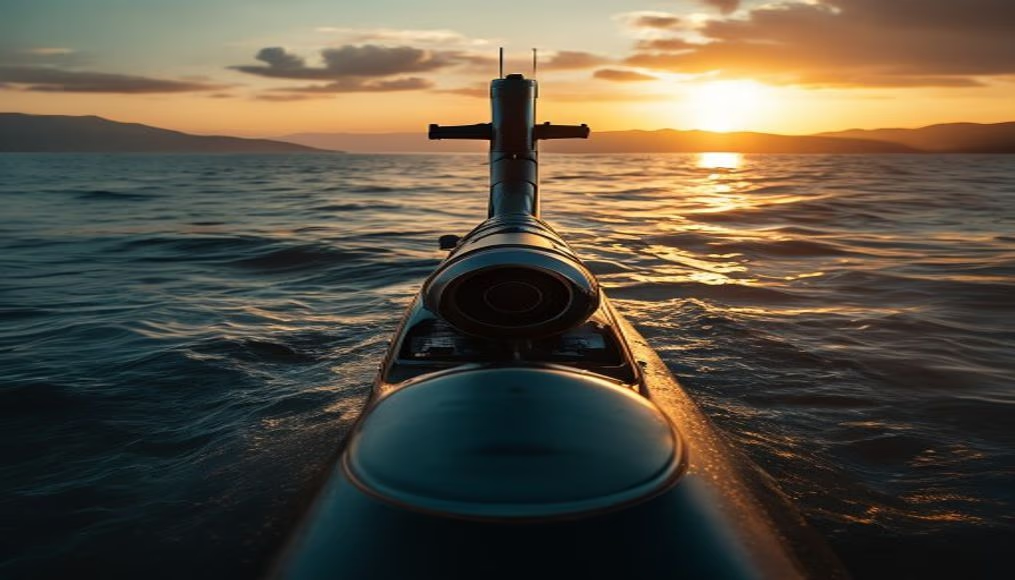
Rowing boat lake morning
1344×768 · AVIF · CC BY 4.0

Rowing boat on a calm lake at dawn. Editorial image depicting the morning practice of rowing, a sport combining technique and connection with nature.
About this subject
Morning rowing on lakes is a practice that combines intense physical exercise with the serenity of nature. The early hours offer calmer waters and milder temperatures, ideal conditions for rowing. Rowing clubs worldwide encourage dawn training, taking advantage of low boat traffic and absence of strong winds. The rhythmic movement of oars on water creates a meditative experience while demanding coordination and strength from the upper body and core.
Rowing boats vary in type and purpose. The skiff is the most common single boat, light and narrow, designed for speed. The double scull accommodates two rowers, each with two oars. There is also the eight with coxswain, typical of competitions. Modern equipment is made of carbon fiber, ensuring rigidity and lightness. Proper technique is essential: the rower must extend the legs, lean the torso, and pull the oars in a fluid motion.
In Brazil, Lagoa Rodrigo de Freitas in Rio de Janeiro is one of the most emblematic spots for rowing, hosting competitions and daily training. Other lakes like Lago Paranoá in Brasília and Guaíba in Porto Alegre are also popular. Internationally, the Cam River in Cambridge and the Thames in London are stages for traditional university regattas. Rowing is one of the oldest Olympic sports, present since 1896 (men) and 1976 (women), demanding discipline and teamwork.
Practicing rowing at dawn offers unique benefits: direct contact with the aquatic ecosystem, observation of local wildlife such as herons and swans, and the chance to witness the sunrise reflected on the water. For many, it is a ritual combining sport and contemplation. The calmness of the lake in the morning contrasts with physical effort, creating a balance between body and mind.
Frequently Asked Questions
What is the difference between Olympic rowing and recreational rowing?
Olympic rowing follows strict FISA rules, with standardized boats (skiff, double, four, eight) and a 2000-meter distance. Recreational rowing is more flexible, using various boat types and distances, without competitive requirements.
Why is dawn the best time for rowing?
In the morning, lakes are usually calmer with less wind and waves, making rowing easier. Temperatures are milder, and there is less boat traffic, providing safety and tranquility.
Which major muscles are used in rowing?
Rowing primarily works the legs (quadriceps and glutes), back (lats and trapezius), arms (biceps and forearms), and core (abs and lower back). It is considered one of the most complete sports, using about 85% of the body's musculature.
Direct URL
https://pub-c7d6a6ea828543ac903a74a341ccb2e1.r2.dev/imagens/rowing-boat-lake-morning-magazine-editorial-p12.avifHow to credit
Include a visible link back to UtilizAí. Copy one of the snippets below:
<a href="https://xn--utiliza-eza.com/en/midia/imagens/rowing-boat-lake-morning-magazine-editorial-p12">Rowing boat lake morning</a> by <a href="https://xn--utiliza-eza.com">UtilizAí</a>, licensed under <a href="https://creativecommons.org/licenses/by/4.0/">CC BY 4.0</a>.
[Rowing boat lake morning](https://xn--utiliza-eza.com/en/midia/imagens/rowing-boat-lake-morning-magazine-editorial-p12) by [UtilizAí](https://xn--utiliza-eza.com), CC BY 4.0
License: CC-BY-4.0