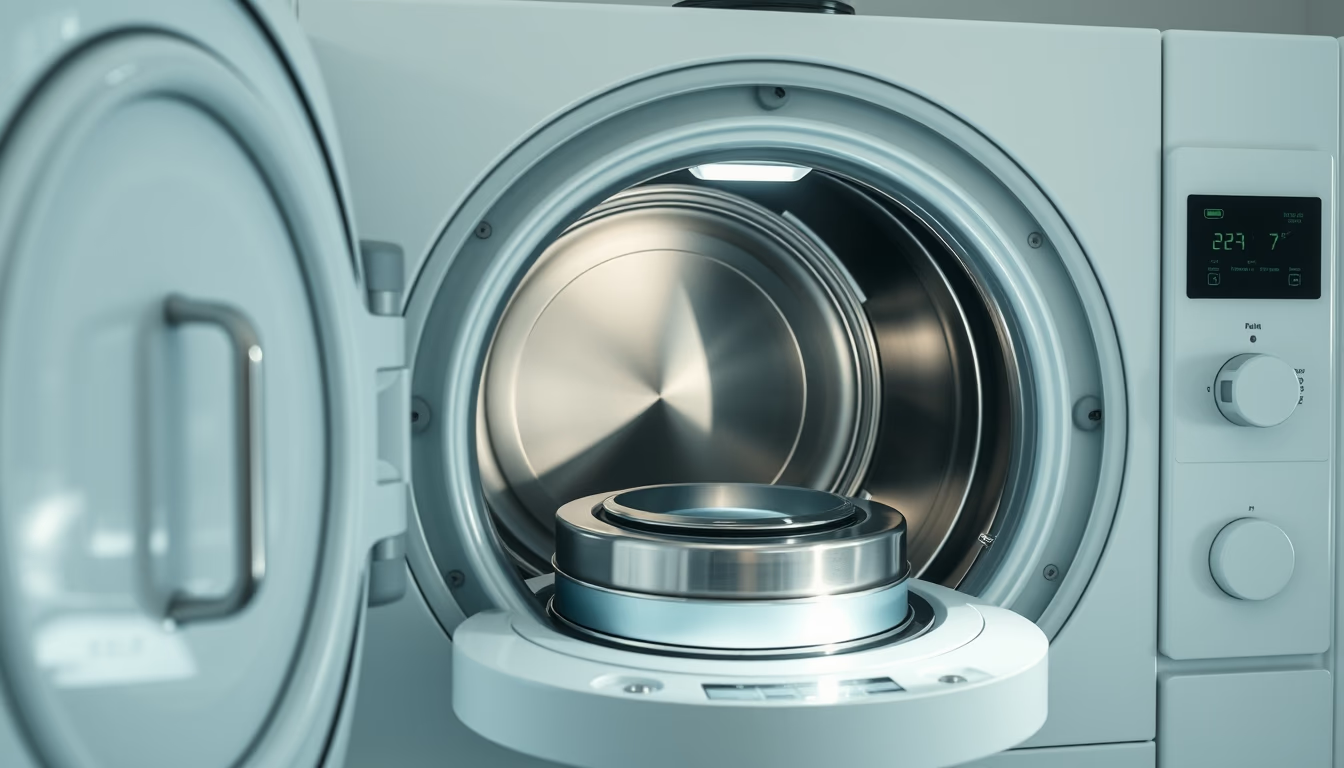
Rotovap evaporator
1344×768 · AVIF · CC BY 4.0

A rotary evaporator (rotovap) is a laboratory device for gentle removal of solvents from samples by evaporation under reduced pressure, widely used in organic chemistry.
About this subject
The rotary evaporator, commonly called a rotovap, is a staple instrument in chemistry laboratories. Its primary function is to remove solvents from a mixture under controlled conditions. It achieves this by combining two principles: rotating the flask to increase the surface area and applying vacuum to lower the solvent's boiling point. This enables gentle evaporation even of high-boiling-point solvents without degrading heat-sensitive compounds.
Invented in 1950 by Lyman C. Craig, the rotovap revolutionized sample preparation. The apparatus consists of a round-bottom flask that rotates while immersed in a heating bath. The vapor is cooled by a condenser and collected in a separate flask. Rotation prevents bumping and creates a thin film on the flask wall, accelerating evaporation.
In practice, rotovaps are used for purifying natural products, in organic synthesis, and in the pharmaceutical industry to concentrate solutions. Their versatility accommodates volumes from milliliters to liters. Vacuum and temperature controls ensure reproducibility, making them essential in any synthetic lab.
Interestingly, the rotovap became widespread with the rise of natural products chemistry in the 1960s and 1970s. Modern models feature digital displays, automatic vacuum systems, and foam sensors, enhancing safety and efficiency.
Frequently Asked Questions
What exactly is a rotary evaporator used for?
A rotary evaporator is used to gently and efficiently remove solvents from samples, typically for concentration or purification purposes in chemistry.
What are typical temperature and vacuum ranges for a rotovap?
Bath temperatures typically range from 20 to 100 °C, and vacuum can go as low as 1 mbar, allowing solvents with high boiling points to evaporate at reduced temperatures.
How do I choose a rotary evaporator for my lab?
Consider sample volume, solvents used, need for digital control, and safety features. Models with motorized lift and foam detection are recommended for heavy use.
Direct URL
https://pub-c7d6a6ea828543ac903a74a341ccb2e1.r2.dev/imagens/rotovap-evaporator-lo-fi-disposable-camera-fresh2.avifHow to credit
Include a visible link back to UtilizAí. Copy one of the snippets below:
<a href="https://xn--utiliza-eza.com/en/midia/imagens/rotovap-evaporator-lo-fi-disposable-camera-fresh2">Rotovap evaporator</a> by <a href="https://xn--utiliza-eza.com">UtilizAí</a>, licensed under <a href="https://creativecommons.org/licenses/by/4.0/">CC BY 4.0</a>.
[Rotovap evaporator](https://xn--utiliza-eza.com/en/midia/imagens/rotovap-evaporator-lo-fi-disposable-camera-fresh2) by [UtilizAí](https://xn--utiliza-eza.com), CC BY 4.0
License: CC-BY-4.0