Rotovap evaporator
1344×768 · AVIF · CC BY 4.0
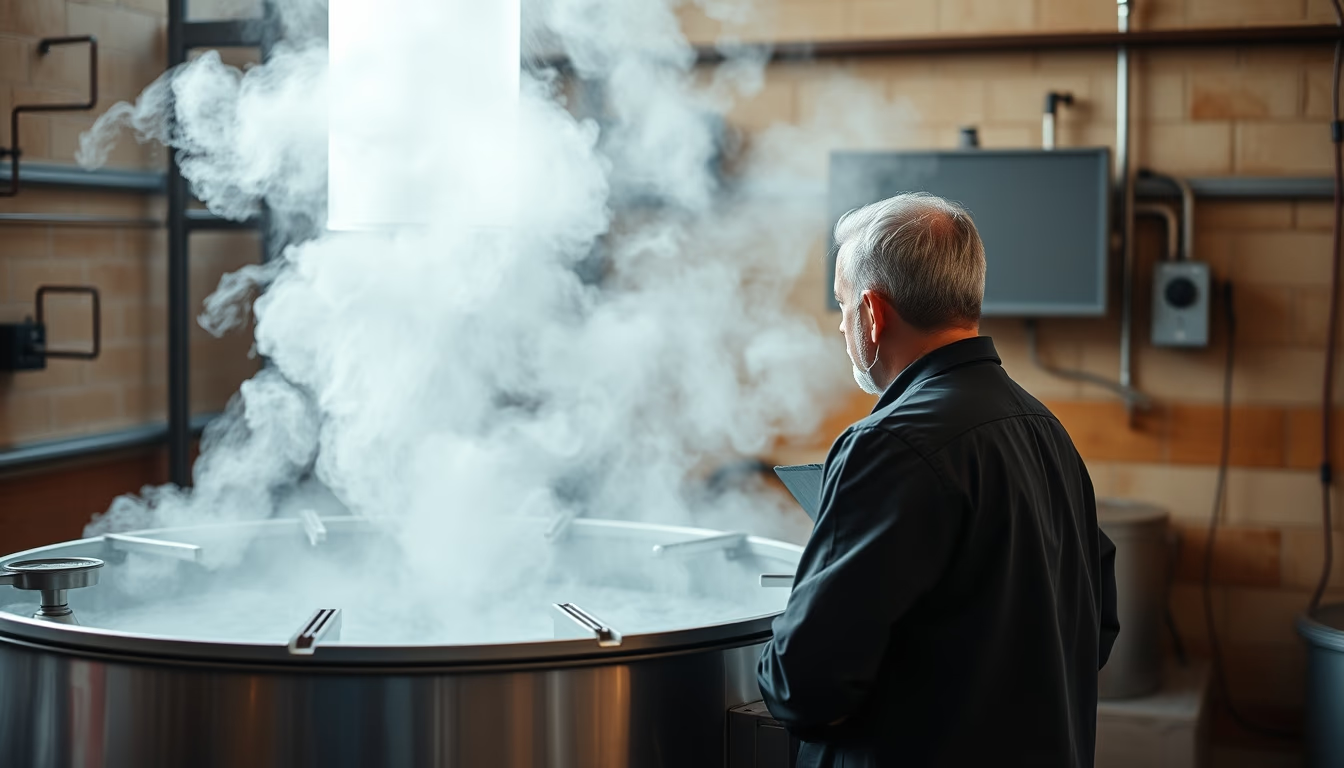
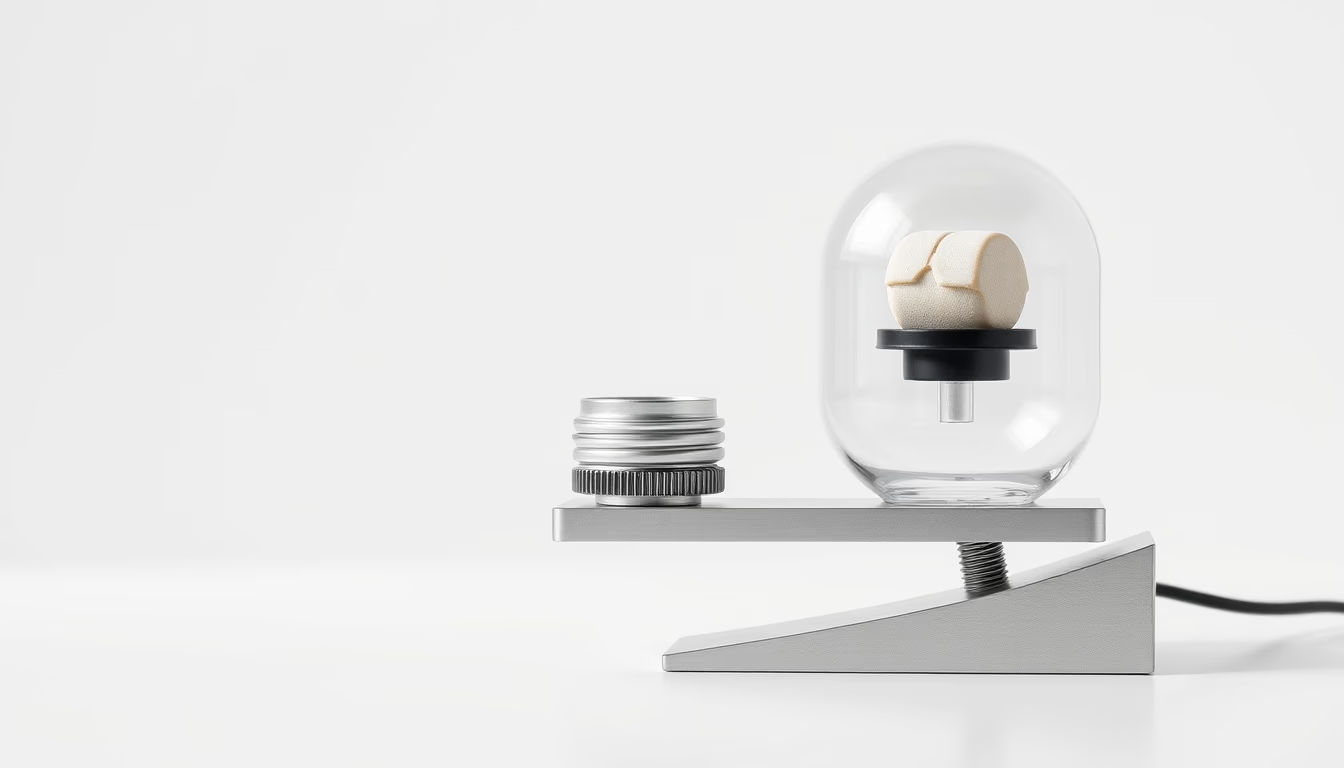
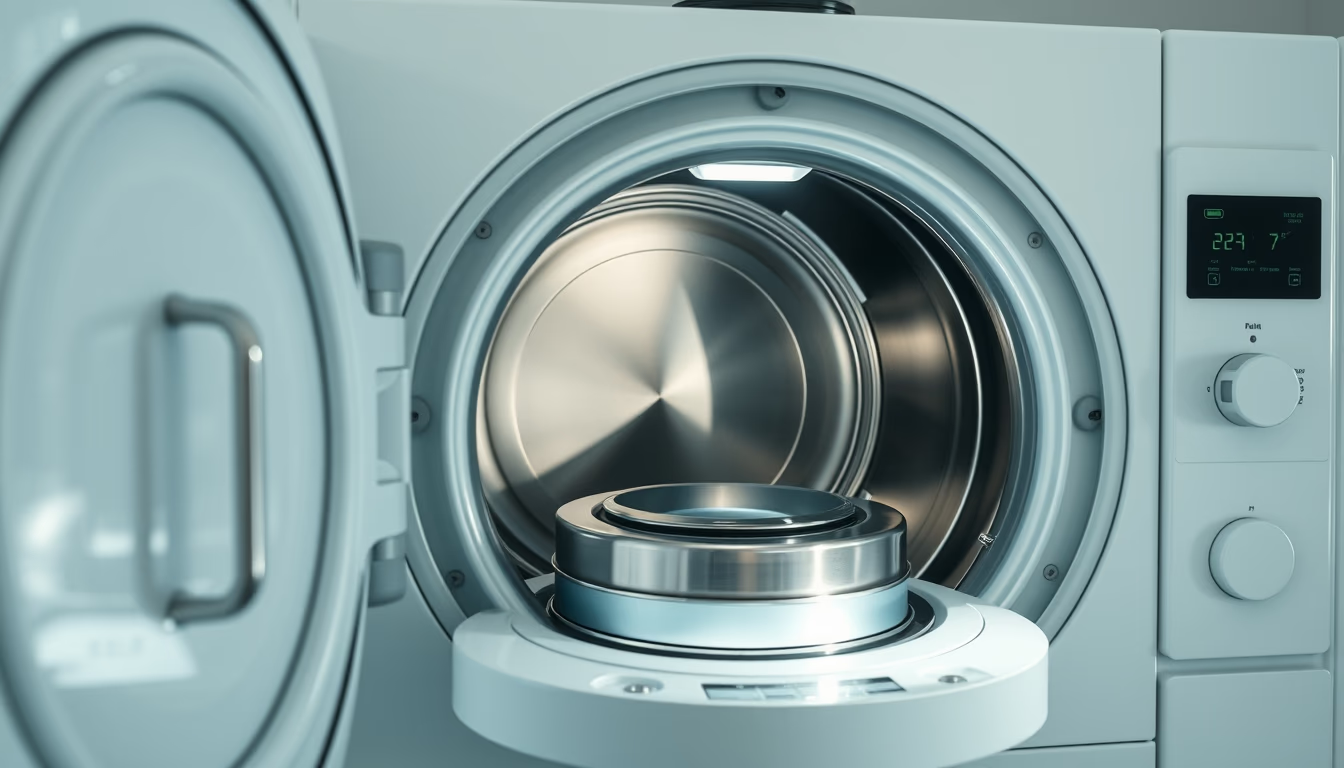
The rotary evaporator is a laboratory device used to remove solvents from samples by evaporation under reduced pressure, widely employed in organic chemistry.
About this subject
The rotary evaporator, commonly known as rotovap, is an essential instrument in organic chemistry, pharmaceutical, and research laboratories. It works on the principle of vacuum distillation: the sample is placed in a rotating flask immersed in a heating bath, while internal pressure is reduced by a vacuum pump. Rotation creates a thin film of solution on the flask wall, increasing surface area and accelerating solvent evaporation. The vapor is then condensed by a cooled condenser and collected in a separate flask. This process allows gentle and efficient solvent removal at lower temperatures, preventing decomposition of heat-sensitive compounds.
The invention of the rotovap was a milestone for modern synthetic chemistry. The first commercial model was developed in the 1950s by the Swiss company Büchi, and it has since become ubiquitous in laboratories worldwide. In Brazil, universities and research institutions such as USP and Unicamp widely use this equipment in their chemistry departments. The ability to recover solvents also contributes to more sustainable and economical laboratory practices.
Interestingly, beyond chemistry, the rotovap has found applications in other fields, such as the food industry for juice concentration and the production of medicinal plant extracts. Rotation speed, bath temperature, and vacuum level are critical parameters that must be adjusted based on solvent volatility and compound sensitivity. Operation manuals recommend specific precautions, such as using high-vacuum grease on joints and periodically checking the sealing system.
Rotary evaporation is also used in purification procedures, like removing water from dry organic solvents. Process efficiency depends on rotation rate, pressure, and temperature. Many laboratories equip rotovaps with digital controllers to ensure reproducibility. Additionally, using cold finger or serpentine condensers can improve recovery of low-boiling solvents. Despite its apparent simplicity, the rotovap is a powerful tool that requires proper training to avoid accidents, such as flask implosions due to excessive vacuum.
Frequently Asked Questions
What is the difference between a rotary evaporator and a simple distillation setup?
A rotary evaporator operates under reduced pressure, allowing evaporation at lower temperatures. The rotation also creates a thin film that increases surface area, making the process faster and gentler than simple distillation.
What types of solvents can be removed with a rotovap?
The rotovap can remove a wide range of organic solvents such as ethanol, methanol, acetone, dichloromethane, and hexane. Solvents with very high or very low boiling points may require special adjustments of vacuum and temperature.
Is it safe to use a rotovap for air- or moisture-sensitive compounds?
Yes, provided that the system is assembled with appropriate connections and an inert gas flow, such as nitrogen, is used to prevent contact with oxygen or moisture. Specific adapters allow addition of reagents or collection of fractions under an inert atmosphere.
Direct URL
https://pub-c7d6a6ea828543ac903a74a341ccb2e1.r2.dev/imagens/rotovap-evaporator-documentary-photography-fresh9.avifHow to credit
Include a visible link back to UtilizAí. Copy one of the snippets below:
<a href="https://xn--utiliza-eza.com/en/midia/imagens/rotovap-evaporator-documentary-photography-fresh9">Rotovap evaporator</a> by <a href="https://xn--utiliza-eza.com">UtilizAí</a>, licensed under <a href="https://creativecommons.org/licenses/by/4.0/">CC BY 4.0</a>.
[Rotovap evaporator](https://xn--utiliza-eza.com/en/midia/imagens/rotovap-evaporator-documentary-photography-fresh9) by [UtilizAí](https://xn--utiliza-eza.com), CC BY 4.0
License: CC-BY-4.0