Rotovap evaporator
1344×768 · AVIF · CC BY 4.0
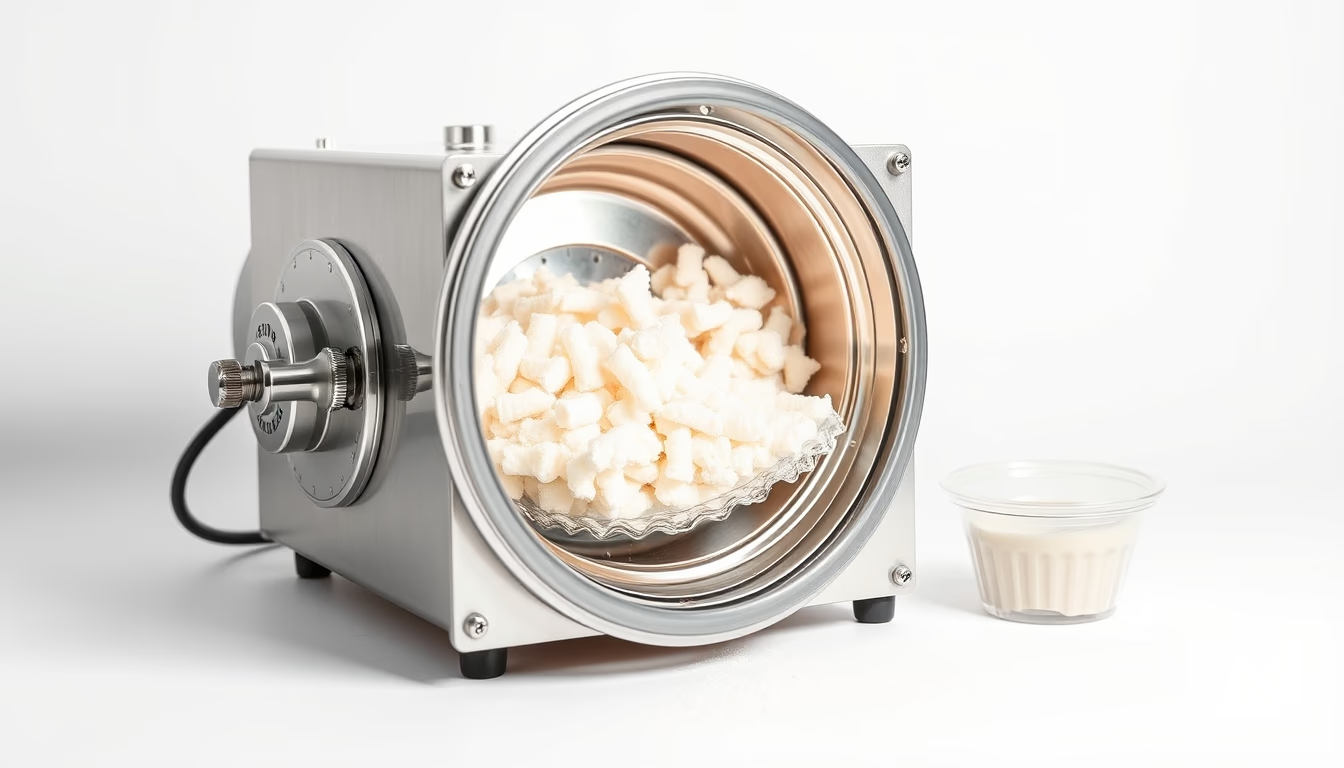
The rotary evaporator (rotovap) is a laboratory instrument used to remove solvents from samples by evaporation under reduced pressure.
About this subject
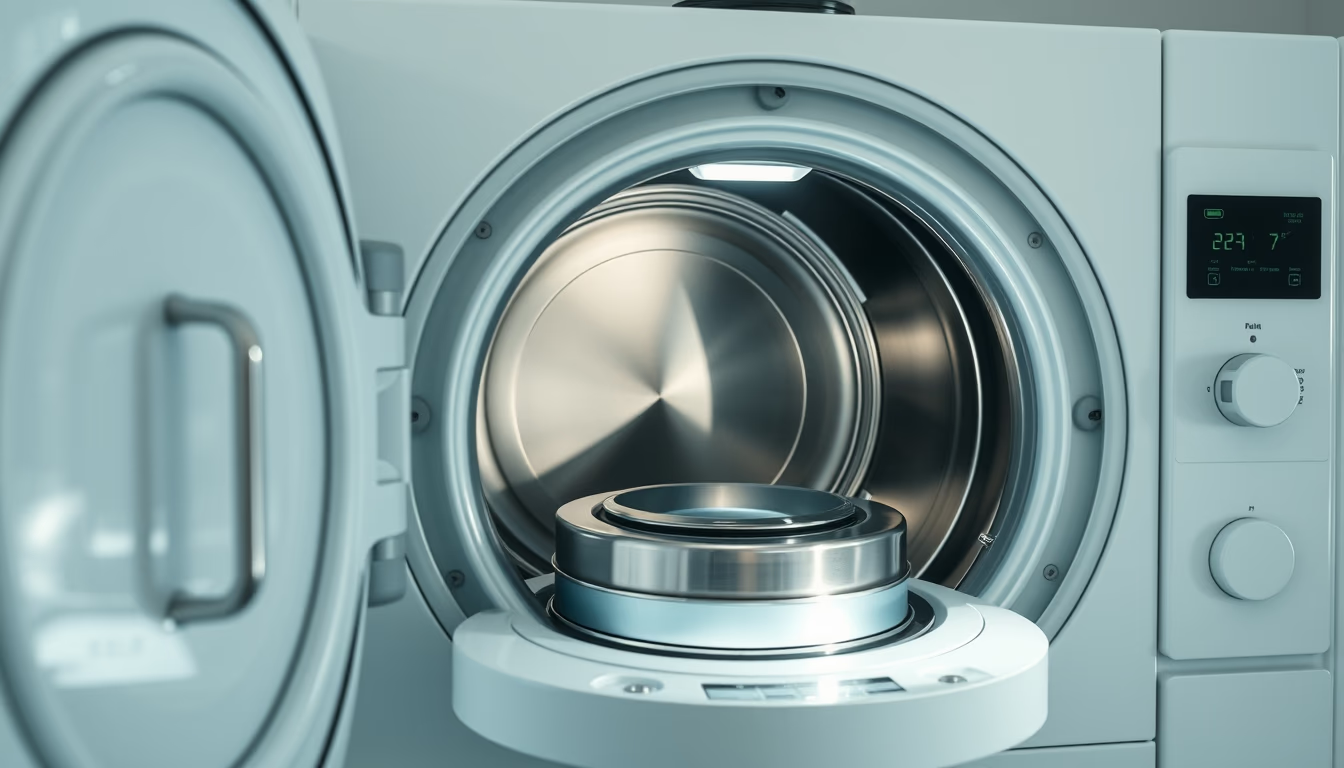
The rotary evaporator, commonly called rotovap, is a staple in organic and pharmaceutical laboratories. It operates by rotating a flask containing the sample while applying gentle heat, forming a thin film that enhances solvent evaporation. The system works under reduced vacuum, lowering the solvent's boiling point and enabling evaporation at lower temperatures, protecting heat-sensitive compounds. The vapor condenses in a chilled condenser and collects in a separate flask.
Invented in the 1950s by Swiss chemist Walter Büchi, the rotovap became the gold standard for solvent removal in synthesis and purification. Its key advantage is efficient removal of volatile solvents without degrading the target product. Modern versions feature digital controls for temperature and rotation, as well as automated vacuum systems. Typical rotation speeds range from 20 to 300 rpm, and bath temperatures can reach up to 100 °C.
Rotary evaporators are widely used in the pharmaceutical industry to concentrate solutions after reactions and in natural product extraction. In research labs, they are common for solvent recovery, reducing costs and environmental footprint. Proper maintenance includes ensuring good vacuum seals and cleaning condensers to avoid cross-contamination.
Frequently Asked Questions
What is the difference between a rotovap and a common evaporator?
A rotovap uses rotation and vacuum to evaporate solvents at lower temperatures, protecting heat-sensitive compounds. Common evaporators lack rotation and operate at atmospheric pressure, requiring higher temperatures.
Which solvents can be removed with a rotovap?
Volatile solvents such as dichloromethane, ethanol, acetone, and hexane are typical. The choice depends on vapor pressure and bath temperature. High-boiling solvents require stronger vacuum.
How to avoid sample loss during evaporation?
Use an appropriately sized flask, adjust rotation to prevent splashing, and control bath temperature to avoid violent boiling. Adding an antifoam agent can also help.
Direct URL
https://pub-c7d6a6ea828543ac903a74a341ccb2e1.r2.dev/imagens/rotovap-evaporator-commercial-product-photography-fresh17.avifHow to credit
Include a visible link back to UtilizAí. Copy one of the snippets below:
<a href="https://xn--utiliza-eza.com/en/midia/imagens/rotovap-evaporator-commercial-product-photography-fresh17">Rotovap evaporator</a> by <a href="https://xn--utiliza-eza.com">UtilizAí</a>, licensed under <a href="https://creativecommons.org/licenses/by/4.0/">CC BY 4.0</a>.
[Rotovap evaporator](https://xn--utiliza-eza.com/en/midia/imagens/rotovap-evaporator-commercial-product-photography-fresh17) by [UtilizAí](https://xn--utiliza-eza.com), CC BY 4.0
License: CC-BY-4.0