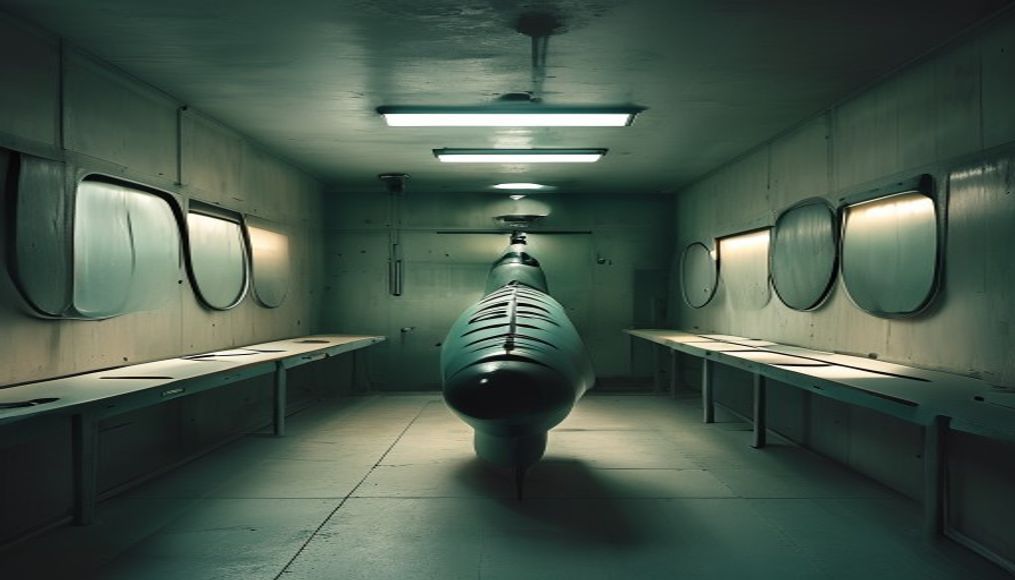
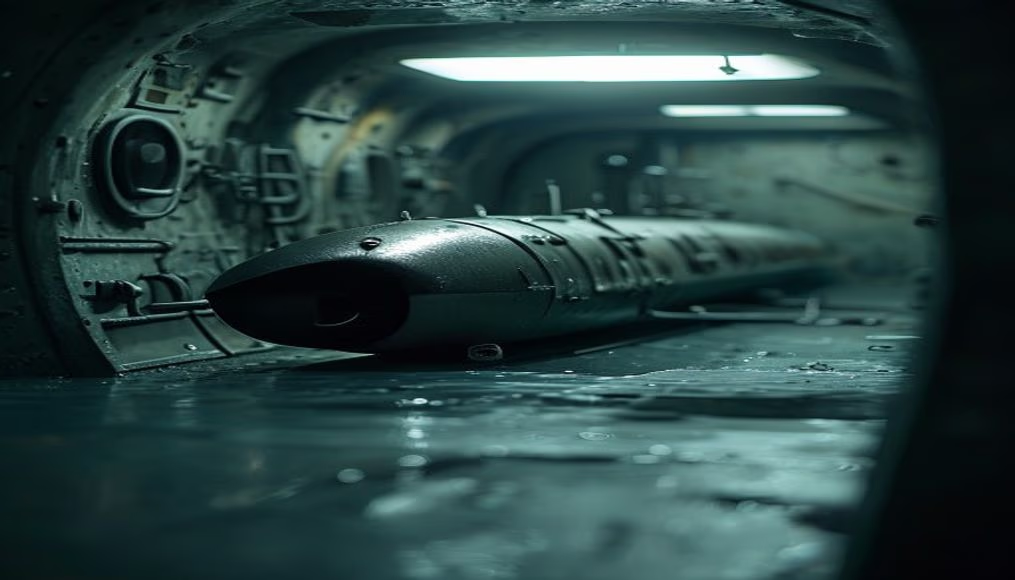
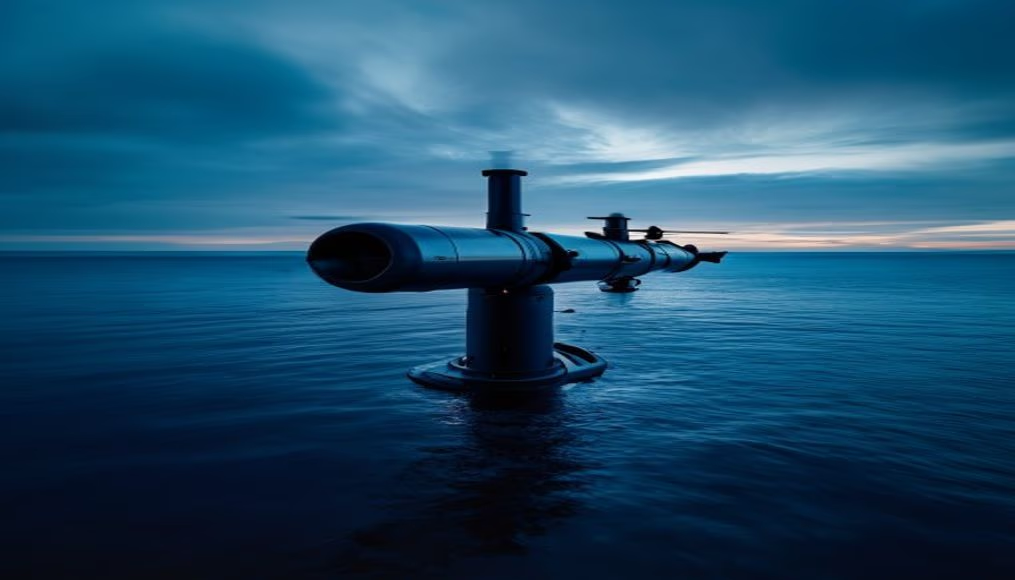
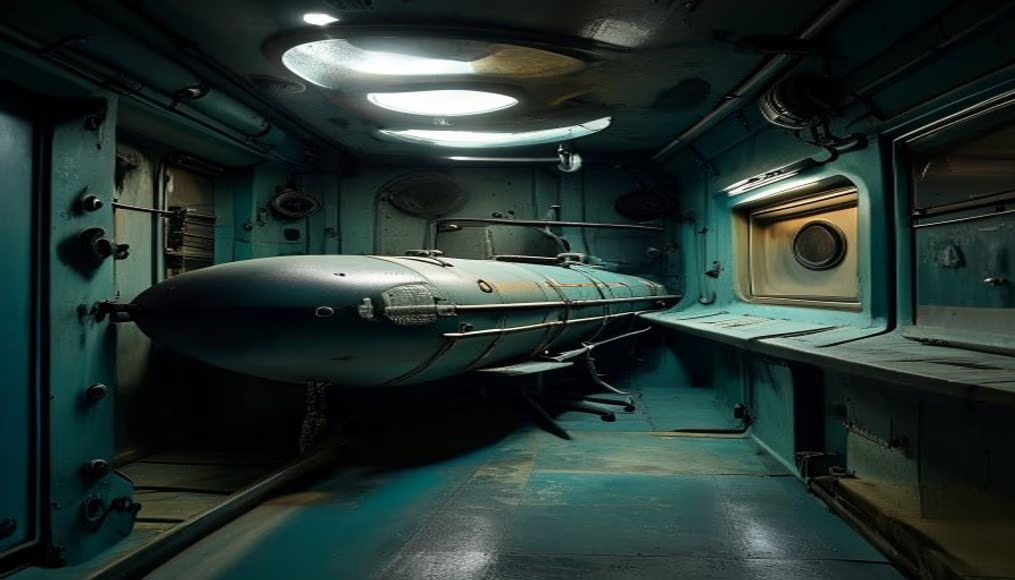
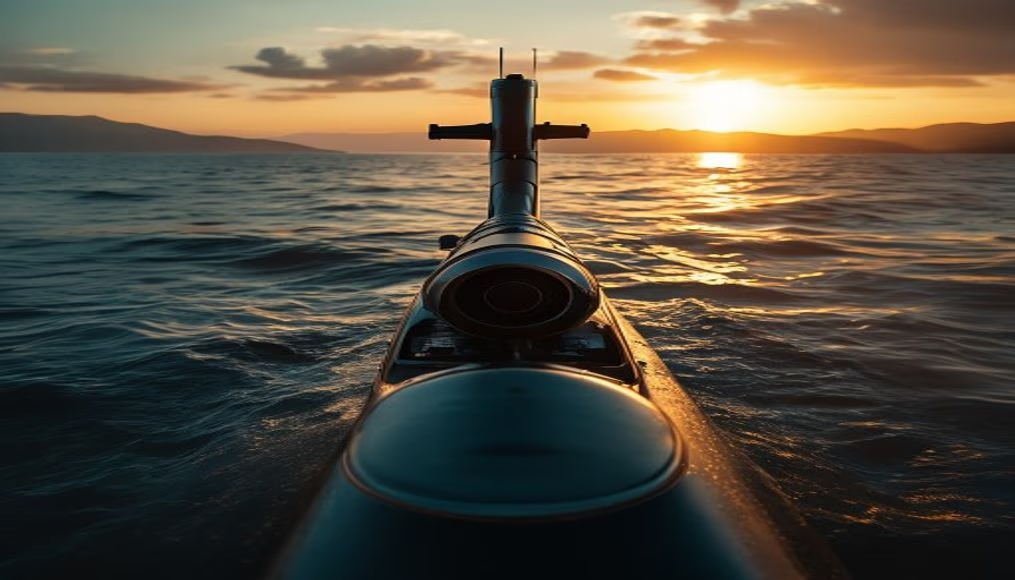
Research vessel ocean
1344×768 · AVIF · CC BY 4.0
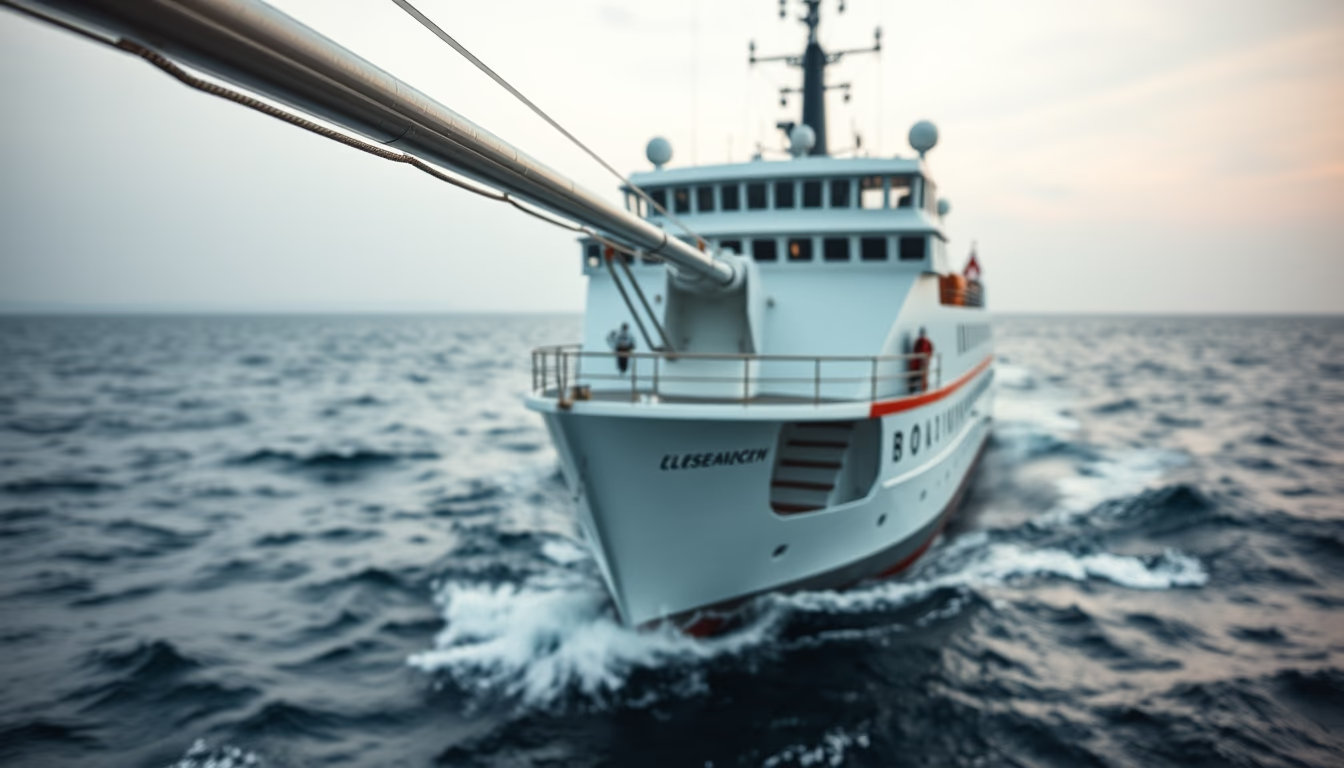
Oceanographic research vessels are specialized ships that collect scientific data across the oceans, crucial for climate and biological studies.
About this subject
Oceanographic research vessels are mobile platforms equipped with laboratories, winches, sonars, and other instruments to study the marine environment. They perform water and sediment sampling, map the seafloor, monitor currents and weather, and support research in marine biology, geology, and chemistry. Notable ships like the RRS Discovery (UK) and NOAAS Ronald H. Brown (USA) are famous for expeditions that revealed hydrothermal vent ecosystems or measured climate change impacts on oceans.
The global research vessel fleet is coordinated by institutions such as UNESCO and NOAA, sharing data through programs like Argo (profiling floats) and GO-SHIP (repeated hydrographic surveys). Brazil operates vessels like NPqHo Vital de Oliveira, which supports studies in the Santos Basin and the Amazon Continental Margin. These ships work for weeks or months under harsh conditions and are essential for validating climate models and forecasting natural disasters.
Modern oceanographic research began with the HMS Challenger expedition (1872-1876), which collected thousands of species and samples. Today, ships like JOIDES Resolution drill the seafloor to recover sediment cores revealing climate history. Autonomy and payload capacity define vessel types: some carry ROVs (remotely operated vehicles) or manned submersibles, like Alvin, which explored the Titanic. Despite advances in autonomous sensors, research vessels remain irreplaceable for complex experiments and physical sample collection.
Frequently Asked Questions
What is the main function of an oceanographic research vessel?
To collect scientific data about the ocean, including water and sediment samples, current measurements, seafloor mapping, and marine life studies, crucial for climate and environmental research.
What are some famous examples of research vessels?
The HMS Challenger (first modern oceanographic expedition), RRS Discovery (UK), JOIDES Resolution (drilling), and Alvin (manned submersible).
How do research vessels contribute to climate change studies?
They monitor temperature, salinity, pH, and ocean circulation, and recover sediment cores that record past climate, helping to validate climate models.
Direct URL
https://pub-c7d6a6ea828543ac903a74a341ccb2e1.r2.dev/imagens/research-vessel-ocean-documentary-photography-p3.avifHow to credit
Include a visible link back to UtilizAí. Copy one of the snippets below:
<a href="https://xn--utiliza-eza.com/en/midia/imagens/research-vessel-ocean-documentary-photography-p3">Research vessel ocean</a> by <a href="https://xn--utiliza-eza.com">UtilizAí</a>, licensed under <a href="https://creativecommons.org/licenses/by/4.0/">CC BY 4.0</a>.
[Research vessel ocean](https://xn--utiliza-eza.com/en/midia/imagens/research-vessel-ocean-documentary-photography-p3) by [UtilizAí](https://xn--utiliza-eza.com), CC BY 4.0
License: CC-BY-4.0