Research vessel ocean
1344×768 · AVIF · CC BY 4.0
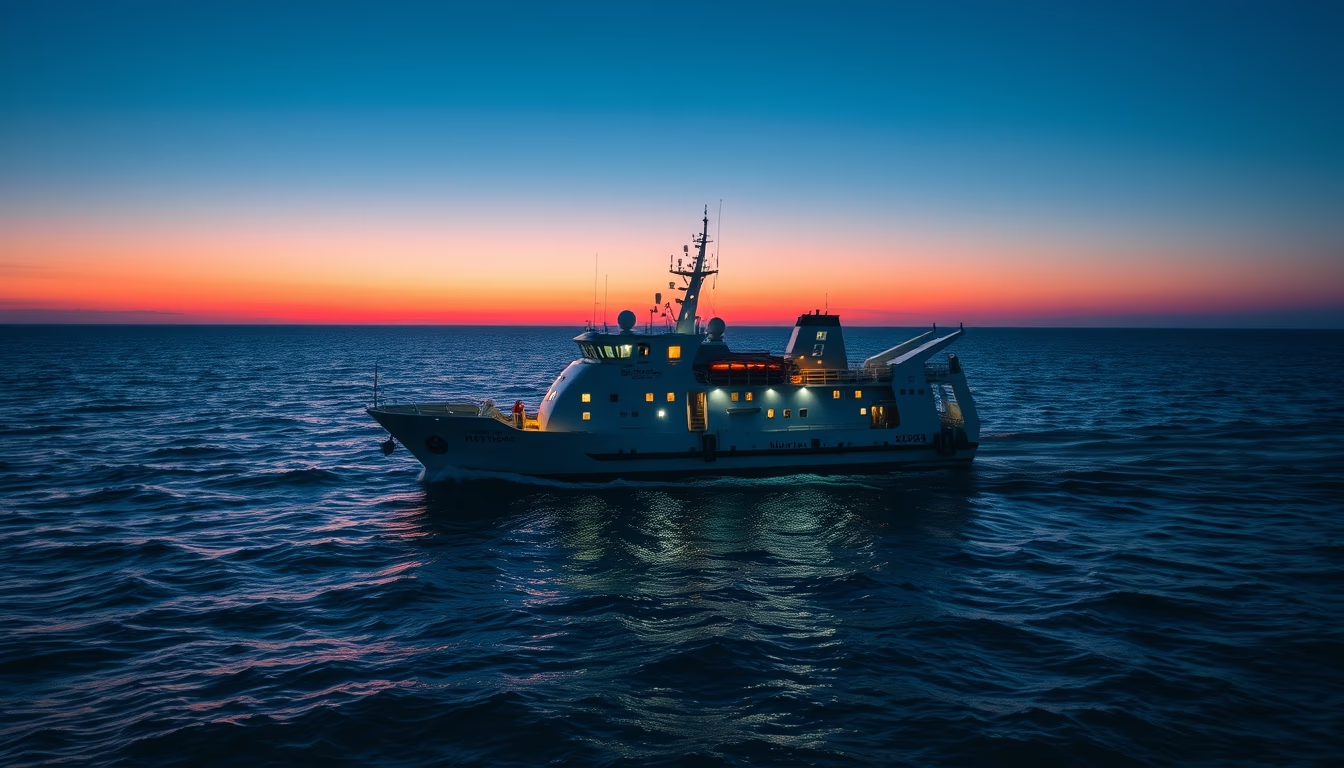
An oceanographic research vessel serves as a floating laboratory for marine, climate and geological research, enabling deep-sea studies worldwide.
About this subject
Oceanographic research vessels are ships specially designed to conduct scientific investigations at sea. They function as floating laboratories equipped with advanced instruments for collecting water, sediment, and biological samples, as well as sensors to measure physical, chemical, and biological parameters of the ocean. These platforms are crucial for climate change studies, seafloor mapping, marine biodiversity monitoring, and prospecting natural resources such as oil and minerals.
The global fleet of research vessels is estimated at around 1,500 ships, operated by research institutes, universities, and government agencies from different countries. In Brazil, one notable example is the NPqHo Vital de Oliveira, a research vessel operated by the Brazilian Navy in partnership with CNPq, which conducts expeditions along the Brazilian coast and the South Atlantic. These ships are equipped with dynamic positioning systems that allow them to maintain an exact position over a study site, even under adverse sea and wind conditions.
An interesting fact is that the world's largest seismic research vessel, the RV Marcus Langseth operated by Columbia University, is 70 meters long and uses compressed air guns to generate seismic waves that penetrate the seafloor, enabling mapping of deep geological structures. Other ships like the RV Kilo Moana use twin-hull SWATH technology for greater stability in rough seas, facilitating precise data collection. The importance of these vessels extends beyond science: they also support fisheries management, climate phenomenon prediction such as El Niño, and sustainable ocean exploration.
Frequently Asked Questions
How many research vessels are there in the world?
There are an estimated 1,500 oceanographic research vessels operating globally, owned by research institutes, universities, and governments.
How does an oceanographic vessel collect samples from the seafloor?
It uses equipment such as dredges, core samplers, and remotely operated vehicles (ROVs) to collect sediments and rocks from the ocean floor.
What is the largest research vessel in Brazil?
The NPqHo Vital de Oliveira is one of Brazil's main research ships, 75 meters long, operated by the Brazilian Navy and capable of deep-sea oceanographic expeditions.
Direct URL
https://pub-c7d6a6ea828543ac903a74a341ccb2e1.r2.dev/imagens/research-vessel-ocean-aerial-drone-shot-p6.avifHow to credit
Include a visible link back to UtilizAí. Copy one of the snippets below:
<a href="https://xn--utiliza-eza.com/en/midia/imagens/research-vessel-ocean-aerial-drone-shot-p6">Research vessel ocean</a> by <a href="https://xn--utiliza-eza.com">UtilizAí</a>, licensed under <a href="https://creativecommons.org/licenses/by/4.0/">CC BY 4.0</a>.
[Research vessel ocean](https://xn--utiliza-eza.com/en/midia/imagens/research-vessel-ocean-aerial-drone-shot-p6) by [UtilizAí](https://xn--utiliza-eza.com), CC BY 4.0
License: CC-BY-4.0