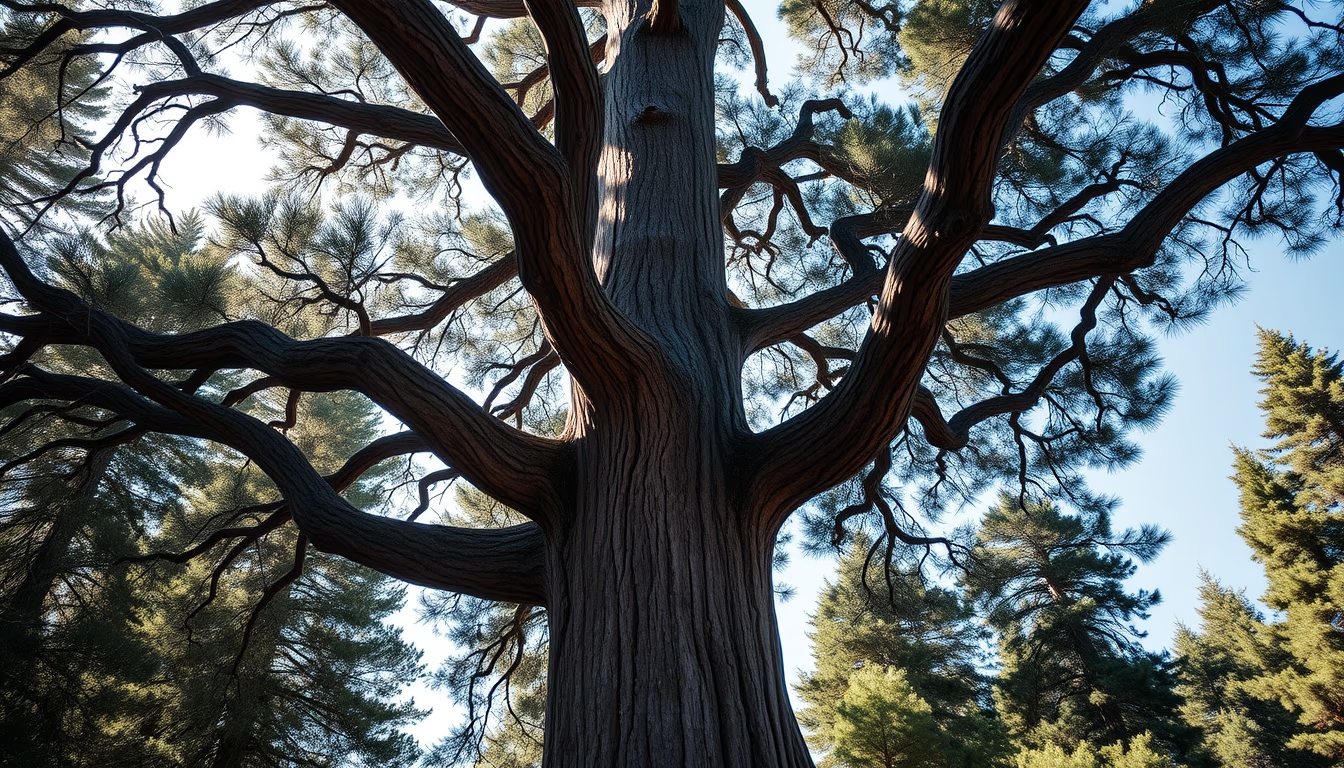
Redwood forest california
1344×768 · AVIF · CC BY 4.0
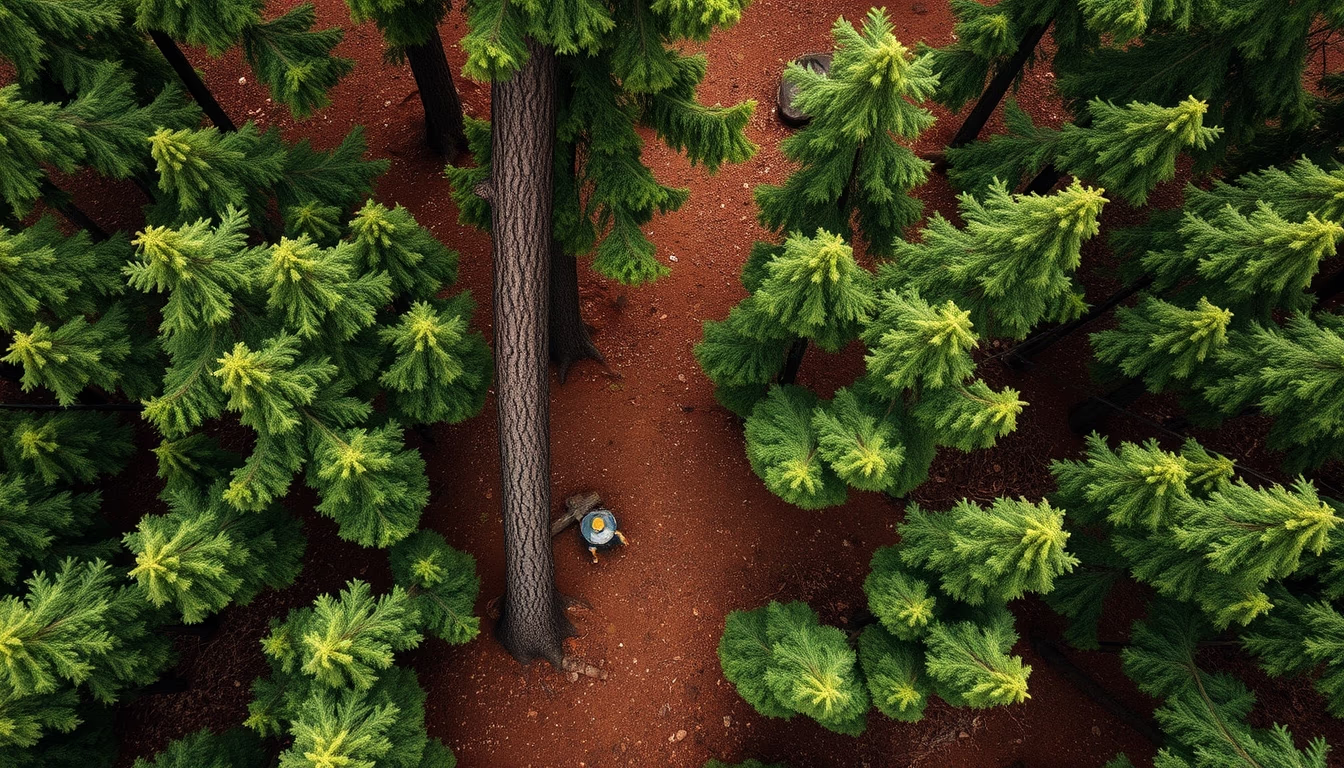
Discover the redwood forests of California, giant trees that are among the tallest and oldest living organisms on Earth.
About this subject
California's redwood forests are dominated by two species: the coast redwood (Sequoia sempervirens) and the giant sequoia (Sequoiadendron giganteum). The coast redwood is the tallest tree species, reaching over 115 meters, while the giant sequoia is the most voluminous, with trunks exceeding 11 meters in diameter. These trees naturally occur in a narrow coastal strip from Oregon to central California, thriving in the humid climate and frequent fog.
The ecological and cultural importance of redwood forests is immense. They host complex ecosystems with ferns, mosses, and diverse wildlife, including black bears, mule deer, and numerous bird species. For indigenous peoples such as the Yurok and Miwok, redwoods hold spiritual significance and were used for buildings and canoes. In the 19th and 20th centuries, logging drastically reduced the original coverage, which now represents less than 5% of pre-colonization levels.
Preservation efforts began with the creation of Sequoia National Park in 1890, followed by state and national parks like Redwood National and State Parks. Together, they protect about 45% of remaining coast redwoods. Notably, some giant sequoias are over 3,000 years old, such as General Sherman, the largest living organism by volume. These forests also act as carbon sinks, storing enormous amounts of CO2.
Sustainable tourism is encouraged, with trails like the Tall Trees Trail and Big Trees Trail. Visitors must take care not to compact soil or damage shallow roots. Redwoods are fire-resistant due to thick bark and low resin, but climate change poses increasing threats through drought and more intense wildfires. Recent studies show that growth rates are accelerating due to higher CO2 levels, though water stress may limit benefits.
Frequently Asked Questions
What is the difference between coast redwoods and giant sequoias?
Coast redwoods (Sequoia sempervirens) are the tallest, reaching up to 115 m, and grow along the Pacific coast. Giant sequoias (Sequoiadendron giganteum) are more massive, with trunks up to 11 m in diameter, and are found only on the western slopes of the Sierra Nevada.
Where can I see the largest redwoods in California?
The largest giant sequoias are in Sequoia National Park and Kings Canyon National Park, including General Sherman. The tallest coast redwoods, like Hyperion, are in Redwood National and State Parks, but their exact locations are kept secret to protect them.
Are redwoods threatened by global warming?
Yes, climate change increases the frequency and intensity of droughts and wildfires, which can damage redwoods. Although they are fire-adapted, extreme fires can be lethal. Additionally, coastal fog, vital for coast redwoods, is diminishing.
Direct URL
https://pub-c7d6a6ea828543ac903a74a341ccb2e1.r2.dev/imagens/redwood-forest-california-isometric-flat-lay-p2.avifHow to credit
Include a visible link back to UtilizAí. Copy one of the snippets below:
<a href="https://xn--utiliza-eza.com/en/midia/imagens/redwood-forest-california-isometric-flat-lay-p2">Redwood forest california</a> by <a href="https://xn--utiliza-eza.com">UtilizAí</a>, licensed under <a href="https://creativecommons.org/licenses/by/4.0/">CC BY 4.0</a>.
[Redwood forest california](https://xn--utiliza-eza.com/en/midia/imagens/redwood-forest-california-isometric-flat-lay-p2) by [UtilizAí](https://xn--utiliza-eza.com), CC BY 4.0
License: CC-BY-4.0