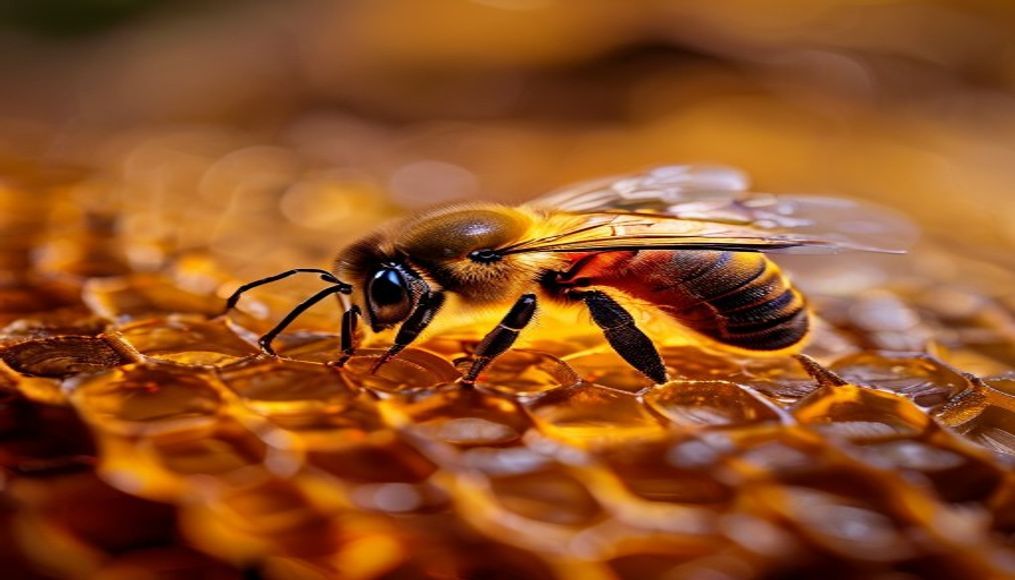
Queen bee macro
1344×768 · JPG · CC BY 4.0
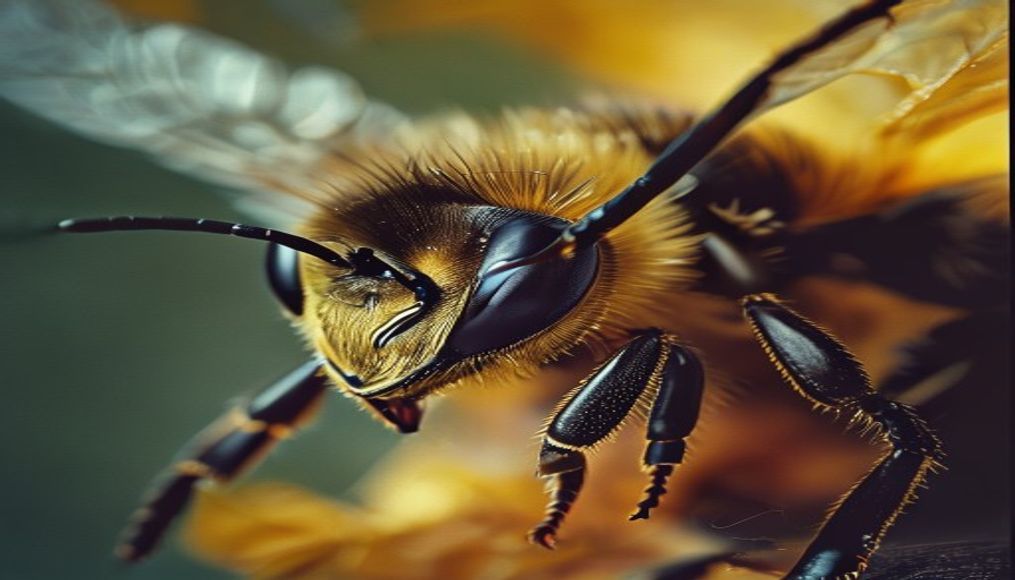
Detailed macro of a queen bee, revealing distinctive features that set her apart from worker bees in the hive.
About this subject
The queen bee is the only fertile individual in a colony of Apis mellifera, responsible for ensuring population continuity through egg laying. Unlike worker bees, she has a more elongated abdomen, shorter wings that do not cover the entire abdomen, and a smooth stinger that allows her to sting multiple times without dying. Her development is accelerated: the egg that will become a queen hatches in 16 days, compared to 21 days for workers. This advantage is due to exclusive feeding with royal jelly throughout the larval stage.
In a healthy hive, the queen can live from 2 to 5 years, while workers live only a few weeks in summer. During peak season, she lays up to 2,000 eggs per day, an impressive metabolic feat. Communication between queen and colony is via pheromones: the queen's mandibular pheromone inhibits worker ovary development and attracts workers to tend her. When the queen ages or fails, workers initiate the rearing of new queens in special queen cells.
The queen does not rule the hive; she is actually a 'laying machine' directed by colony pheromones and needs. Under natural conditions, a new queen emerges and kills rivals still inside their queen cells. The virgin queen undertakes a mating flight where she mates with multiple drones (up to 20), storing enough sperm for life. The presence of a vigorous queen indicates a productive colony; experienced beekeepers assess her quality by laying pattern and absence of diseases.
Frequently Asked Questions
How to visually identify the queen bee in a hive?
The queen is larger than workers, with a long pointed abdomen, shorter wings that do not cover the abdomen, and splayed legs. She is often surrounded by a retinue of workers that feed and groom her.
What is the main function of the queen bee in the colony?
Her primary role is egg laying, ensuring replacement of workers, drones, and new queens. She also produces pheromones that regulate worker behavior and reproduction.
How long does a queen bee live?
On average 2 to 5 years, up to 7 years under ideal conditions. Her longevity far exceeds that of workers due to royal jelly feeding and continuous protection by the swarm.
Direct URL
https://pub-c7d6a6ea828543ac903a74a341ccb2e1.r2.dev/imagens/queen-bee-macro-film-grain-authentic-p4.jpgHow to credit
Include a visible link back to UtilizAí. Copy one of the snippets below:
<a href="https://xn--utiliza-eza.com/en/midia/imagens/queen-bee-macro-film-grain-authentic-p4">Queen bee macro</a> by <a href="https://xn--utiliza-eza.com">UtilizAí</a>, licensed under <a href="https://creativecommons.org/licenses/by/4.0/">CC BY 4.0</a>.
[Queen bee macro](https://xn--utiliza-eza.com/en/midia/imagens/queen-bee-macro-film-grain-authentic-p4) by [UtilizAí](https://xn--utiliza-eza.com), CC BY 4.0
License: CC-BY-4.0