Pricing tier comparison
1344×768 · AVIF · CC BY 4.0

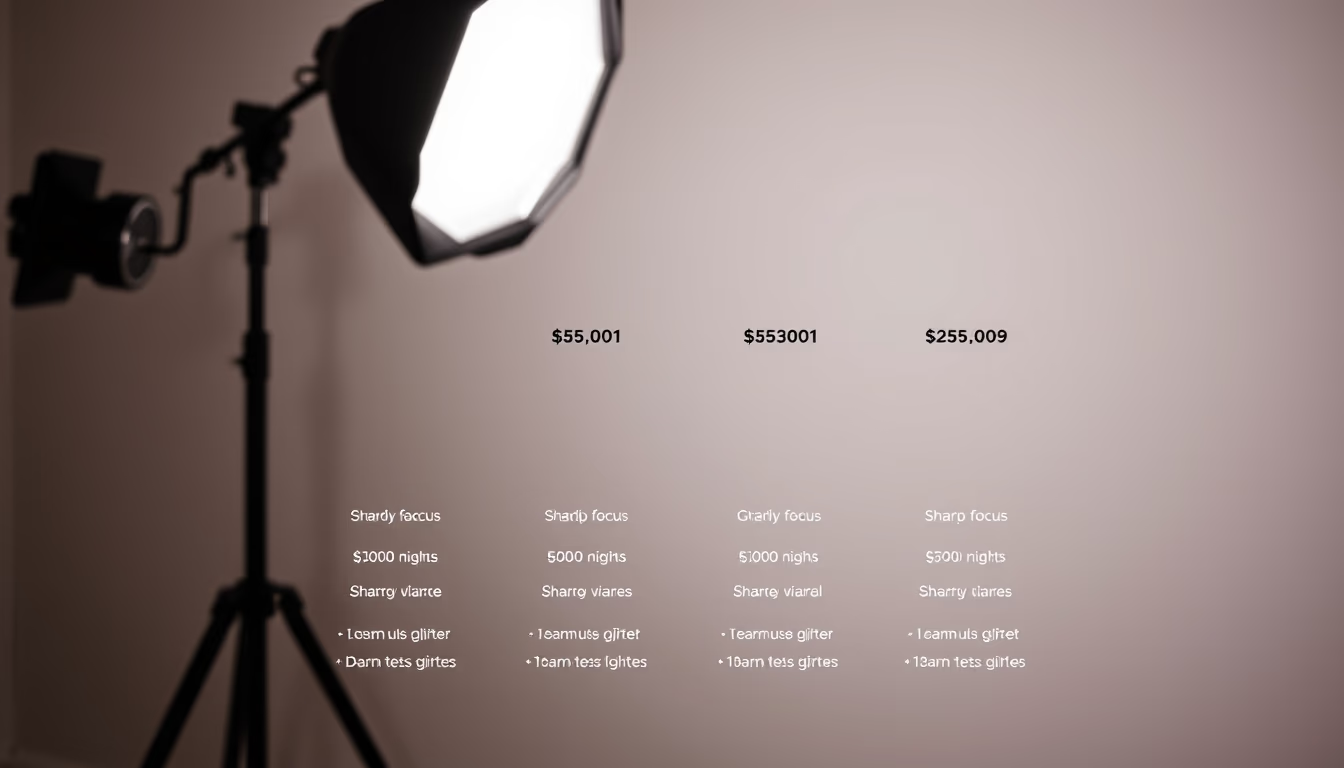
SaaS pricing tier comparison highlights the importance of aligning features, usage limits, and cost for different customer profiles.
About this subject
SaaS pricing tier models are widely used to segment the market and capture different willingness to pay. Companies like Slack, HubSpot, and Salesforce structure their plans from free to premium tiers, each with specific feature sets, user limits, and support levels. Choosing the right tier directly impacts cost-effectiveness, requiring a careful needs assessment.
Each tier offers a distinct package: free or freemium plans serve as entry points for user acquisition, while paid tiers progressively unlock more storage, integrations, and advanced analytics. Strategies such as the decoy effect are employed in pricing tables to influence consumer decisions, making a premium plan appear more attractive. Behavioral studies show that the visual presentation of the table, with a highlighted recommended plan, can increase conversion rates.
In Brazil, SaaS companies like RD Station and Pipefy also adopt pricing tiers, adapting them to the local market with BRL pricing and Portuguese support. Price transparency is critical for trust; customers value clarity on what they are paying for and easily compare offerings. When analyzing a tier table, it's important to consider not only the monthly cost but also usage limits, scalability, and included technical support.
Comparing plans side by side helps customers identify the best value for their profile, avoiding paying for unused features or missing essential resources. In a competitive market, a well-designed tier structure balances user needs with revenue goals, serving as a strategic tool for both acquisition and retention.
Frequently Asked Questions
How to choose the best pricing plan in a SaaS?
Evaluate the features offered in each tier, the number of users, and the usage volume you need. Try the free plan if available to see if it meets your requirements before investing.
Why do SaaS companies offer different pricing tiers?
To serve different market segments, from small businesses needing basic solutions to large corporations requiring customization and dedicated support. This maximizes value capture and customer satisfaction.
What is the decoy effect in pricing tables?
It is a psychological strategy where a middle tier with questionable value makes the more expensive tier seem more attractive, steering the customer's choice toward a higher-margin plan for the company.
Direct URL
https://pub-c7d6a6ea828543ac903a74a341ccb2e1.r2.dev/imagens/pricing-tier-comparison-aerial-drone-shot-p5.avifHow to credit
Include a visible link back to UtilizAí. Copy one of the snippets below:
<a href="https://xn--utiliza-eza.com/en/midia/imagens/pricing-tier-comparison-aerial-drone-shot-p5">Pricing tier comparison</a> by <a href="https://xn--utiliza-eza.com">UtilizAí</a>, licensed under <a href="https://creativecommons.org/licenses/by/4.0/">CC BY 4.0</a>.
[Pricing tier comparison](https://xn--utiliza-eza.com/en/midia/imagens/pricing-tier-comparison-aerial-drone-shot-p5) by [UtilizAí](https://xn--utiliza-eza.com), CC BY 4.0
License: CC-BY-4.0