Pirate ship reconstruction
1344×768 · AVIF · CC BY 4.0
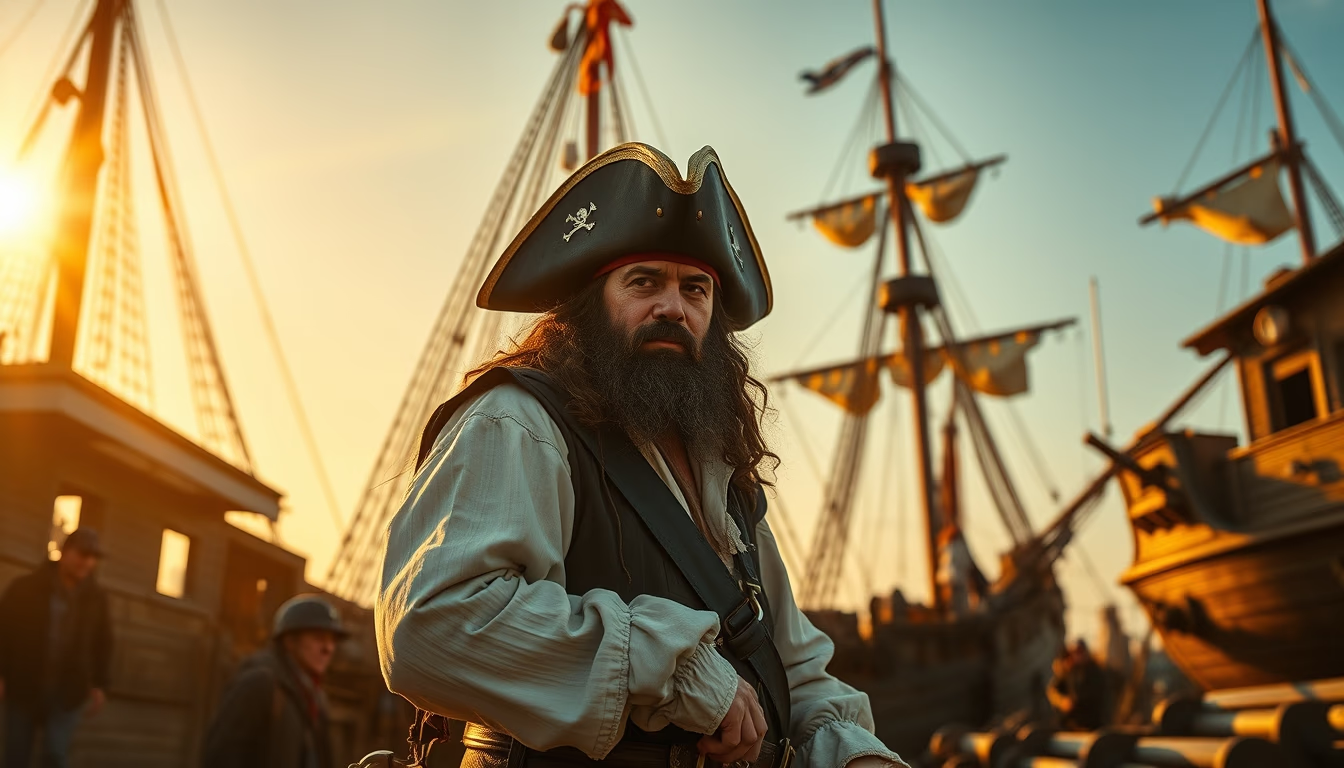
The reconstruction of pirate ships merges naval archaeology and historical tourism, recreating vessels like the Whydah Gally and Queen Anne's Revenge.
About this subject
Pirate ship reconstruction is a fascinating field that combines underwater archaeology, naval engineering, and cultural tourism. These vessels are recreated from historical evidence such as recovered wrecks, period documents, and paintings. An iconic example is the Whydah Gally, a slave ship captured by pirate Samuel Bellamy in 1717 and wrecked off Cape Cod. Its wreck was discovered in 1984, and artifacts and hull sections have since been used to recreate the ship, now displayed at the Whydah Pirate Museum in Massachusetts.
Another notable reconstruction is the Queen Anne's Revenge, the flagship of Blackbeard (Edward Teach). The original ship was a French slave vessel named La Concorde, captured in 1717. Its remains were found off the coast of North Carolina in 1996, and a functional replica was built for the film "Pirates of the Caribbean" and later exhibited in museums. These reconstructions are rarely 100% accurate, as they incorporate adaptations for safe navigation and tourist visits, but they strictly follow the proportions and construction techniques of the early 18th century.
Reconstructed pirate ships also serve as educational tools. They allow the public to understand living conditions aboard, pirate hierarchy, and naval technology from the Golden Age of Piracy (1650-1730). They are often operated by historical associations that conduct demonstration voyages and themed events. In Brazil, there are examples like the pirate ship at Beto Carrero World theme park, but most accurate historical reconstructions are in the United States and Europe, especially the Caribbean and the U.S. East Coast.
Interestingly, the reconstruction of pirate ships also boosts local economies. Cities like St. Augustine (Florida) and Bath (North Carolina) attract tourists with their replica ships, which frequently participate in regattas, festivals, and film shoots. Building these boats creates jobs for shipwrights, historians, and artists. Moreover, the popularity of franchises such as "Pirates of the Caribbean" has increased interest in these replicas, leading to a revival in historical ship construction.
Frequently Asked Questions
How are pirate ships reconstructed with historical accuracy?
Reconstructors use archaeological data from wrecks, period documents like logs and naval contracts, as well as paintings and engravings. Traditional shipbuilding techniques are employed, but modern adaptations for safety and accessibility are common.
Where can I see a replica pirate ship?
In the United States, highlights include the Whydah Pirate Museum (Massachusetts), the Queen Anne's Revenge in Beaufort (North Carolina), and Blackbeard's ship in Bath. In Europe, there are replicas in maritime museums in the Netherlands and England. In Brazil, Beto Carrero World has a thematic replica.
What is the difference between a replica and an original preserved ship?
Replicas are modern constructions based on historical evidence, while original preserved ships are authentic artifacts, often in poor condition. Replicas can sail, while originals rarely leave the museum.
Direct URL
https://pub-c7d6a6ea828543ac903a74a341ccb2e1.r2.dev/imagens/pirate-ship-reconstruction-travel-photography-p0.avifHow to credit
Include a visible link back to UtilizAí. Copy one of the snippets below:
<a href="https://xn--utiliza-eza.com/en/midia/imagens/pirate-ship-reconstruction-travel-photography-p0">Pirate ship reconstruction</a> by <a href="https://xn--utiliza-eza.com">UtilizAí</a>, licensed under <a href="https://creativecommons.org/licenses/by/4.0/">CC BY 4.0</a>.
[Pirate ship reconstruction](https://xn--utiliza-eza.com/en/midia/imagens/pirate-ship-reconstruction-travel-photography-p0) by [UtilizAí](https://xn--utiliza-eza.com), CC BY 4.0
License: CC-BY-4.0