Pirate ship reconstruction
1344×768 · AVIF · CC BY 4.0
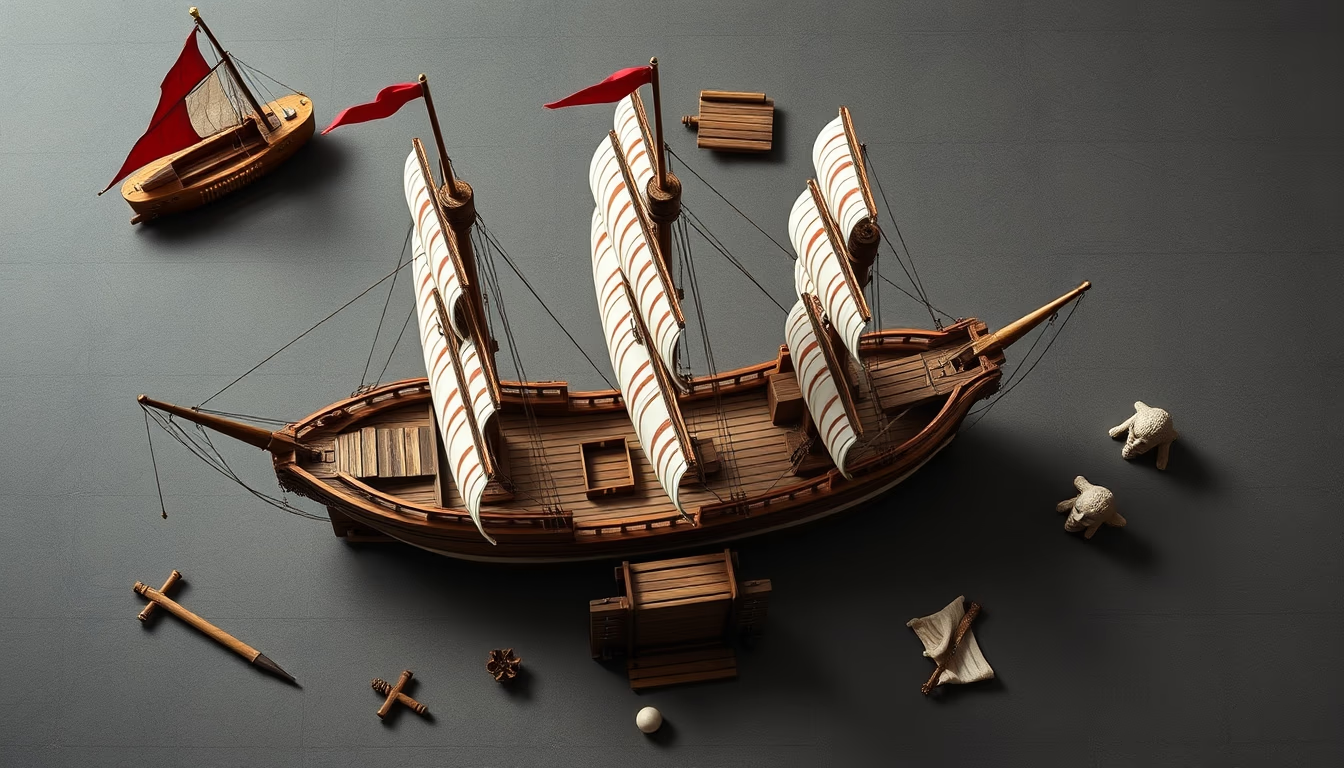
The reconstruction of historic pirate ships like the Whydah and Queen Anne's Revenge reveals 18th-century navigation techniques and life on board.
About this subject
Reconstructing pirate ships is a fascinating field that combines maritime archaeology, naval history, and traditional craftsmanship. Ships like the Whydah Gally, wrecked in 1717 and discovered in 1984, have been painstakingly recreated from artifacts and historical records. The Whydah, originally a slave ship captured by pirate Samuel Bellamy, offers a window into the golden age of piracy in the Caribbean. Another example is Queen Anne's Revenge, the flagship of Blackbeard, which ran aground in 1718 near North Carolina. Its full-size reconstruction, based on underwater excavations, helped understand the structure and armament of pirate vessels.
These projects require years of research and construction, involving historians, archaeologists, and shipwrights. The replicas are used for educational and tourism purposes, such as the Queen Anne's Revenge reconstruction ship that sailed in exhibitions across the United States. They allow the public to experience what life and work were like on board, from the deck to the cramped quarters. Moreover, the analysis of wood remains, cannons, and personal items contributes knowledge about trade routes and combat tactics.
Cultural significance extends beyond entertainment. Reconstructions preserve the memory of a period when the Caribbean and Atlantic were arenas of colonial rivalry and piracy. Visiting a reconstructed ship in places like Nassau, Charleston, or Port Royal helps tourists better understand the historical context. Modern technology such as 3D scanning and modeling also aids in recreating lost details, ensuring the legacy of these ships endures for future generations.
Frequently Asked Questions
Why reconstruct historic pirate ships?
To better understand life on board, navigation techniques, and maritime trade of the 18th century, as well as to preserve cultural and historical heritage.
How are pirate ship reconstructions made?
They rely on archaeological evidence from shipwrecks, historical records like logbooks and engravings, and traditional shipbuilding techniques.
Where can I see a reconstructed pirate ship?
At maritime museums, traveling exhibitions, or historic ports, such as the Queen Anne's Revenge in Beaufort, North Carolina, or the Whydah in Provincetown, Massachusetts.
Direct URL
https://pub-c7d6a6ea828543ac903a74a341ccb2e1.r2.dev/imagens/pirate-ship-reconstruction-isometric-flat-lay-p8.avifHow to credit
Include a visible link back to UtilizAí. Copy one of the snippets below:
<a href="https://xn--utiliza-eza.com/en/midia/imagens/pirate-ship-reconstruction-isometric-flat-lay-p8">Pirate ship reconstruction</a> by <a href="https://xn--utiliza-eza.com">UtilizAí</a>, licensed under <a href="https://creativecommons.org/licenses/by/4.0/">CC BY 4.0</a>.
[Pirate ship reconstruction](https://xn--utiliza-eza.com/en/midia/imagens/pirate-ship-reconstruction-isometric-flat-lay-p8) by [UtilizAí](https://xn--utiliza-eza.com), CC BY 4.0
License: CC-BY-4.0