Pinball machine 1970s
1344×768 · AVIF · CC BY 4.0
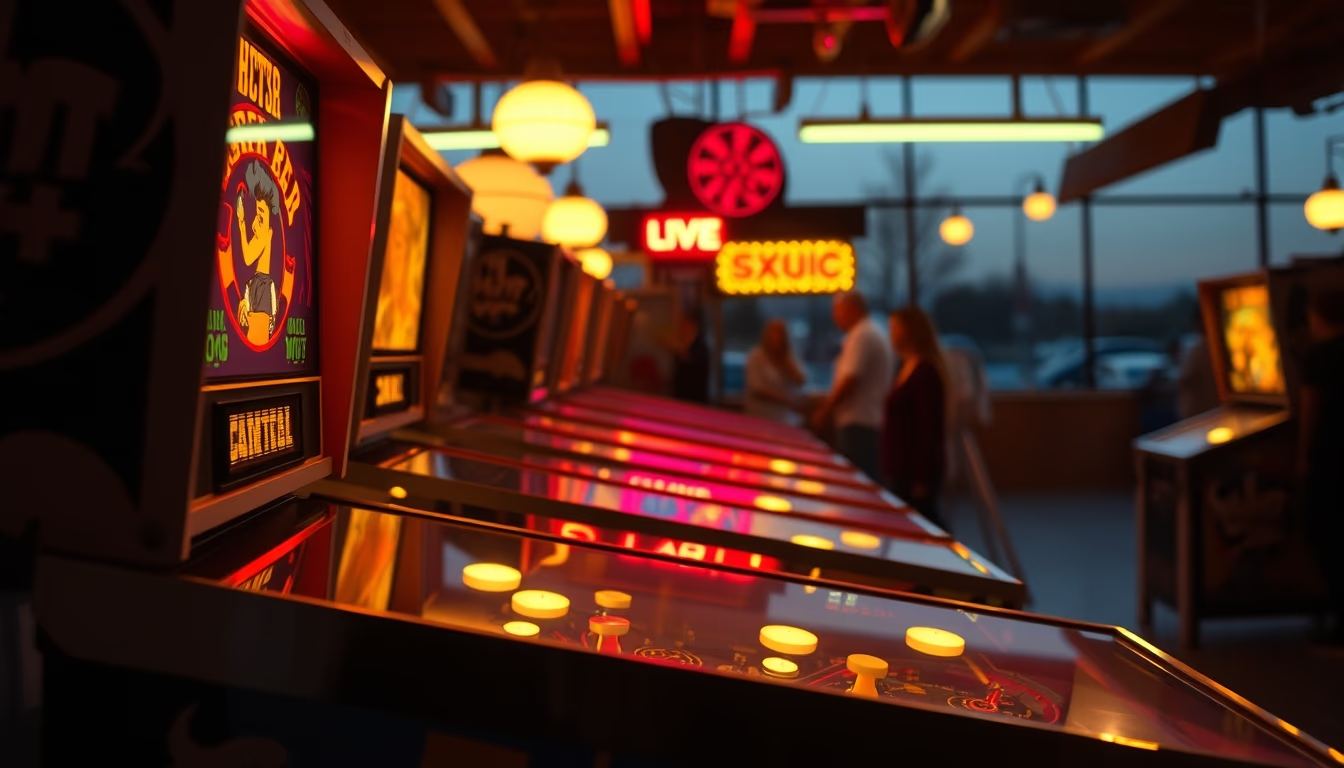
Pinball machine from the 1970s, the golden age of arcade gaming, blending electromechanical design with early solid‑state technology.
About this subject
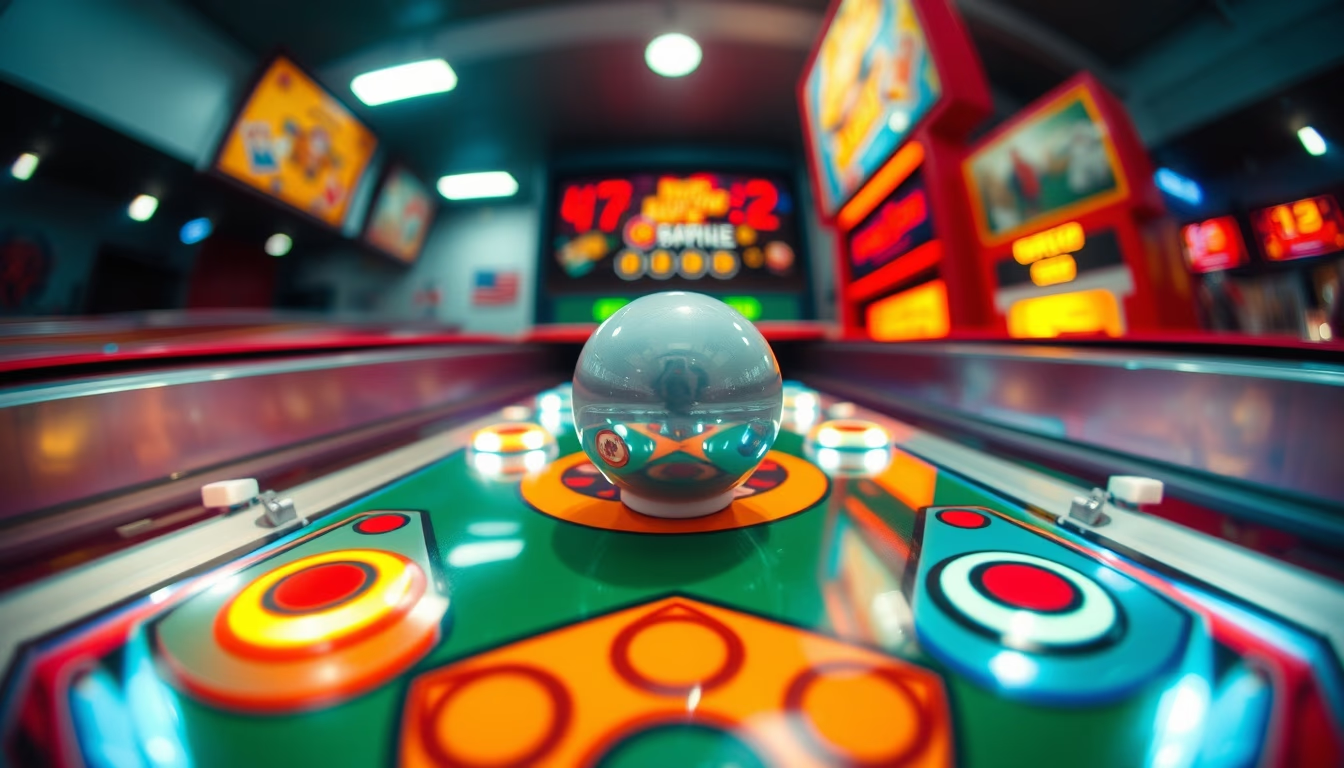
The 1970s represented the golden age of pinball, a period when electromechanical complexity met the dawn of solid‑state electronics. Games like Williams' Gorgar (1979) featured the first ever voice chip, while Bally's Fireball (1974) popularized the multiball mode. Twin flippers became standard, allowing for more precise ball control, and scoring displays shifted from mechanical reels to early digital LEDs.
Despite its arcade glory, pinball faced widespread legal bans in many U.S. cities until the mid‑1970s. Lawmakers viewed it as a game of chance akin to gambling. The turning point came in 1976 when Roger Sharpe demonstrated before the New York City Council that pinball required skill; his iconic shot down the middle of a game convinced officials to lift the ban. This event triggered a nationwide resurgence and the rise of dedicated pinball arcades.
Internationally, the 1970s saw pinball fever spread to Europe and South America. In Brazil, local manufacturers like Supergame produced licensed versions, often housed in custom wood cabinets. Arcades in São Paulo and Rio de Janeiro became social hubs where teenagers spent hours perfecting their technique. The tactile feedback of flipper buttons and the clatter of the ball are still cherished by retro gamers today.
Collectors today prize 1970s machines for their artistic backglasses and robust electromechanical systems. Themes ranged from space exploration to rock music, with hand‑painted artwork by artists like Gordon Morison. The games are also historically significant as the last generation before the video game crash and the eventual rebirth of pinball as a niche hobby.
Frequently Asked Questions
Why were pinball machines banned in many U.S. cities during the 1970s?
Authorities considered them games of chance rather than skill, linking them to gambling, juvenile delinquency, and organized crime. The ban was overturned in 1976 when Roger Sharpe demonstrated that pinball required genuine player ability.
What was the first pinball machine with a speech synthesizer?
Williams' Gorgar (1979) was the first to feature a voice chip. It could utter phrases like "Gorgar speaks!" and "Beat me!", a technological breakthrough at the time.
How did 1970s pinball machines differ from earlier models?
They introduced dual flippers (replacing single flippers), multiball modes, drop targets, and late in the decade began replacing electromechanical relays with solid‑state boards, enabling more complex gameplay and digital scoring displays.
Direct URL
https://pub-c7d6a6ea828543ac903a74a341ccb2e1.r2.dev/imagens/pinball-machine-1970s-cinematic-wide-shot-fresh6.avifHow to credit
Include a visible link back to UtilizAí. Copy one of the snippets below:
<a href="https://xn--utiliza-eza.com/en/midia/imagens/pinball-machine-1970s-cinematic-wide-shot-fresh6">Pinball machine 1970s</a> by <a href="https://xn--utiliza-eza.com">UtilizAí</a>, licensed under <a href="https://creativecommons.org/licenses/by/4.0/">CC BY 4.0</a>.
[Pinball machine 1970s](https://xn--utiliza-eza.com/en/midia/imagens/pinball-machine-1970s-cinematic-wide-shot-fresh6) by [UtilizAí](https://xn--utiliza-eza.com), CC BY 4.0
License: CC-BY-4.0