Pearl oyster harvest
1344×768 · AVIF · CC BY 4.0
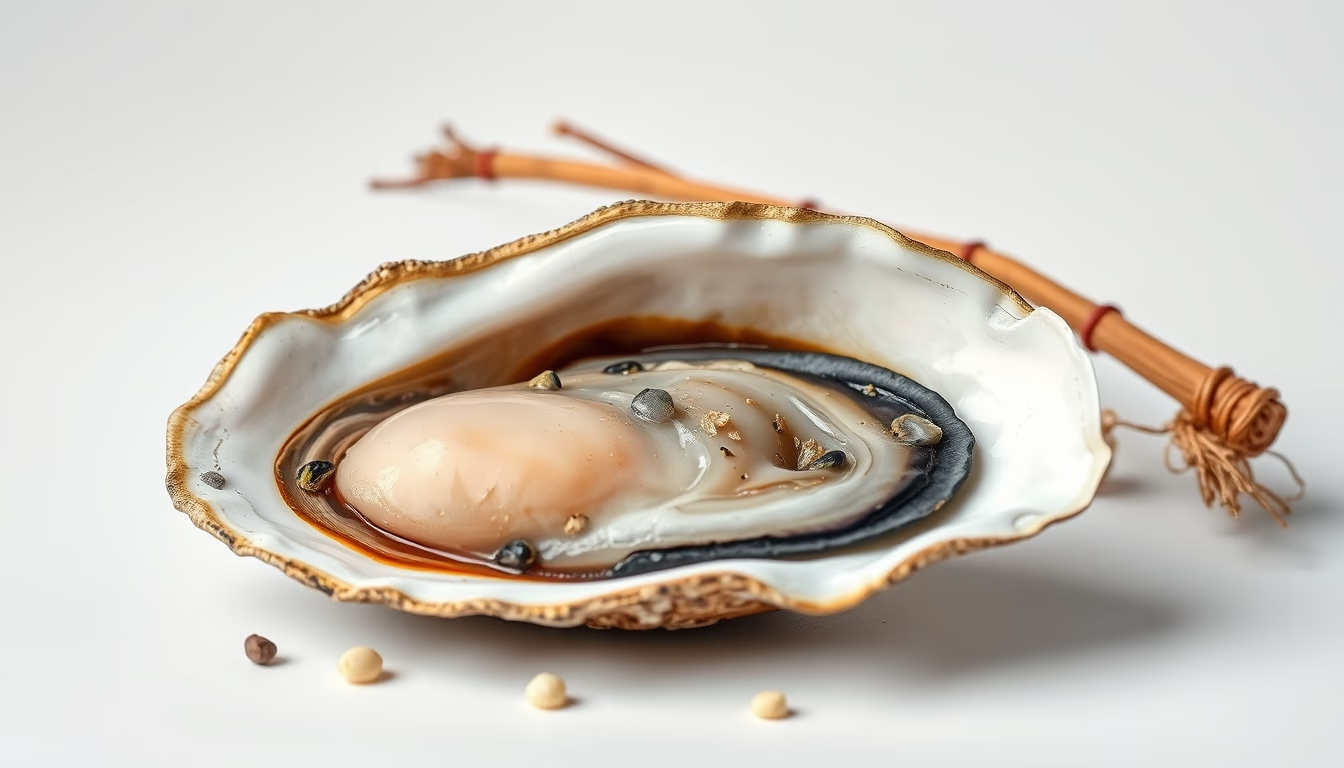
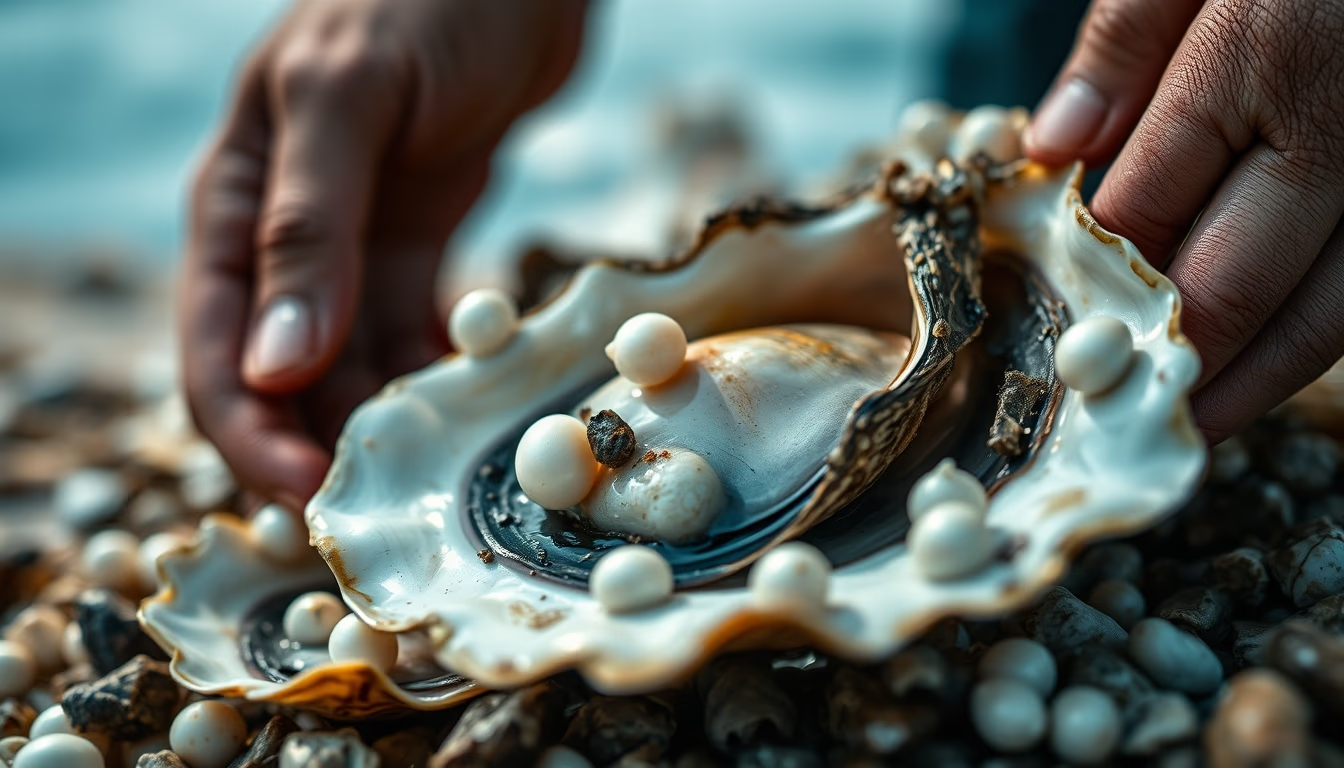
The harvest of pearl oysters is a crucial step in pearl aquaculture, combining technique and patience to extract precious gems from the sea.
About this subject
The harvest of pearl oysters represents the peak of the production cycle in pearl farming, an activity that cultivates bivalve mollusks for pearl formation. Unlike natural pearl extraction, which involves random searching in wild oysters, harvesting on pearl farms follows strict planning. After a growth period ranging from 6 months to 4 years, oysters are removed from the water and opened carefully to avoid damaging the formed gem. The process requires skilled labor, as each oyster is individually evaluated.
Modern pearl farming dates back to the late 19th century when Japanese entrepreneur Kokichi Mikimoto developed the first method for culturing spherical pearls, patented in 1896. Before that, Chinese and Arab cultures used rudimentary techniques to induce pearl formation, but without modern quality control. Today, harvests occur mainly in tropical waters of Japan, French Polynesia, Australia, and Indonesia, using species such as Pinctada maxima and Pinctada margaritifera.
The extraction process involves several steps: first, oysters are cleaned and visually inspected. Then, a small incision in the mantle allows removal of the pearl, which is graded by size, shape, color, and luster. After harvest, the oyster can be re-implanted with a new nucleus to produce another pearl, but many are discarded due to stress. The environmental impact of pearl farming is relatively low compared to other aquaculture forms, as oysters filter water and require no external feed.
Interestingly, only about 5% of cultivated oysters produce gem-quality pearls. Natural pearls, extremely rare, form when a parasite or grain of sand enters the oyster without human intervention. Cultured pearls represent over 99% of the current market, with values reaching millions of dollars for perfect specimens. The harvest is thus a moment of uncertainty and reward, where technique and luck converge.
Frequently Asked Questions
How long does it take for an oyster to produce a pearl?
Typically from 6 months to 4 years, depending on the oyster species and desired pearl size. Species like Pinctada maxima can take up to 4 years to produce large pearls.
What is the difference between natural and cultured pearls?
Natural pearls form without human intervention when an irritant enters the oyster. Cultured pearls are induced by surgical implantation of a nucleus (usually from shell) and a piece of mantle tissue. Over 99% of commercial pearls are cultured.
Where does most cultured pearl production occur?
Major producers are Japan (Akoya pearls), French Polynesia (black pearls), Australia (South Sea pearls), and Indonesia. Each region produces pearls with distinct color and size characteristics.
Direct URL
https://pub-c7d6a6ea828543ac903a74a341ccb2e1.r2.dev/imagens/pearl-oyster-harvest-studio-still-life-fresh8.avifHow to credit
Include a visible link back to UtilizAí. Copy one of the snippets below:
<a href="https://xn--utiliza-eza.com/en/midia/imagens/pearl-oyster-harvest-studio-still-life-fresh8">Pearl oyster harvest</a> by <a href="https://xn--utiliza-eza.com">UtilizAí</a>, licensed under <a href="https://creativecommons.org/licenses/by/4.0/">CC BY 4.0</a>.
[Pearl oyster harvest](https://xn--utiliza-eza.com/en/midia/imagens/pearl-oyster-harvest-studio-still-life-fresh8) by [UtilizAí](https://xn--utiliza-eza.com), CC BY 4.0
License: CC-BY-4.0