Pearl oyster harvest
1344×768 · AVIF · CC BY 4.0
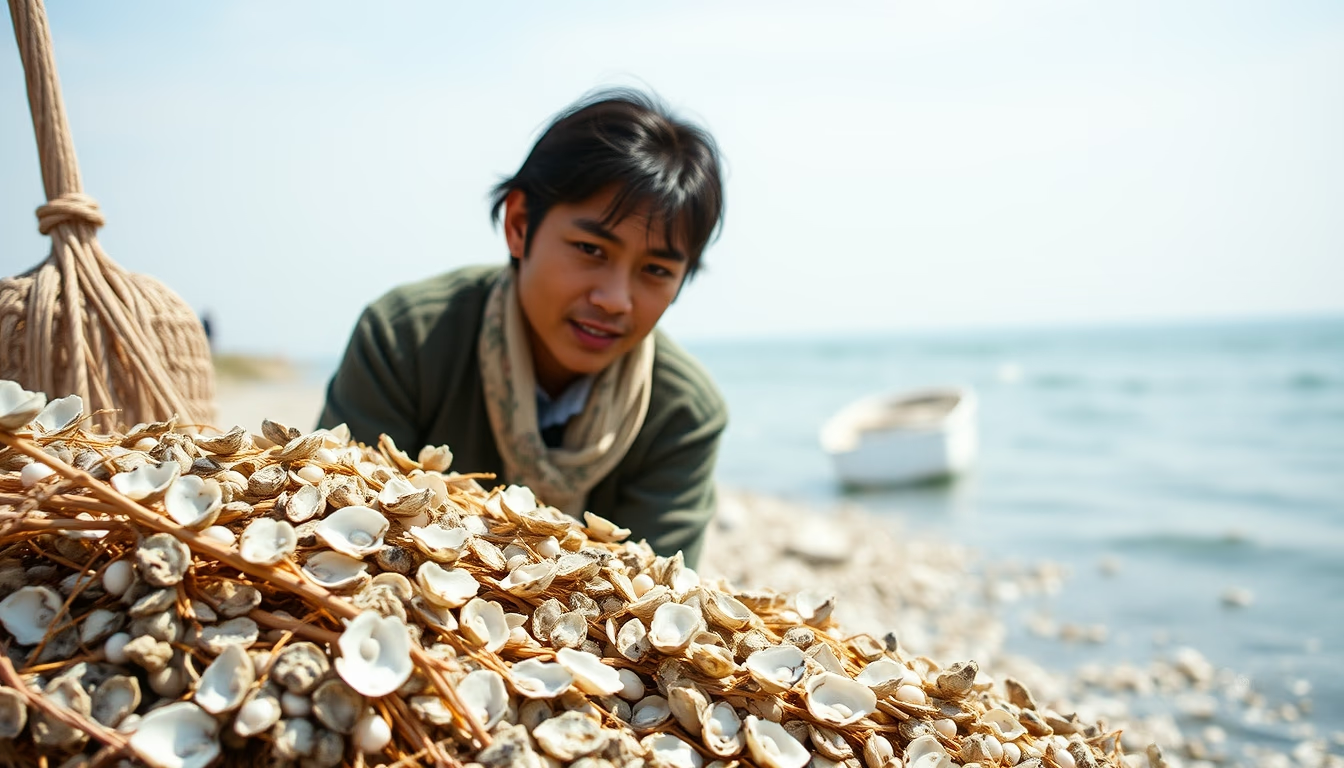
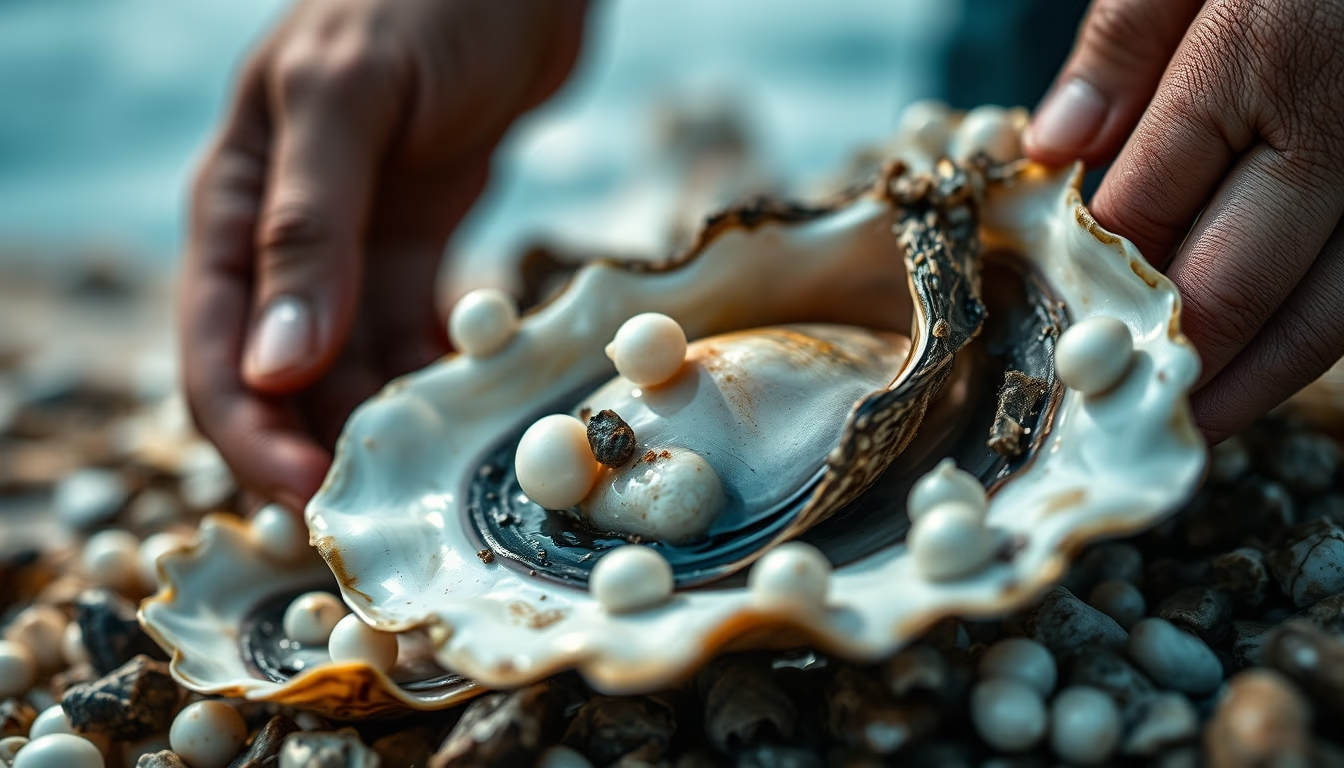
Pearl oyster harvesting is an ancient practice combining traditional and modern techniques to extract cultured pearls, primarily in coastal regions of Asia and Oceania.
About this subject
Pearl oyster harvesting occurs after a meticulous cultivation process lasting from 6 months to 4 years, depending on the species and desired pearl size. Oysters are opened manually or with specific tools, and each is carefully inspected to extract the pearls formed inside. About 50% of oysters do not produce commercial pearls, and only a small fraction achieves top quality.
Major producing countries include Japan, French Polynesia (Tahiti), Australia, and Indonesia. In Japan, the Akoya pearl cultivation technique was developed by Kokichi Mikimoto in the early 20th century, revolutionizing the market. In Tahiti, black pearls are famous for their unique coloration, resulting from specific environmental conditions. Global production of cultured pearls exceeds natural ones by more than 100 times, making harvesting an economic pillar for coastal communities.
The harvesting process requires precision and care to avoid damaging the pearls. After extraction, oysters are often reimplanted for further production, but mortality rates are high. Pearls are then graded by size, shape, color, and luster, and valued in the jewelry market. Sustainability of the activity depends on responsible farming practices, such as water quality control and waste management.
Frequently Asked Questions
What is the difference between natural and cultured pearls?
Natural pearls form without human intervention, while cultured pearls are induced by inserting a nucleus or tissue into the oyster. Most pearls on the market today are cultured.
How long does it take for an oyster to produce a pearl?
Time ranges from 6 months to 4 years. Freshwater pearls may be faster, while Tahitian or South Sea pearls require more time.
Which are the main countries producing cultured pearls?
Japan, French Polynesia, Australia, Indonesia, and the Philippines are among the largest producers. Each region is known for specific types of pearls.
Direct URL
https://pub-c7d6a6ea828543ac903a74a341ccb2e1.r2.dev/imagens/pearl-oyster-harvest-film-grain-authentic-fresh6.avifHow to credit
Include a visible link back to UtilizAí. Copy one of the snippets below:
<a href="https://xn--utiliza-eza.com/en/midia/imagens/pearl-oyster-harvest-film-grain-authentic-fresh6">Pearl oyster harvest</a> by <a href="https://xn--utiliza-eza.com">UtilizAí</a>, licensed under <a href="https://creativecommons.org/licenses/by/4.0/">CC BY 4.0</a>.
[Pearl oyster harvest](https://xn--utiliza-eza.com/en/midia/imagens/pearl-oyster-harvest-film-grain-authentic-fresh6) by [UtilizAí](https://xn--utiliza-eza.com), CC BY 4.0
License: CC-BY-4.0