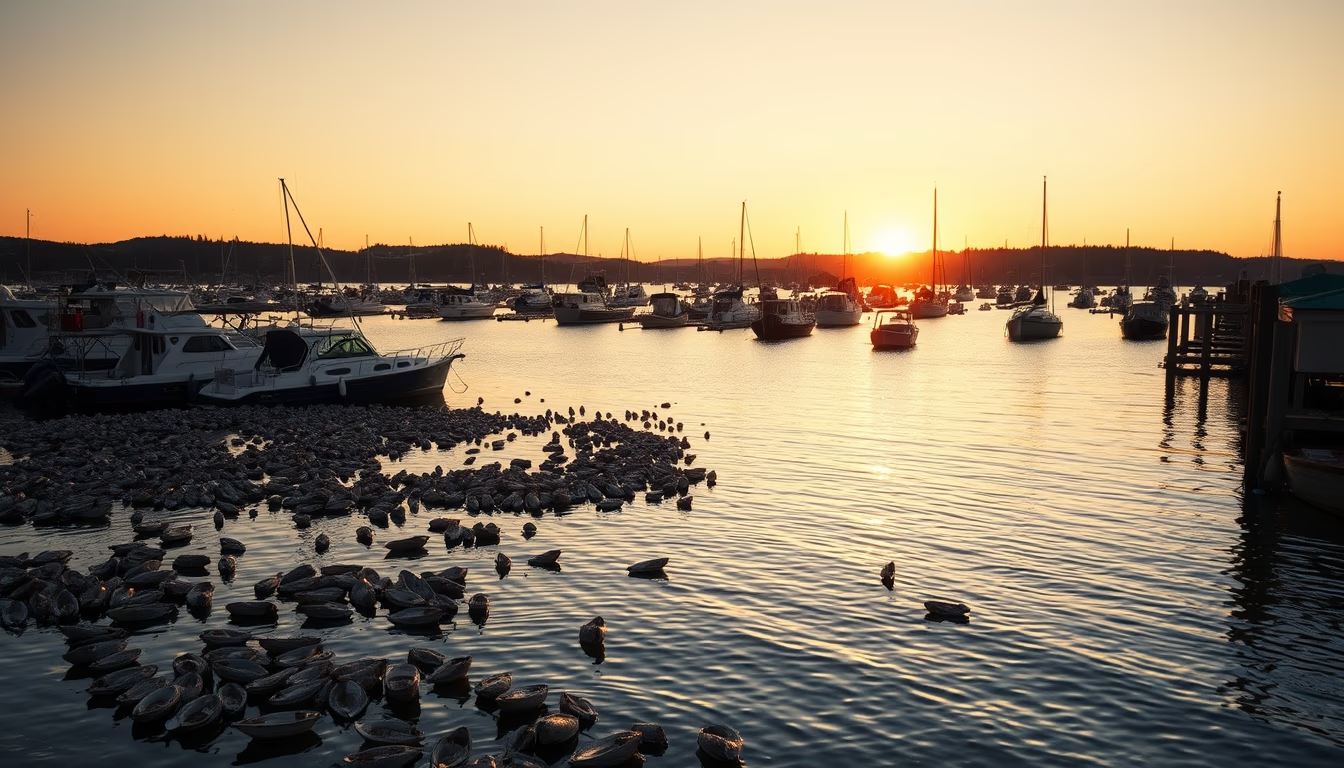
Oyster farm bay
1344×768 · AVIF · CC BY 4.0
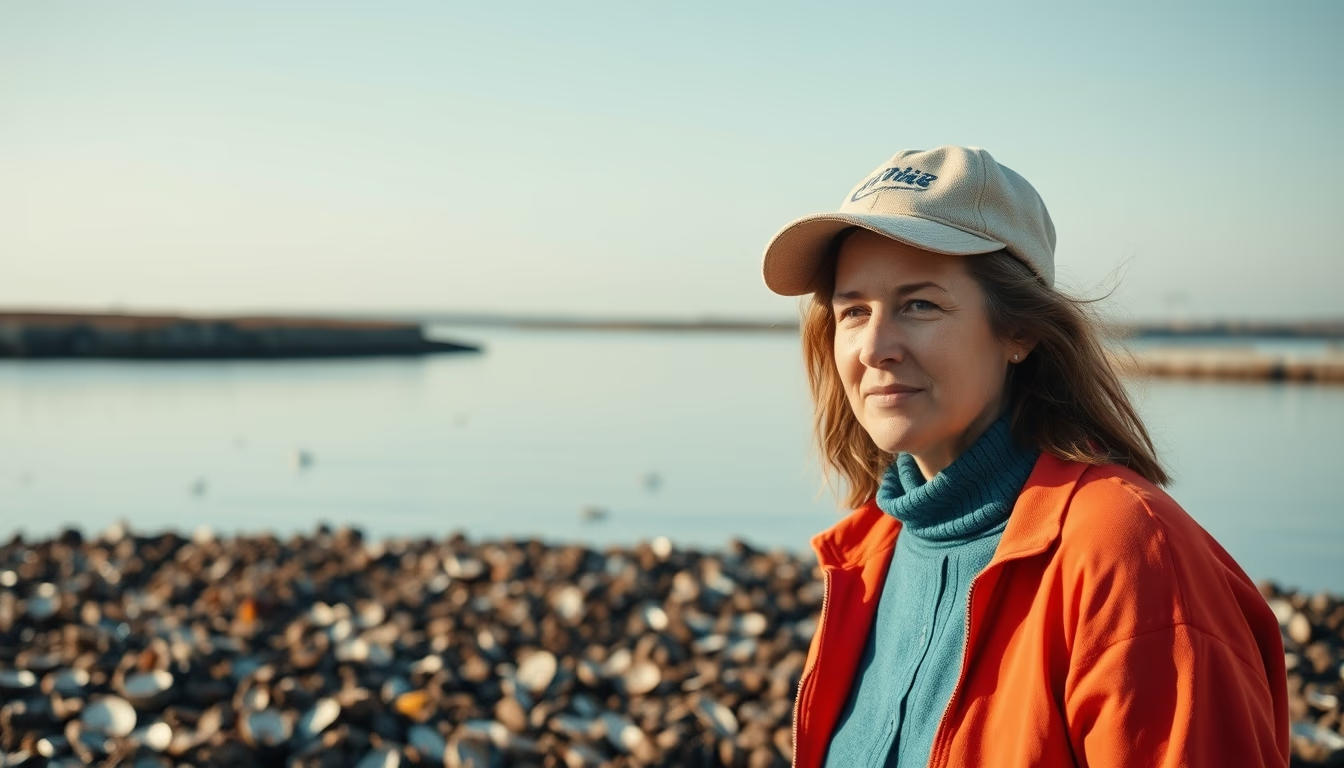
Oysters farmed in coastal bays combine aquaculture tradition and sustainability, naturally filtering water and generating income for coastal communities.
About this subject
Oyster farming, or oyster aquaculture, is an ancient practice that has scaled commercially in many countries, especially in sheltered coastal bays. In the United States, major producing regions include the Chesapeake Bay, Puget Sound, and the Gulf of Mexico. These areas provide calm waters rich in plankton, essential for oyster growth.
Two main cultivation methods are used: bottom culture (oysters grown directly on the seafloor) and suspended culture (using bags, racks, or longlines). Suspended methods, such as lantern nets, are common in deeper waters and allow easy handling and protection from predators. During growth, each oyster filters up to 50 gallons of water per day, improving water clarity and controlling excess nutrients.
Economically, the global oyster market is worth billions of dollars, with France, China, and the United States leading production. The industry supports coastal communities through direct jobs, processing, and tourism (e.g., oyster festivals). Sustainability certifications like ASC (Aquaculture Stewardship Council) are increasingly important for market access.
Ecologically, oyster reefs provide critical habitat for fish, crabs, and other marine life. They also help stabilize shorelines and reduce erosion. Oyster farming, when well-managed, can be a model of regenerative aquaculture, balancing production with environmental stewardship. The minimalist composition of an oyster farm bay often highlights the serene geometry of lines and floats against the water, reflecting harmony between human activity and nature.
Frequently Asked Questions
What are the main environmental benefits of oyster farming?
Oysters filter water, removing suspended particles and excess nutrients, which improves water quality and prevents eutrophication. Their cultivation structures also provide habitat for other marine species.
Which country is the largest oyster producer globally?
China is the largest oyster producer, followed by France and the United States. China accounts for over 80% of global oyster production.
How are oysters farmed in coastal bays?
Oysters are grown using bottom culture (on the seafloor) or suspended systems like bags, racks, or lantern nets. They feed on natural plankton and reach market size in 8 to 18 months, depending on water temperature and salinity.
Direct URL
https://pub-c7d6a6ea828543ac903a74a341ccb2e1.r2.dev/imagens/oyster-farm-bay-minimalist-composition-fresh2.avifHow to credit
Include a visible link back to UtilizAí. Copy one of the snippets below:
<a href="https://xn--utiliza-eza.com/en/midia/imagens/oyster-farm-bay-minimalist-composition-fresh2">Oyster farm bay</a> by <a href="https://xn--utiliza-eza.com">UtilizAí</a>, licensed under <a href="https://creativecommons.org/licenses/by/4.0/">CC BY 4.0</a>.
[Oyster farm bay](https://xn--utiliza-eza.com/en/midia/imagens/oyster-farm-bay-minimalist-composition-fresh2) by [UtilizAí](https://xn--utiliza-eza.com), CC BY 4.0
License: CC-BY-4.0