Oyster farm bay
1344×768 · AVIF · CC BY 4.0
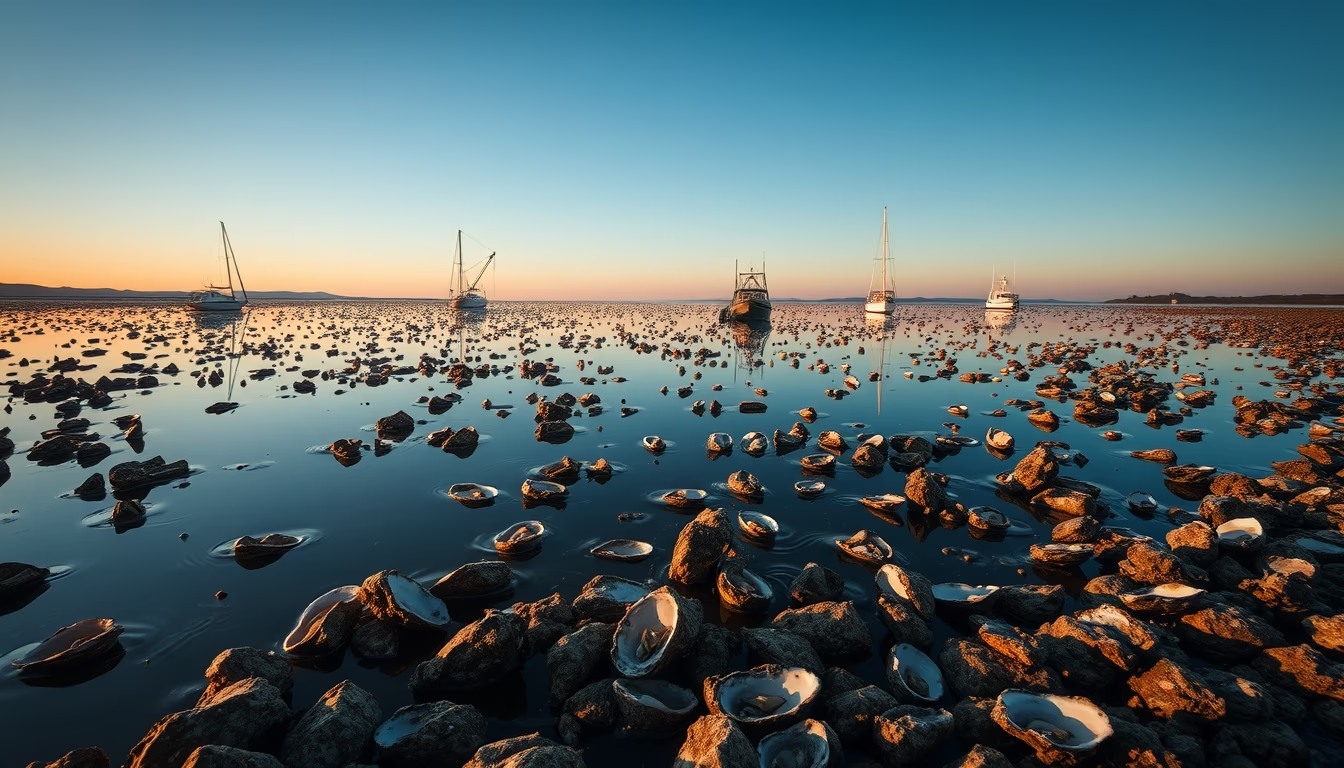
Oyster farming in coastal bays combines tradition and sustainability, generating income and preserving marine ecosystems.
About this subject
Oyster farming in bays is an ancient aquaculture practice, with methods ranging from suspended ropes to bottom trays. Regions like the Chesapeake Bay in the United States, Arcachon Bay in France, and the South Bay of Santa Catarina Island in Brazil are globally renowned for oyster production. In Santa Catarina, oyster farming began in the 1990s and now supports hundreds of families, especially in cities like Florianópolis and Palhoça.
These bivalve mollusks play a crucial ecological role: they filter seawater, removing suspended particles and excess nutrients, thus improving water clarity and quality. Oyster reefs also create habitats for fish and invertebrates, boosting local biodiversity. A single oyster can filter up to 50 liters of water per day, an invaluable ecosystem service.
Economically, oyster farming generates direct and indirect jobs, from seed production to marketing. Oysters are eaten raw or processed, and their shells are used in construction and as calcium supplements in animal feed. Gastronomic events like Florianópolis's Oyster Festival attract tourists and stimulate the local economy.
However, the industry faces challenges such as ocean acidification, pollution from sewage and microplastics, and disease outbreaks like Pacific oyster mortality syndrome. Sustainable management practices and certifications, such as those from the Marin Trust, help ensure the sector's quality and longevity.
Frequently Asked Questions
How are oysters farmed in bays?
Oysters are mainly grown in suspended systems like lantern nets or longlines, or in bottom trays placed on the seabed. They attach to substrates and feed on natural plankton, requiring no external feeding.
What are the main environmental benefits of oyster farming?
Oysters filter large volumes of water, removing pollutants and improving water quality. Their reefs provide habitat for many marine species, boosting biodiversity and stabilizing sediments.
Where are the largest oyster farms in Brazil located?
The largest concentrations are on the coast of Santa Catarina, especially in Florianópolis, Palhoça, and São Francisco do Sul. Significant production also occurs in Rio de Janeiro and São Paulo.
Direct URL
https://pub-c7d6a6ea828543ac903a74a341ccb2e1.r2.dev/imagens/oyster-farm-bay-fine-art-photography-fresh3.avifHow to credit
Include a visible link back to UtilizAí. Copy one of the snippets below:
<a href="https://xn--utiliza-eza.com/en/midia/imagens/oyster-farm-bay-fine-art-photography-fresh3">Oyster farm bay</a> by <a href="https://xn--utiliza-eza.com">UtilizAí</a>, licensed under <a href="https://creativecommons.org/licenses/by/4.0/">CC BY 4.0</a>.
[Oyster farm bay](https://xn--utiliza-eza.com/en/midia/imagens/oyster-farm-bay-fine-art-photography-fresh3) by [UtilizAí](https://xn--utiliza-eza.com), CC BY 4.0
License: CC-BY-4.0