Oyster farm bay
1344×768 · AVIF · CC BY 4.0
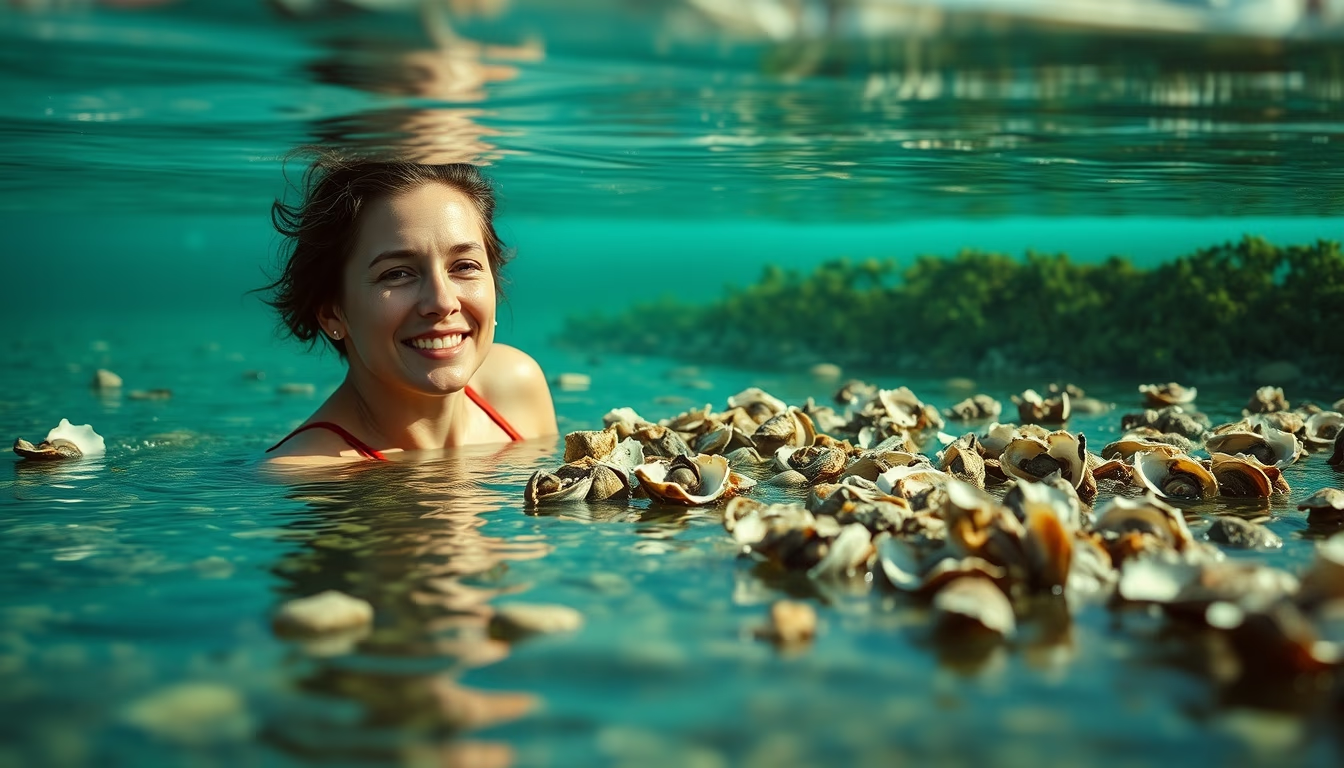
Oyster farming in bays is a sustainable practice that combines tradition and technology to produce high-quality oysters.
About this subject
Oyster farming in bays is a globally practiced form of aquaculture, with major producers including the United States (especially Washington and Maryland), France (Marennes-Oléron), Japan (Hiroshima), and Brazil (Santa Catarina). These bay environments provide sheltered waters with optimal salinity and temperature, crucial for oyster growth. The method often involves off-bottom culture using racks, bags, or long lines, where oysters are suspended in the water column to feed on natural plankton.
The environmental benefits of oyster farming are significant. Oysters are filter feeders that remove algae, nutrients, and particulate matter from the water, improving clarity and reducing the risk of harmful algal blooms. Well-managed oyster farms can enhance biodiversity by providing habitat for other marine species. Additionally, oyster shells are a source of calcium carbonate, which can be recycled to create substrate for reef restoration.
Culturally, oysters have been a food source for centuries. In the US, the Chesapeake Bay region is famous for its Apalachicola oysters, while French _huîtres_ are a delicacy. The industry supports livelihoods in coastal communities, offering stable income compared to wild fisheries. Economic impact includes not only harvesting but also processing, distribution, and tourism (e.g., oyster festivals).
A key challenge in oyster farming is disease management, such as Dermo and MSX in some regions. Selective breeding for disease resistance has been a focus. Also, climate change poses risks: ocean acidification can affect shell formation, and rising temperatures may alter growth rates. Nonetheless, oyster farming remains a model for sustainable seafood production, with low environmental footprint and high nutritional value.
Frequently Asked Questions
How are oysters farmed in bays?
Oysters are farmed in bays using suspended systems like long lines or racks, where they are placed in mesh bags or cages. They feed by filtering natural plankton from the water, requiring no added feed.
What are the environmental benefits of oyster farming?
Oyster farming improves water quality by filtering out algae, nutrients, and sediments. Oyster reefs also provide habitat for marine life and help stabilize shorelines. The practice is considered a form of green aquaculture.
Which countries are leading in oyster production?
Major oyster-producing countries include China, the United States, France, Japan, and Brazil. Each region has unique species and cultivation methods, such as the French raised oyster _Crassostrea gigas_ or the American Eastern oyster.
Direct URL
https://pub-c7d6a6ea828543ac903a74a341ccb2e1.r2.dev/imagens/oyster-farm-bay-film-grain-authentic-fresh9.avifHow to credit
Include a visible link back to UtilizAí. Copy one of the snippets below:
<a href="https://xn--utiliza-eza.com/en/midia/imagens/oyster-farm-bay-film-grain-authentic-fresh9">Oyster farm bay</a> by <a href="https://xn--utiliza-eza.com">UtilizAí</a>, licensed under <a href="https://creativecommons.org/licenses/by/4.0/">CC BY 4.0</a>.
[Oyster farm bay](https://xn--utiliza-eza.com/en/midia/imagens/oyster-farm-bay-film-grain-authentic-fresh9) by [UtilizAí](https://xn--utiliza-eza.com), CC BY 4.0
License: CC-BY-4.0