Oil tanker massive
1344×768 · AVIF · CC BY 4.0
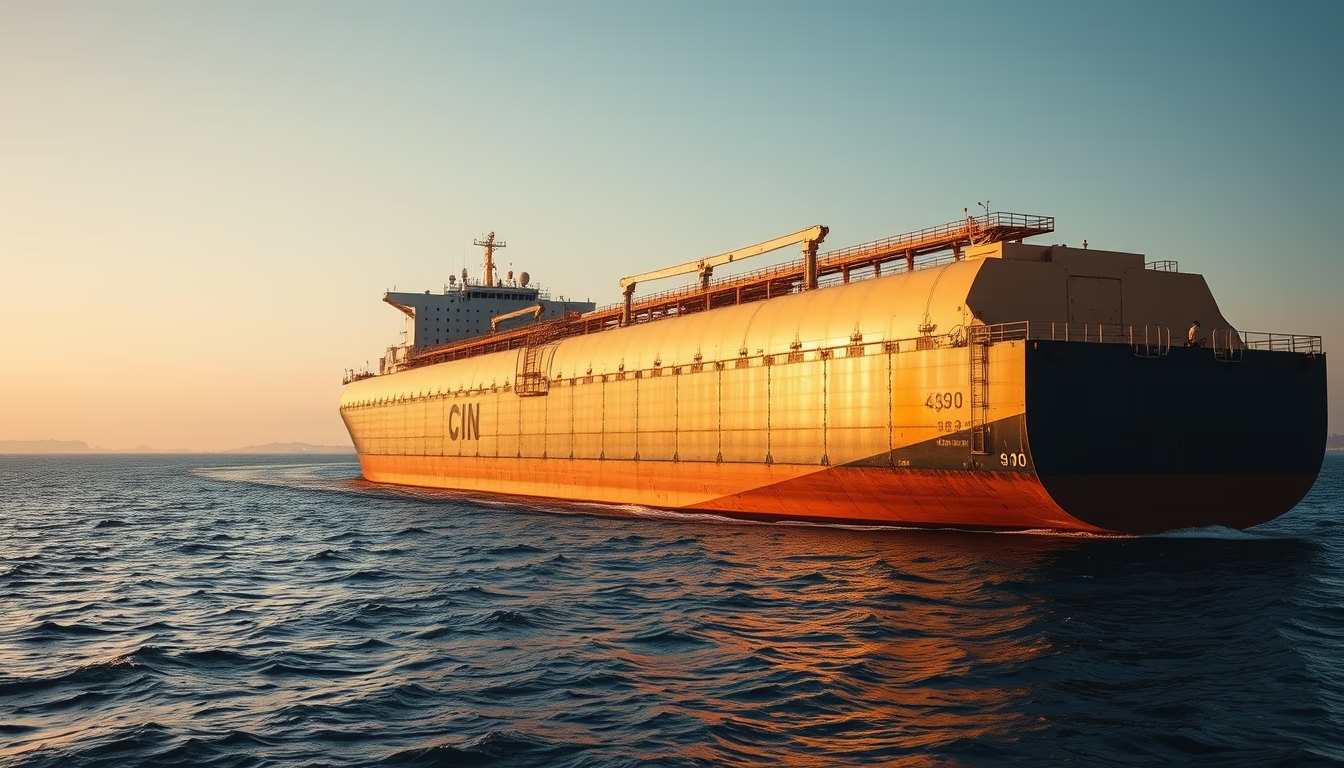
Massive oil tankers carry millions of barrels of crude oil across oceans, vital to the global economy but also a focus of environmental concerns.
About this subject
Oil tankers are ships designed for the bulk transport of crude oil and its derivatives. They range from small coastal vessels to gigantic Very Large Crude Carriers (VLCCs) and Ultra Large Crude Carriers (ULCCs) capable of carrying over 300,000 metric tons. The largest tanker ever built, the Seawise Giant, measured 458 meters in length and displaced 657,000 tons when fully loaded, surpassed only by some floating platforms. These vessels are crucial to petroleum logistics: around 60% of all oil consumed globally is shipped by sea, with critical routes through the Strait of Hormuz, Malacca Strait, and Suez Canal.
Shipbuilding for tankers has evolved to include double hulls, a regulatory requirement after accidents like the Exxon Valdez spill in 1989. Double hulls reduce spill risk from collisions or groundings but do not eliminate hazards. Oil spills can cause immense ecological damage, affecting marine life and coastal economies. Furthermore, tankers emit greenhouse gases and sulfur oxides, prompting regulations like MARPOL and emission limits in control zones.
Geographically, major tanker loading ports include Ras Tanura (Saudi Arabia), Basra (Iraq), and Houston (USA), while discharge ports are in Rotterdam, Singapore, and New Orleans. A typical VLCC voyage from the Persian Gulf to Asia takes about 30 days. The tanker industry is highly cyclical, with freight rates fluctuating with global demand and idle capacity. In recent years, increased US oil shipments to Europe and Asia have shifted traditional patterns, and the aging global tanker fleet (average 10, 15 years) raises questions about maintenance and operational risks.
Frequently Asked Questions
What is the maximum capacity of an oil tanker?
The largest tankers, ULCCs, can carry up to 550,000 metric tons of crude oil, but most VLCCs carry between 200,000 and 320,000 tons. The record is held by the Seawise Giant, with a deadweight tonnage of 564,763 tons.
How do oil tankers avoid oil spills?
Since the 1990s, most new tankers have double hulls, meaning two steel layers separated by a void space. This reduces puncture risk in accidents. Additionally, advanced navigation systems and crew training help prevent collisions and groundings.
What is the most dangerous route for oil tankers?
The Strait of Hormuz, between the Persian Gulf and the Gulf of Oman, is the most critical route, carrying about 20% of the world's oil. It faces dense traffic, geopolitical tensions, and piracy. Other risky routes include the Malacca Strait and the Suez Canal.
Direct URL
https://pub-c7d6a6ea828543ac903a74a341ccb2e1.r2.dev/imagens/oil-tanker-massive-travel-photography-p9.avifHow to credit
Include a visible link back to UtilizAí. Copy one of the snippets below:
<a href="https://xn--utiliza-eza.com/en/midia/imagens/oil-tanker-massive-travel-photography-p9">Oil tanker massive</a> by <a href="https://xn--utiliza-eza.com">UtilizAí</a>, licensed under <a href="https://creativecommons.org/licenses/by/4.0/">CC BY 4.0</a>.
[Oil tanker massive](https://xn--utiliza-eza.com/en/midia/imagens/oil-tanker-massive-travel-photography-p9) by [UtilizAí](https://xn--utiliza-eza.com), CC BY 4.0
License: CC-BY-4.0