Oil tanker massive
1344×768 · AVIF · CC BY 4.0
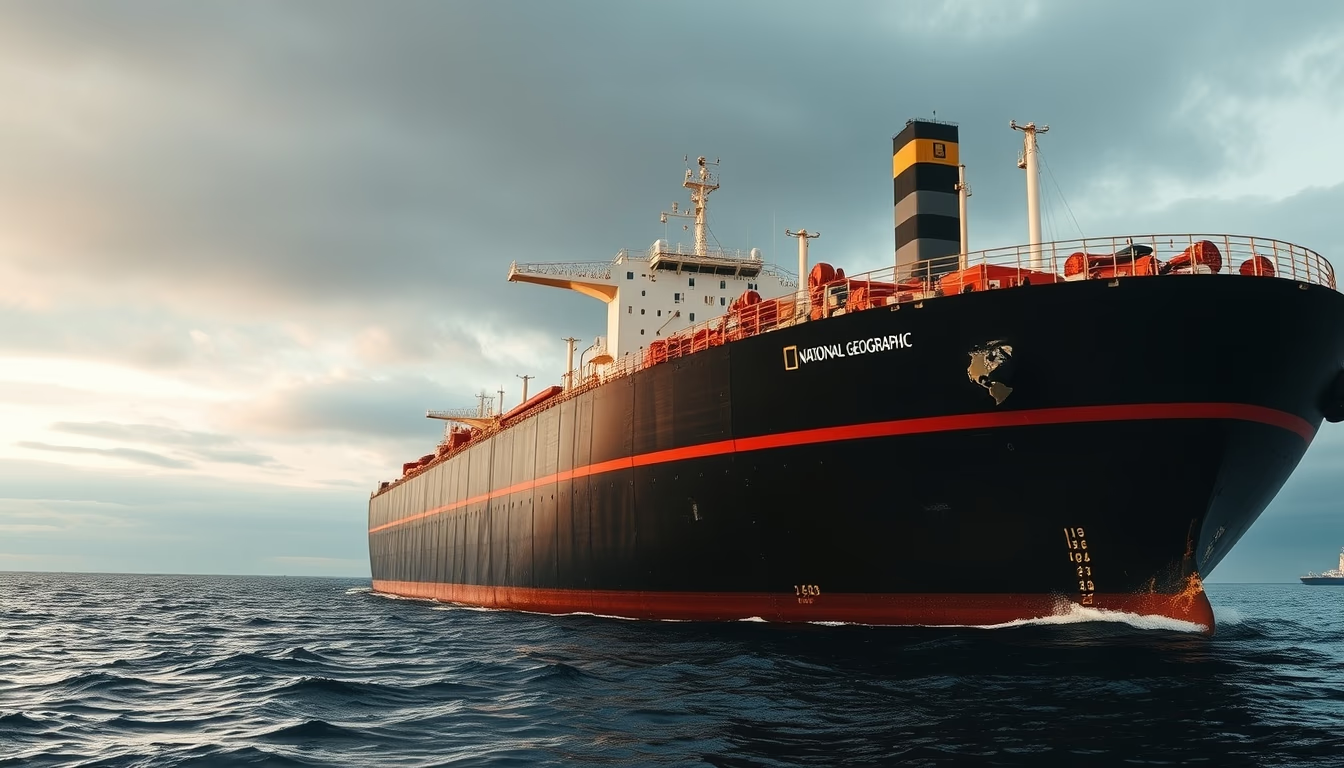
A massive oil tanker transports millions of barrels of crude oil across oceans, supporting the global economy while posing significant environmental risks.
About this subject
Large oil tankers, especially Ultra Large Crude Carriers (ULCCs), are floating cities dedicated to transporting crude oil. Some exceed 400 meters in length and carry up to 2 million barrels (over 300,000 metric tonnes). These vessels navigate critical chokepoints such as the Strait of Hormuz, the Suez Canal, and the Cape of Good Hope, linking major producers in the Middle East, Russia, and Africa to key consumers in Asia, Europe, and North America.
The global tanker fleet is regulated by strict international standards, notably the International Convention for the Prevention of Pollution from Ships (MARPOL), which mandates double hulls for ships built after 1996 to reduce spill risk from collisions or groundings. Segregated ballast systems prevent seawater contamination with oil residues. Economically, oil freight rates significantly impact the final barrel price, influenced by geopolitical tensions and fleet utilization.
Despite safety improvements, historic accidents like the Exxon Valdez (1989, Alaska) and the Prestige (2002, Spain) highlight catastrophic environmental risks. Recently, decarbonization pressure has driven the industry toward alternative fuels such as LNG, ammonia, and even retractable sails to cut emissions. Projects like the Oceanbird, a wind-powered tanker concept, signal a potential revolution in heavy cargo maritime transport.
Frequently Asked Questions
What is the largest oil tanker ever built?
The largest oil tanker ever built was the Seawise Giant (also known as Knock Nevis), measuring 458 meters in length with a capacity of 564,763 metric tonnes. It operated from 1979 to 2004.
How do oil tankers prevent explosions during transport?
They use inert gas systems that inject nitrogen into cargo tanks to reduce oxygen levels below the combustion threshold, preventing explosions of flammable vapors.
What do VLCC and ULCC stand for?
VLCC stands for Very Large Crude Carrier, with a deadweight tonnage (DWT) between 200,000 and 300,000. ULCC stands for Ultra Large Crude Carrier, with DWT above 300,000. Both are classifications for crude oil tankers.
Direct URL
https://pub-c7d6a6ea828543ac903a74a341ccb2e1.r2.dev/imagens/oil-tanker-massive-national-geographic-style-p10.avifHow to credit
Include a visible link back to UtilizAí. Copy one of the snippets below:
<a href="https://xn--utiliza-eza.com/en/midia/imagens/oil-tanker-massive-national-geographic-style-p10">Oil tanker massive</a> by <a href="https://xn--utiliza-eza.com">UtilizAí</a>, licensed under <a href="https://creativecommons.org/licenses/by/4.0/">CC BY 4.0</a>.
[Oil tanker massive](https://xn--utiliza-eza.com/en/midia/imagens/oil-tanker-massive-national-geographic-style-p10) by [UtilizAí](https://xn--utiliza-eza.com), CC BY 4.0
License: CC-BY-4.0