Oil tanker massive
1344×768 · AVIF · CC BY 4.0
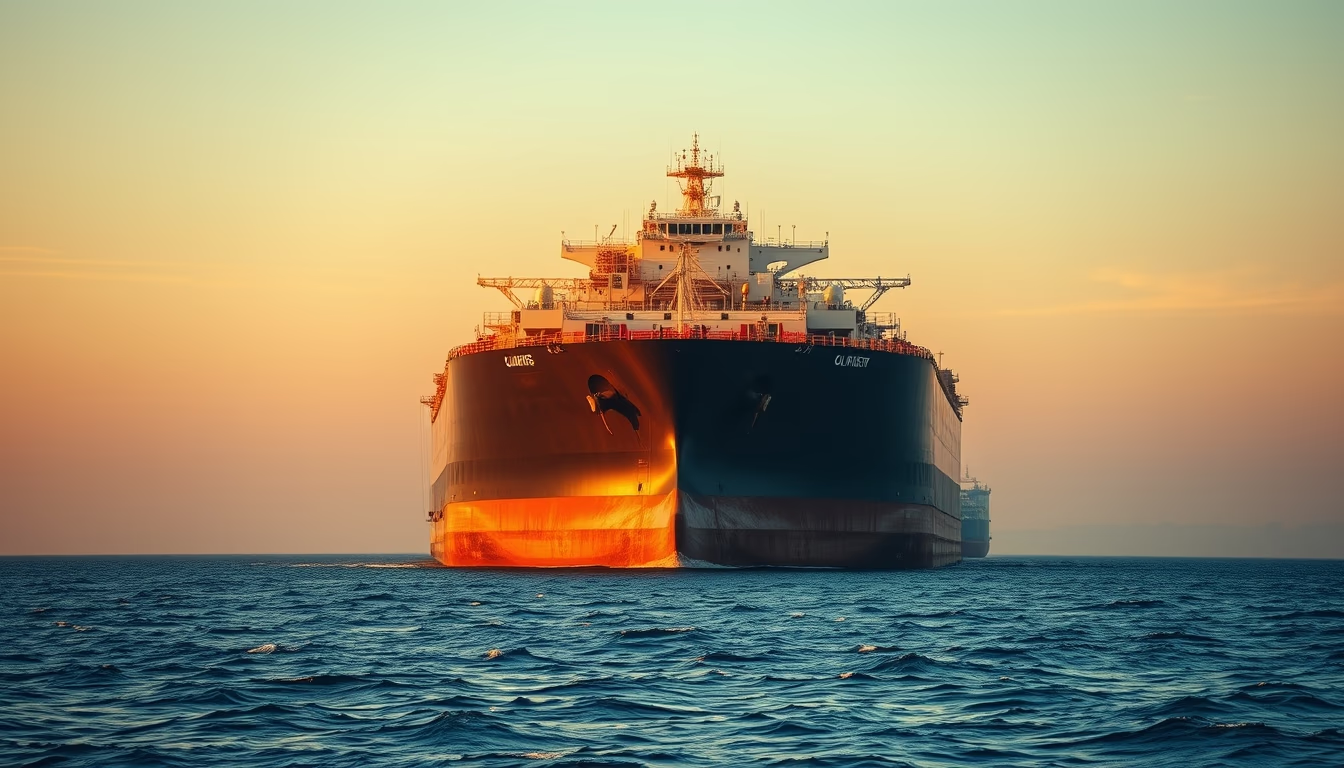
Oil tankers rank among the largest mobile structures ever built by humans, crucial for the global transport of crude oil and refined fuels.
About this subject
Oil tankers are vessels specifically designed for the bulk transport of crude oil and its refined products. Their history dates back to the late 19th century, with the first modern oil tanker, the Zoroaster, built in 1877 to sail the Caspian Sea. Since then, design has evolved dramatically. ULCCs (Ultra Large Crude Carriers) can exceed 400 meters in length and carry over 500,000 metric tons of cargo, with a draft of more than 20 meters when fully loaded. These colossal dimensions restrict their passage to specially deepened ports and channels such as the Strait of Malacca.
The economic importance of oil tankers is undeniable. Approximately 60% of all oil produced worldwide is transported by sea, connecting production fields in the Middle East, Africa, and the Americas to refineries and consumers in Europe, Asia, and the United States. Critical chokepoints like the Strait of Hormuz and the Suez Canal are vital to global energy flows. Tankers are classified by size: Aframax (up to 120,000 tons), Suezmax (up to 200,000 tons), and VLCC (Very Large Crude Carriers, between 200,000 and 320,000 tons).
Operating these vessels involves rigorous safety and environmental protocols. The Exxon Valdez spill in 1989 led to mandatory double hulls for new tankers, drastically reducing spill risks. Nonetheless, accidents like the Prestige (2002) still happen. The industry also faces pressure to cut CO2 emissions, piloting technologies such as LNG propulsion and rotor sails. Maritime oil transport remains a pillar of the global economy but is under increasing scrutiny to become cleaner and more sustainable.
Frequently Asked Questions
What is the largest oil tanker ever built?
The largest oil tanker ever built was the Seawise Giant (also known as Knock Nevis), measuring 458 meters in length with a deadweight tonnage of 564,763 tonnes. It was scrapped in 2010.
How long does it take to load or unload an oil tanker?
Loading time varies by size and terminal infrastructure. A VLCC may take 24 to 48 hours to fully load and up to 72 hours to discharge, depending on pump capacity.
Do modern oil tankers still cause pollution?
Yes, although safety standards have improved. Accidental spills have decreased dramatically, but CO2 and sulfur emissions remain a concern, driving stricter regulations such as IMO 2020.
Direct URL
https://pub-c7d6a6ea828543ac903a74a341ccb2e1.r2.dev/imagens/oil-tanker-massive-cinematic-wide-shot-p1.avifHow to credit
Include a visible link back to UtilizAí. Copy one of the snippets below:
<a href="https://xn--utiliza-eza.com/en/midia/imagens/oil-tanker-massive-cinematic-wide-shot-p1">Oil tanker massive</a> by <a href="https://xn--utiliza-eza.com">UtilizAí</a>, licensed under <a href="https://creativecommons.org/licenses/by/4.0/">CC BY 4.0</a>.
[Oil tanker massive](https://xn--utiliza-eza.com/en/midia/imagens/oil-tanker-massive-cinematic-wide-shot-p1) by [UtilizAí](https://xn--utiliza-eza.com), CC BY 4.0
License: CC-BY-4.0