Oil tanker massive
1344×768 · AVIF · CC BY 4.0
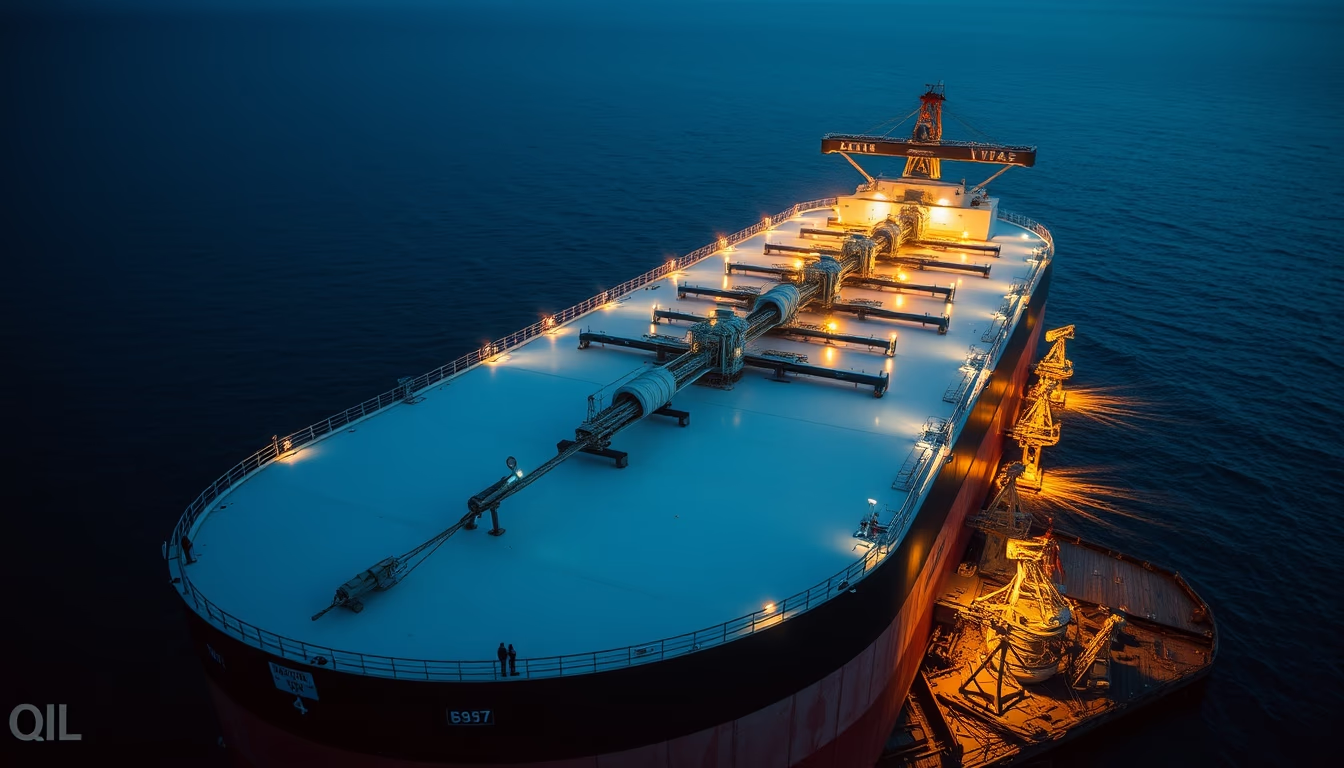
Oil tankers are massive vessels designed to transport crude oil and petroleum products across oceans, vital to the global economy.
About this subject
Oil tankers are specialized cargo ships designed for the bulk transport of crude oil and petroleum products, such as gasoline, diesel, and kerosene. They constitute roughly one-third of the world's merchant fleet by deadweight tonnage, with capacities ranging from 10,000 to over 550,000 deadweight tons (DWT). The largest vessels, known as Ultra Large Crude Carriers (ULCC), can exceed 400 meters in length, comparable to skyscrapers lying on their side. These ships operate on key routes, such as the Persian Gulf to Japan or the North Sea to the United States, and often sail under flags of convenience, including Panama, Liberia, and the Marshall Islands.
The history of oil tankers dates back to the late 19th century, with the development of the first vessels designed for bulk oil transport. The Glückauf, built in 1886 in Germany, is often considered the first modern oil tanker. Since then, the size of these ships has grown exponentially, driven by energy demand and economies of scale. However, this growth also brought environmental and safety challenges. Accidents like the Exxon Valdez (1989) and the Prestige (2002) caused massive ecological damage, leading to stricter regulations, such as the requirement for double hulls on new tankers starting in the 1990s.
Today, oil tankers transport approximately 1.9 billion tons of oil annually, accounting for about 30% of global maritime trade. The world fleet includes over 7,000 tankers, categorized into classes like Aframax, Suezmax, and VLCC (Very Large Crude Carrier). These ships operate within a complex network of loading and unloading terminals, many located in strategic areas such as Ras Tanura (Saudi Arabia) and Rotterdam (Netherlands). The logistics of oil transport are crucial to maintaining global energy flows, but are also subject to price volatility, geopolitical tensions, and increasing environmental pressures for an energy transition.
Frequently Asked Questions
What is the largest oil tanker ever built?
The largest oil tanker ever built was the Seawise Giant (also known as Mont, Happy Giant, and Jahre Viking), measuring 458.45 meters in length with a capacity of 564,763 DWT. Launched in 1979, it was scrapped in 2009.
Why do oil tankers often fly flags of convenience?
Flags of convenience allow shipowners to register vessels in countries with lighter regulations, lower taxes, and reduced operating costs. This is common in the maritime industry to maximize profitability.
What are the main environmental risks of an oil tanker?
The main risks are oil spills, which can result from collisions, groundings, structural failures, or loading/unloading operations. A major spill can devastate marine and coastal ecosystems, killing wildlife and affecting local economies.
Direct URL
https://pub-c7d6a6ea828543ac903a74a341ccb2e1.r2.dev/imagens/oil-tanker-massive-aerial-drone-shot-p3.avifHow to credit
Include a visible link back to UtilizAí. Copy one of the snippets below:
<a href="https://xn--utiliza-eza.com/en/midia/imagens/oil-tanker-massive-aerial-drone-shot-p3">Oil tanker massive</a> by <a href="https://xn--utiliza-eza.com">UtilizAí</a>, licensed under <a href="https://creativecommons.org/licenses/by/4.0/">CC BY 4.0</a>.
[Oil tanker massive](https://xn--utiliza-eza.com/en/midia/imagens/oil-tanker-massive-aerial-drone-shot-p3) by [UtilizAí](https://xn--utiliza-eza.com), CC BY 4.0
License: CC-BY-4.0