Oghams celtic stone
1344×768 · AVIF · CC BY 4.0
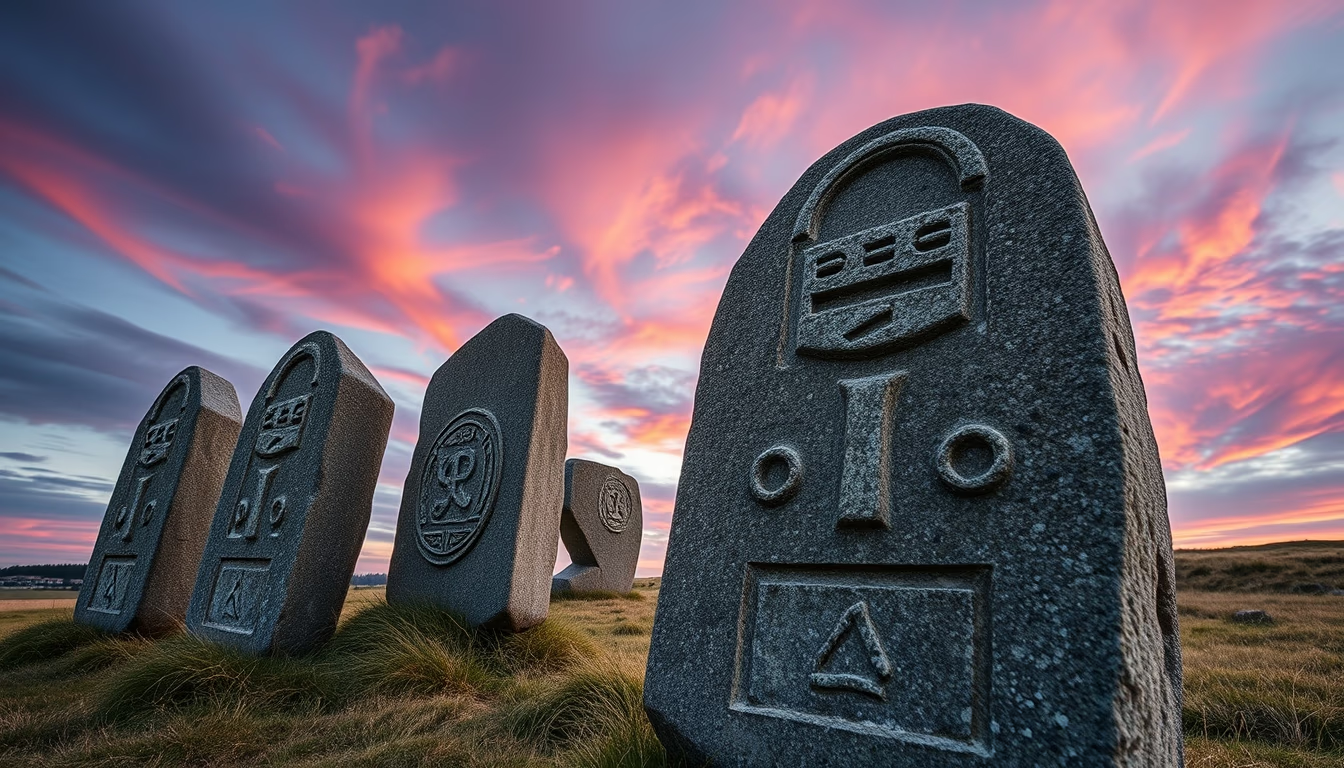
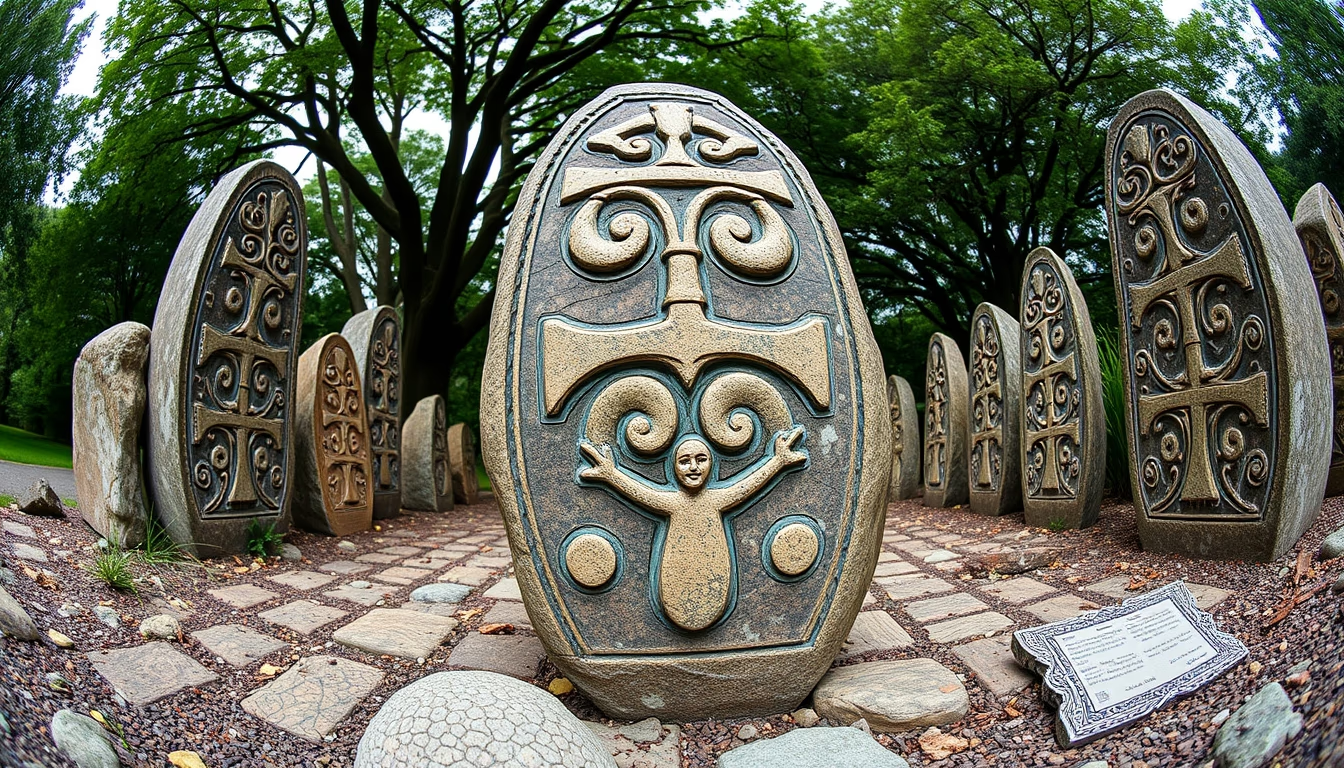
Stones bearing Ogham inscriptions, an early medieval Irish alphabet, are historical monuments that reveal early Celtic culture in Ireland and parts of Britain.
About this subject
Ogham is an alphabetic writing system that emerged in the 4th century AD, primarily used to inscribe names on standing stones across Ireland, with some examples in western Britain. Each letter was represented by a set of strokes or notches along a central vertical or horizontal line, totaling 20 original characters, later expanded to 25. These inscriptions often recorded personal names or lineages, serving as territorial markers or funerary memorials. Most Ogham stones date from the 4th to 7th centuries AD, though the script continued in use into the Middle Ages in manuscript contexts. The geographical distribution is concentrated in the counties of Kerry, Cork, and Waterford in southwestern Ireland, with notable examples such as the Kilmalkedar Stone and St. Declan's Stone. Ogham also holds mythological significance: Irish legend associates its creation with the god Ogma, a deity of eloquence and writing. Modern studies suggest Ogham originated from contact with the Latin alphabet, adapted for efficient carving in wood and stone. The preservation of these stones outdoors for over a thousand years demonstrates the durability of inscriptions on sandstone and quartzite, common rocks in the region. Today, Ogham stones are protected as Irish cultural heritage, many housed in churches or museums to prevent erosion and vandalism. They stand as tangible evidence of the transition from Celtic culture to Christianity, as some inscriptions include Christian crosses, indicating religious syncretism.
Frequently Asked Questions
What does the word 'Ogham' mean?
Ogham (from Old Irish 'ogam') is the name of the alphabet used to write the early Irish language. It is thought to derive from the god Ogma, associated with writing and eloquence in Celtic mythology.
Where are Ogham stones found?
Most are in Ireland, especially Counties Kerry, Cork, and Waterford. Some have been found in Wales, Scotland, and the Isle of Man, typically erected as boundary markers or memorials.
Why is Ogham important for history?
Ogham provides the earliest evidence of written Irish, dating from the 4th to 7th centuries AD. It helps scholars understand social organization, migrations, and the transition from Celtic paganism to Christianity.
Direct URL
https://pub-c7d6a6ea828543ac903a74a341ccb2e1.r2.dev/imagens/oghams-celtic-stone-long-exposure-fresh16.avifHow to credit
Include a visible link back to UtilizAí. Copy one of the snippets below:
<a href="https://xn--utiliza-eza.com/en/midia/imagens/oghams-celtic-stone-long-exposure-fresh16">Oghams celtic stone</a> by <a href="https://xn--utiliza-eza.com">UtilizAí</a>, licensed under <a href="https://creativecommons.org/licenses/by/4.0/">CC BY 4.0</a>.
[Oghams celtic stone](https://xn--utiliza-eza.com/en/midia/imagens/oghams-celtic-stone-long-exposure-fresh16) by [UtilizAí](https://xn--utiliza-eza.com), CC BY 4.0
License: CC-BY-4.0