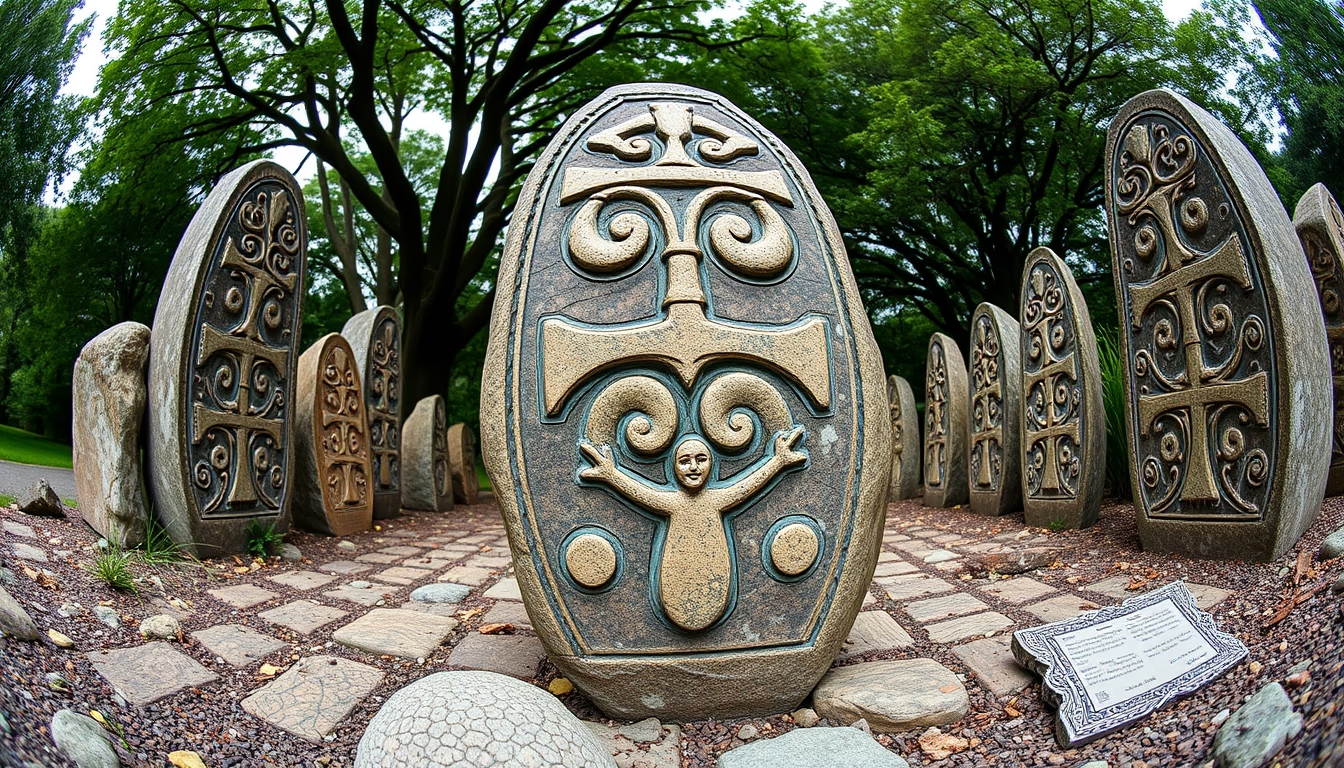
Oghams celtic stone
1344×768 · AVIF · CC BY 4.0
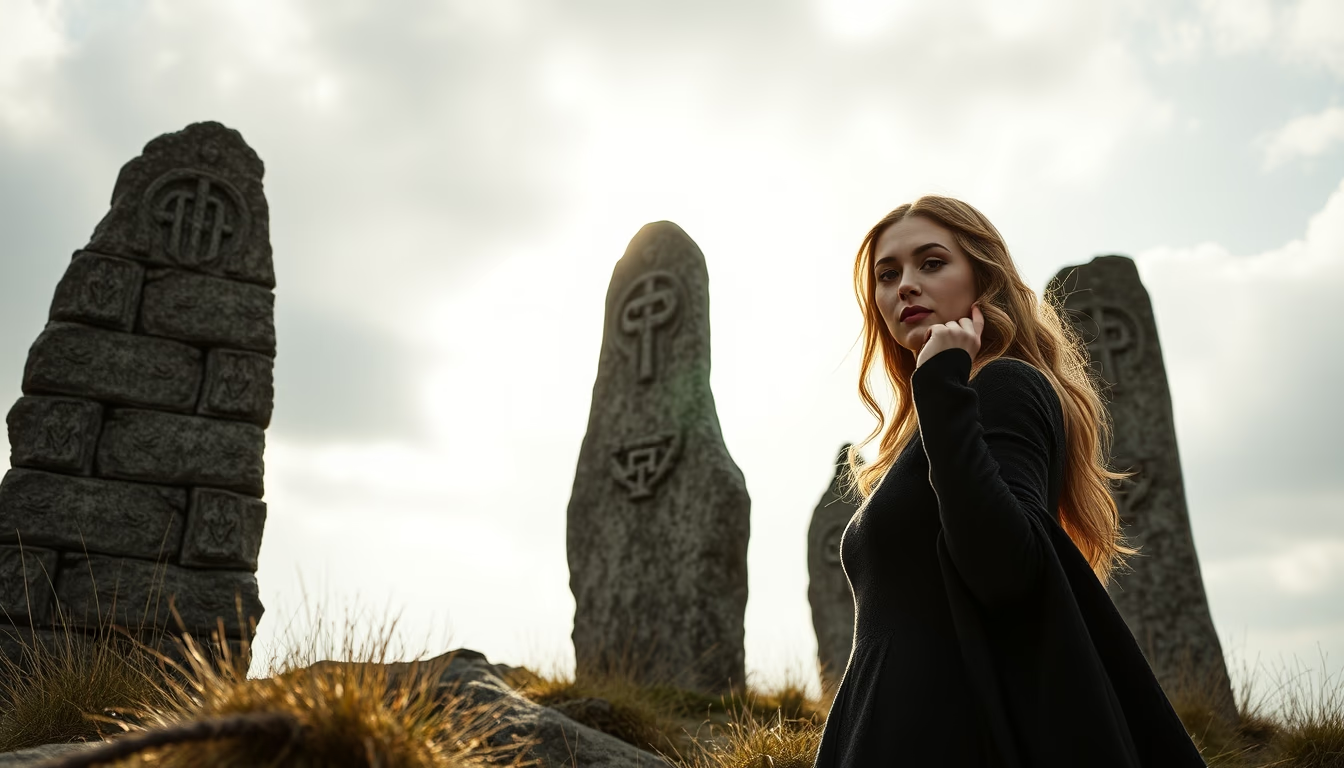
Ogham, an early Irish alphabet carved on stone, dates to the 4th century and is one of Europe's most enigmatic medieval writing systems.
About this subject
Ogham (also spelled Ogam) is an early medieval alphabet used to write the Old Irish language, with inscriptions found predominantly in Ireland, but also in Scotland, Wales, and the Isle of Man. Its origins date to the 4th century AD, though some scholars propose an earlier date. The system consists of 20 basic letters (feadha), represented by strokes and notches arranged along a vertical or horizontal line, often carved on upright stones. Unlike the Latin alphabet, Ogham was primarily used for monumental inscriptions, usually memorials or property markers, recording the deceased's name and paternal lineage.
Ogham stones are among the most significant archaeological remnants of medieval Ireland. Approximately 400 such stones survive, concentrated in counties Kerry, Cork, and Waterford. Most date from the 5th to the 7th centuries, a period of transition from Celtic paganism to Christianity. Deciphering the inscriptions provides valuable insights into the language, genealogy, and social practices of the time. Interestingly, the system was also used in later manuscripts, such as the Book of Ballymote, which includes a treatise on Ogham.
The name 'Ogham' derives from Ogma, the Irish god of eloquence and writing. The alphabet is thought to have been inspired by the Latin alphabet but adapted for carving on wood or stone. The strokes are grouped in sets of one to five, and each letter is named after a tree (e.g., 'Beith' for birch, 'Luis' for rowan). This arboreal association later led to esoteric interpretations, but the original function was practical and funerary. The earliest inscriptions often begin with the word 'MAQI' (genitive of 'macc', son), indicating filiation.
Although Ogham fell out of common use after the 7th century, it was never entirely forgotten. Today, it is rediscovered by linguists, historians, and Celtic culture enthusiasts. Ogham stones are protected as national monuments in Ireland and attract visitors interested in ancient history. Moreover, the alphabet has gained popularity in pop culture, appearing in films, games, and jewelry as a mystical symbol of Celtic traditions.
Frequently Asked Questions
What does Ogham mean?
Ogham (or Ogam) is an early alphabet used for writing Old Irish, consisting of 20 letters represented by strokes carved along a central line. The name derives from Ogma, the Celtic god of eloquence.
Where are Ogham stones found?
About 400 Ogham stones survive, most in Ireland, especially in counties Kerry, Cork, and Waterford. There are also examples in Scotland, Wales, and the Isle of Man.
What was the purpose of Ogham inscriptions?
The inscriptions were mainly funerary memorials or property markers, recording the deceased's name and paternal lineage, often beginning with the word 'MAQI' (son of).
Direct URL
https://pub-c7d6a6ea828543ac903a74a341ccb2e1.r2.dev/imagens/oghams-celtic-stone-high-fashion-editorial-fresh11.avifHow to credit
Include a visible link back to UtilizAí. Copy one of the snippets below:
<a href="https://xn--utiliza-eza.com/en/midia/imagens/oghams-celtic-stone-high-fashion-editorial-fresh11">Oghams celtic stone</a> by <a href="https://xn--utiliza-eza.com">UtilizAí</a>, licensed under <a href="https://creativecommons.org/licenses/by/4.0/">CC BY 4.0</a>.
[Oghams celtic stone](https://xn--utiliza-eza.com/en/midia/imagens/oghams-celtic-stone-high-fashion-editorial-fresh11) by [UtilizAí](https://xn--utiliza-eza.com), CC BY 4.0
License: CC-BY-4.0