Mussel ropes ocean
1344×768 · AVIF · CC BY 4.0
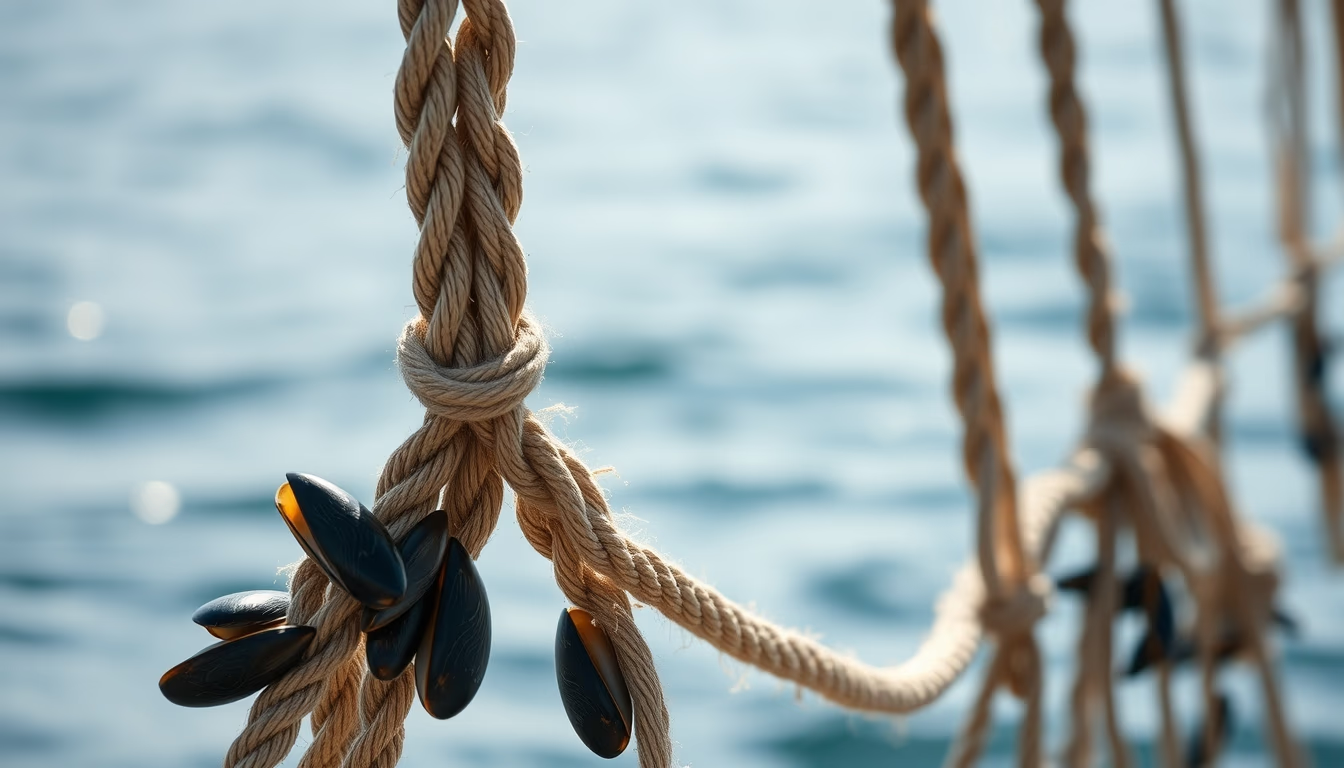
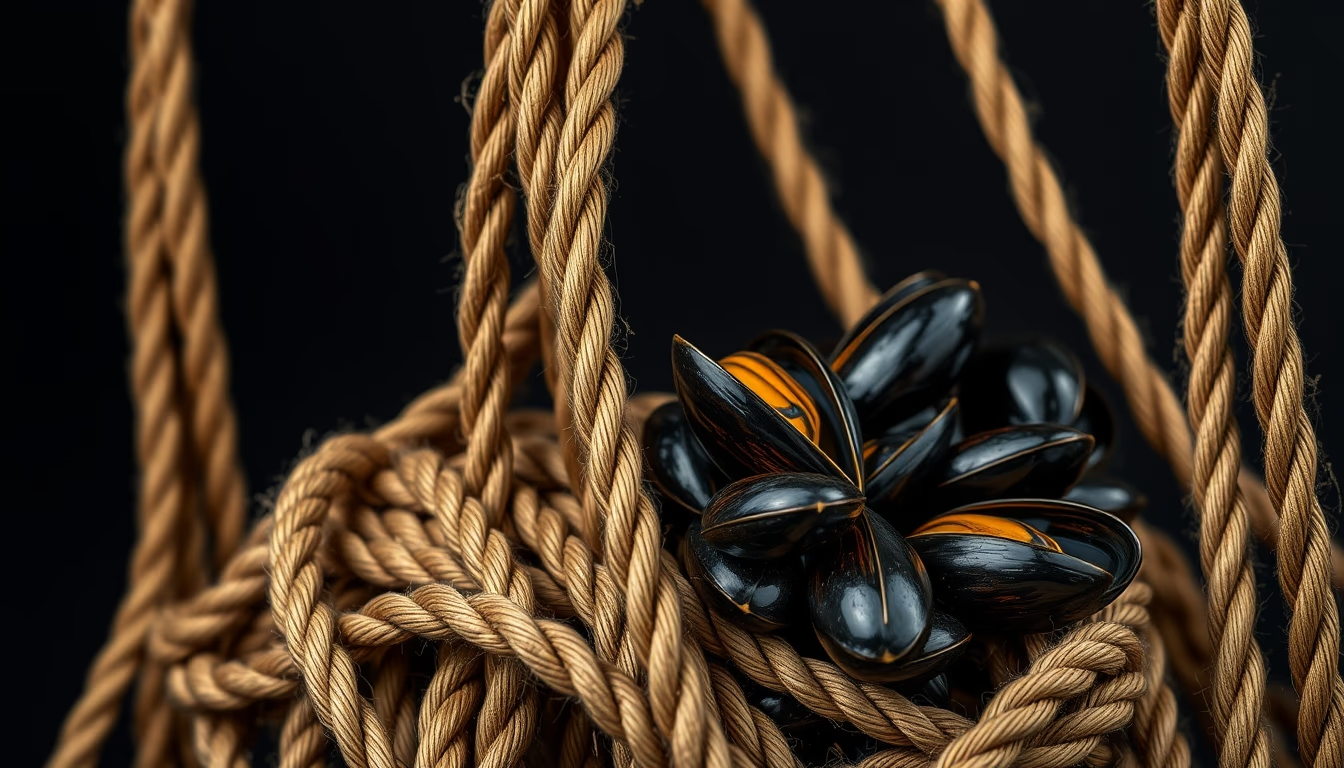
Mussel ropes in the ocean are suspended cultivation structures, allowing shellfish to grow without touching the seabed.
About this subject
Mussel ropes, also known as long-line or suspended cultivation, are an efficient aquaculture method used globally to produce mussels (Mytilus spp.). In this system, natural or synthetic ropes are hung from floating structures anchored at sea, with mussel seeds attached. The mollusks grow attached to the ropes, filtering plankton and organic matter from the water. This process requires no external feeding, as mussels are natural filter feeders.
The technique is widely employed in regions such as Galicia (Spain), the coast of New Zealand, and southern Brazil, especially in Santa Catarina. In Brazil, cultivated mussel production has increased significantly in recent decades, with the species Perna perna being prominent. Ropes are submerged at depths that vary according to temperature and food availability, optimizing growth.
Environmentally, rope cultivation offers benefits such as reducing coastal eutrophication, as mussels consume excess nutrients. Additionally, the structures act as artificial reefs, attracting marine biodiversity. Estimates suggest each rope can yield 10 to 20 kg of mussels per meter, depending on local conditions. Harvesting is done manually or with mechanical equipment, and the mussels are sold fresh, frozen, or processed.
Historically, mussel rope culture was developed in Europe in the 20th century and adapted for different seas. It is a low-cost installation and maintenance activity, accessible to small producers. Sustainability depends on proper management of cultivation density and monitoring of water quality to avoid harmful algal blooms.
Frequently Asked Questions
How do mussel ropes in the ocean work?
The ropes are suspended from floating structures, and mussel seeds are attached. The mussels grow by filtering plankton from the water, with no need for artificial feeding.
What are the environmental benefits of mussel rope culture?
It reduces eutrophication by consuming excess nutrients and creates habitats for other marine species, acting as artificial reefs.
Where is mussel rope cultivation most common?
It is common in Galicia (Spain), New Zealand, and southern Brazil (Santa Catarina), being a traditional technique in these regions.
Direct URL
https://pub-c7d6a6ea828543ac903a74a341ccb2e1.r2.dev/imagens/mussel-ropes-ocean-minimalist-composition-fresh1.avifHow to credit
Include a visible link back to UtilizAí. Copy one of the snippets below:
<a href="https://xn--utiliza-eza.com/en/midia/imagens/mussel-ropes-ocean-minimalist-composition-fresh1">Mussel ropes ocean</a> by <a href="https://xn--utiliza-eza.com">UtilizAí</a>, licensed under <a href="https://creativecommons.org/licenses/by/4.0/">CC BY 4.0</a>.
[Mussel ropes ocean](https://xn--utiliza-eza.com/en/midia/imagens/mussel-ropes-ocean-minimalist-composition-fresh1) by [UtilizAí](https://xn--utiliza-eza.com), CC BY 4.0
License: CC-BY-4.0