Mount kilauea lava
1344×768 · AVIF · CC BY 4.0
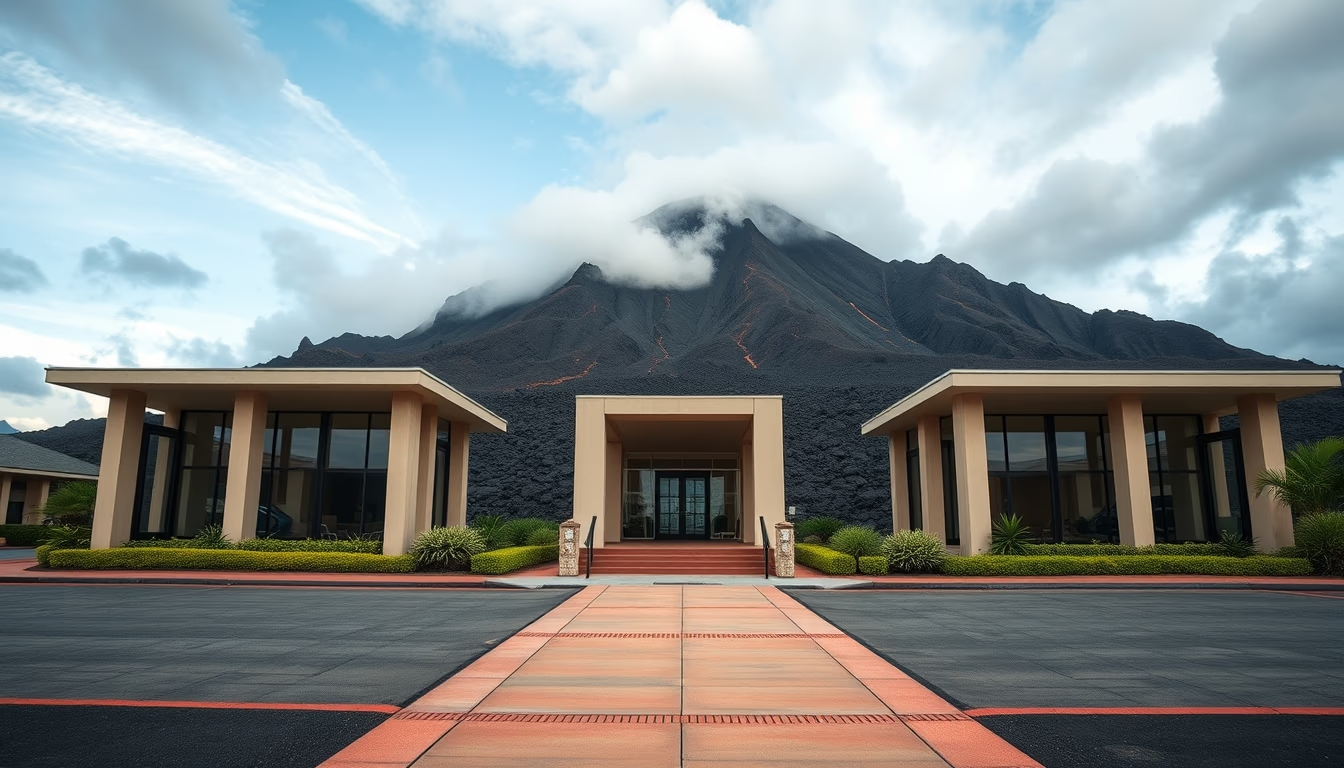
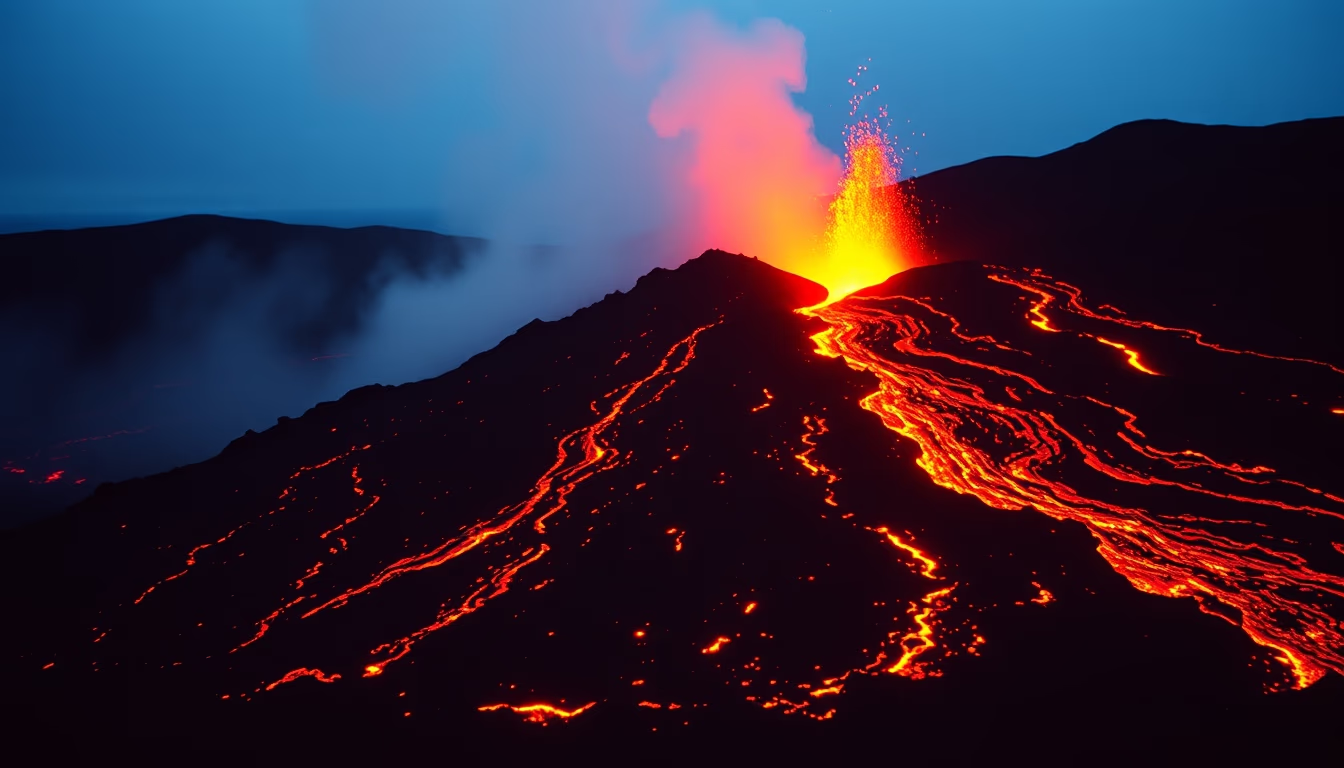
Mount Kilauea in Hawaii is one of the most active volcanoes on Earth, with basaltic lava eruptions that shape the landscape and attract scientists and tourists.
About this subject
Mount Kilauea is a shield volcano located on the Big Island of Hawaii, within Hawaii Volcanoes National Park. Its continuous eruptive activity since 1983, with brief pauses, has made it one of the most monitored and studied volcanoes on the planet. Kilauea's lava is basaltic, with low viscosity, allowing it to flow long distances before solidifying. This behavior creates extensive lava fields and, when it reaches the ocean, forms lava deltas and spectacular interactions with seawater.
Kilauea's significance extends beyond geology. In Hawaiian culture, the volcano is home to the goddess Pele, considered the creator of the islands. Eruptions are seen as divine manifestations, and natives often leave offerings at the caldera's edge. Additionally, Kilauea serves as a natural laboratory for scientists studying volcanic processes, including the formation of lava tubes and the emission of gases such as sulfur dioxide, which affect local air quality.
The most recent major eruption began on January 3, 1983, on the volcano's eastern flank, in the East Rift Zone. This eruption, lasting until 2018 with a pause between 2018 and 2020, produced over 4 km³ of lava, covering about 120 km² of land. In 2018, a series of earthquakes and fissure openings led to the destruction of hundreds of homes in the Leilani Estates subdivision. Kilauea's volcanic activity remains unpredictable, with episodes of lava fountains and flows that can rapidly change direction, requiring constant monitoring by the Hawaiian Volcano Observatory.
Frequently Asked Questions
What is the temperature of Kilauea's lava?
Kilauea's lava typically reaches temperatures between 1,100°C and 1,200°C, depending on the type and distance from the source.
Is Kilauea still erupting in 2025?
Yes, Kilauea continues to erupt intermittently. Currently, activity is concentrated at Halemaʻumaʻu crater, with lava fountains and flows varying in intensity.
Is it safe to visit Kilauea during an eruption?
Hawaii Volcanoes National Park constantly monitors activity and opens areas as safety allows. Visitors must follow ranger guidance and avoid restricted zones due to toxic gases and unstable terrain.
Direct URL
https://pub-c7d6a6ea828543ac903a74a341ccb2e1.r2.dev/imagens/mount-kilauea-lava-architectural-photography-p9.avifHow to credit
Include a visible link back to UtilizAí. Copy one of the snippets below:
<a href="https://xn--utiliza-eza.com/en/midia/imagens/mount-kilauea-lava-architectural-photography-p9">Mount kilauea lava</a> by <a href="https://xn--utiliza-eza.com">UtilizAí</a>, licensed under <a href="https://creativecommons.org/licenses/by/4.0/">CC BY 4.0</a>.
[Mount kilauea lava](https://xn--utiliza-eza.com/en/midia/imagens/mount-kilauea-lava-architectural-photography-p9) by [UtilizAí](https://xn--utiliza-eza.com), CC BY 4.0
License: CC-BY-4.0