Mech robot industrial
1344×768 · AVIF · CC BY 4.0
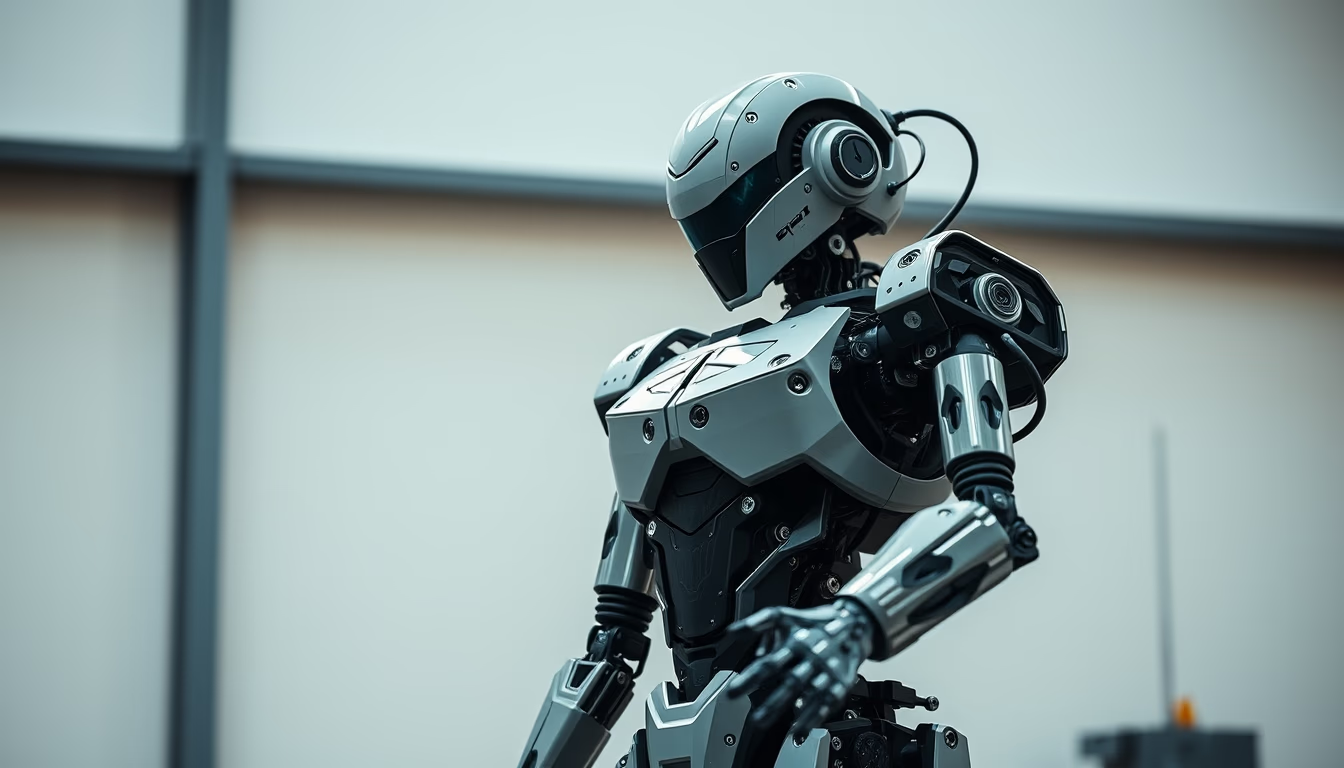
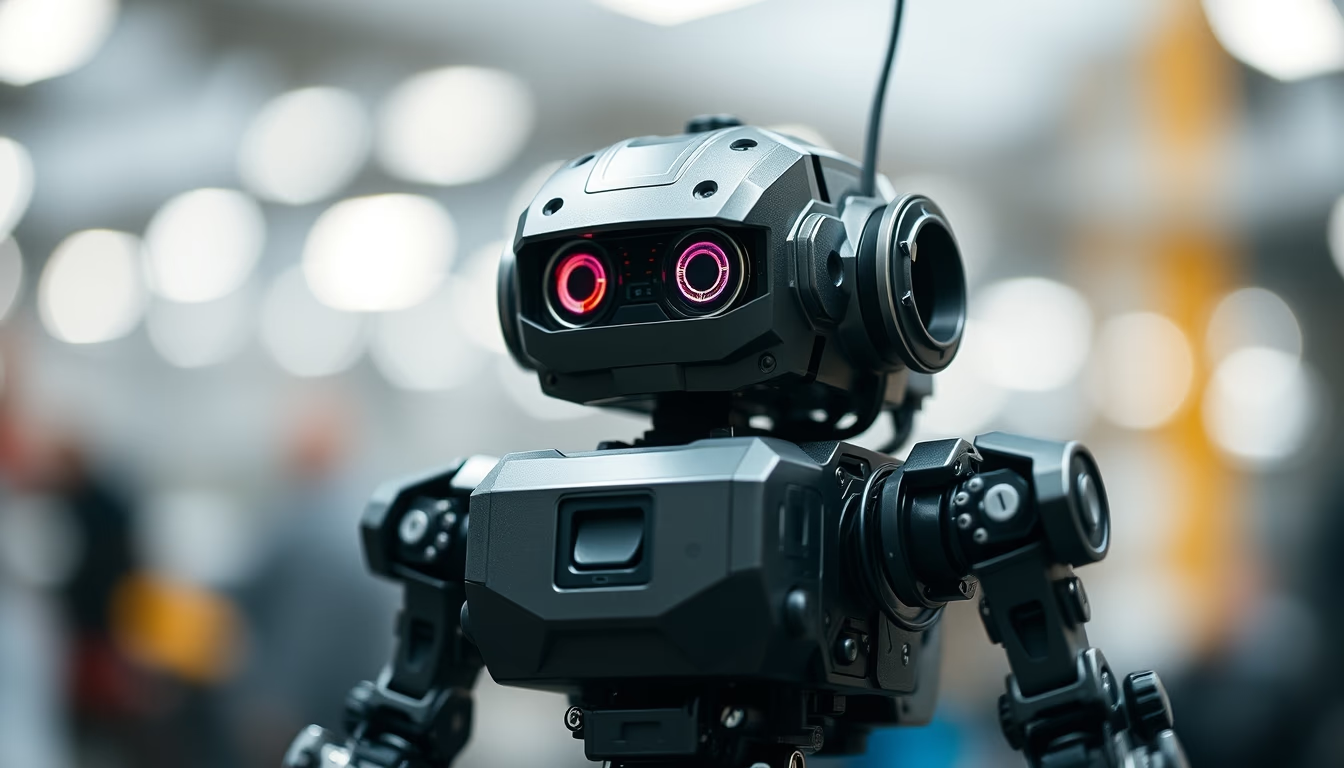
Industrial mech robots are humanoid machines used in factories and science fiction, combining strength and precision for heavy tasks.
About this subject
Industrial mech robots, also known as robotic exoskeletons or walkers, represent a convergence of mechanical engineering and artificial intelligence. Unlike traditional fixed robots, these mechanisms have adaptable legs or wheels to navigate uneven terrain, designed for harsh environments such as mines, power plants, or disaster zones. In science fiction, they appear as combat vehicles or construction tools, but in reality companies like Boston Dynamics and Hyundai are developing functional prototypes for logistics and assembly.
The term "mecha" originates from the Japanese "meka", short for "mechanical", and became popular with anime such as "Mobile Suit Gundam" and "Neon Genesis Evangelion". In the industrial context, these robots are often remotely controlled or operate semi-autonomously, using sensors and cameras to perform welding, painting, or heavy lifting. Data from the International Federation of Robotics indicates that the industrial robot market grows 10% per year, with emphasis on mobile solutions.
A notable curiosity is that the world's first functional mecha, the General Electric Walking Truck (1969), was piloted by a human and weighed 1,360 kg. Modern designs, such as Boston Dynamics' Atlas, can already perform parkour and object manipulation. Safety is a critical aspect: while fixed robots are isolated, mechas require advanced collision systems to prevent accidents with human workers.
In Brazil, the adoption of industrial mechas is still incipient, but sectors like oil and gas are studying their use for maintenance on offshore platforms. The trend is that, as sensor and battery costs decline, these robots will become more common on flexible production lines.
Frequently Asked Questions
What is the difference between a common industrial robot and an industrial mech robot?
Common industrial robots are fixed or have articulated arms, while mechas are mobile and can move around, imitating human or animal form, allowing them to operate in hard-to-reach areas.
Are industrial mechas already used in real factories?
Yes, prototypes and commercial models such as Boston Dynamics Spot and Hyundai Elevate are tested for inspection, logistics, and cargo handling, but full adoption is still limited by cost and regulation.
What are the main challenges to popularizing industrial mechas?
High cost of sensors and actuators, battery autonomy, safety in human environments, and need for specific infrastructure are the biggest obstacles.
Direct URL
https://pub-c7d6a6ea828543ac903a74a341ccb2e1.r2.dev/imagens/mech-robot-industrial-minimalist-composition-fresh5.avifHow to credit
Include a visible link back to UtilizAí. Copy one of the snippets below:
<a href="https://xn--utiliza-eza.com/en/midia/imagens/mech-robot-industrial-minimalist-composition-fresh5">Mech robot industrial</a> by <a href="https://xn--utiliza-eza.com">UtilizAí</a>, licensed under <a href="https://creativecommons.org/licenses/by/4.0/">CC BY 4.0</a>.
[Mech robot industrial](https://xn--utiliza-eza.com/en/midia/imagens/mech-robot-industrial-minimalist-composition-fresh5) by [UtilizAí](https://xn--utiliza-eza.com), CC BY 4.0
License: CC-BY-4.0