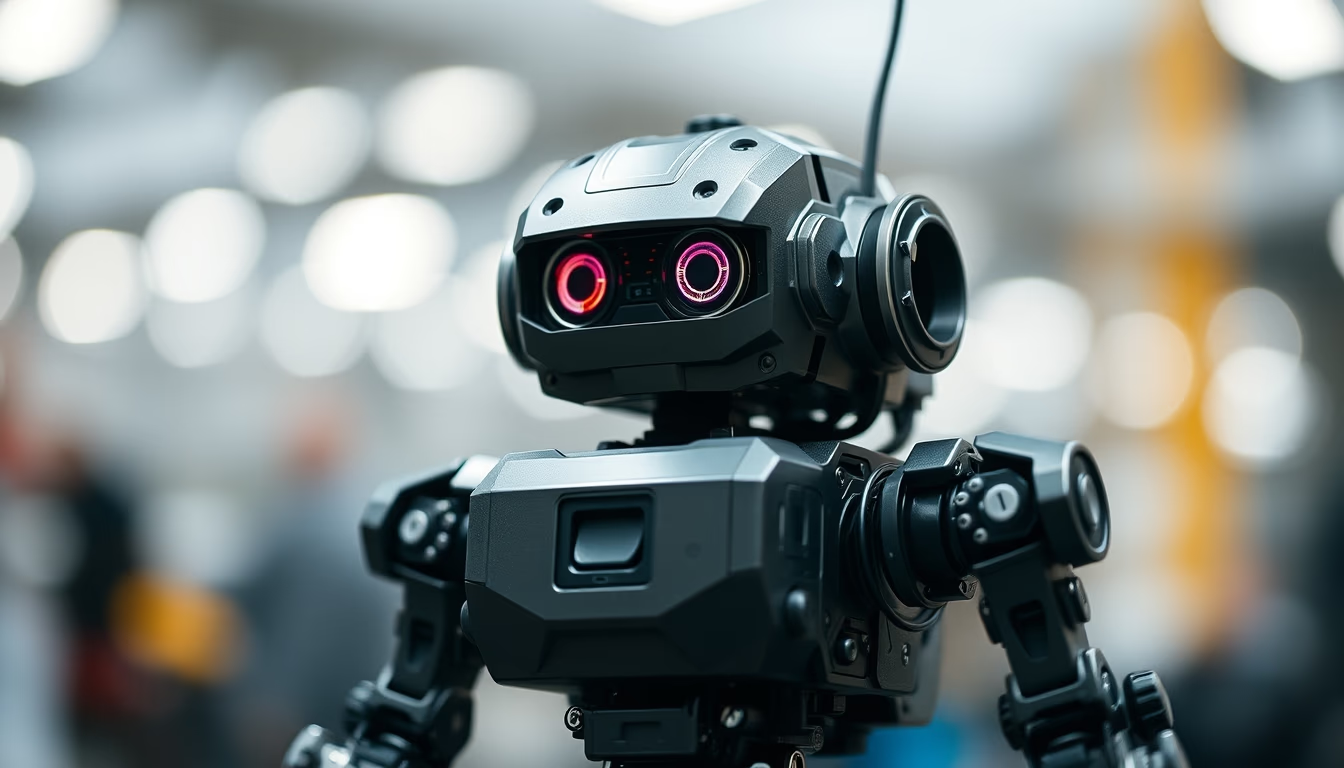
Mech robot industrial
1344×768 · AVIF · CC BY 4.0
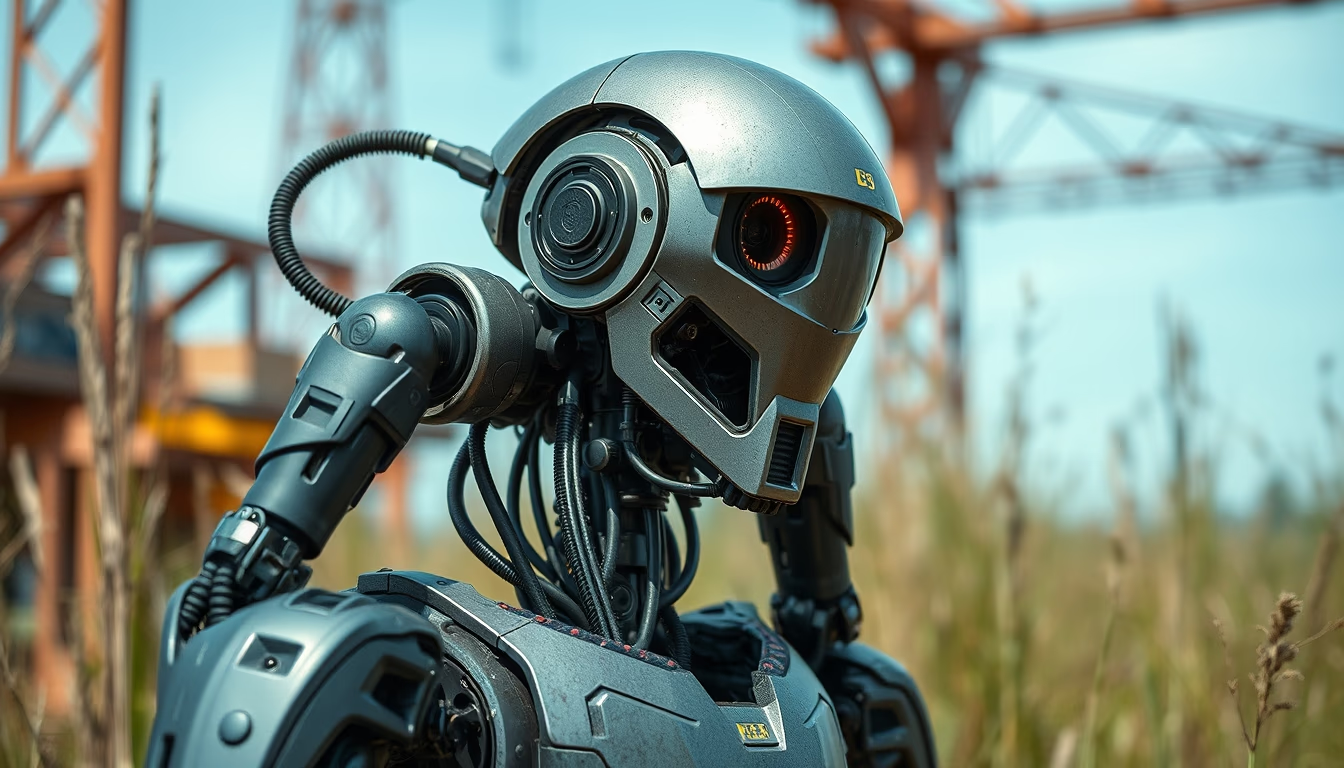
Industrial mech robots are large machines used in factories, mining, and construction, combining brute force with automated precision.
About this subject
Industrial mech robots, also known as mechs or robotic exoskeletons, represent a significant evolution in heavy task automation. Unlike traditional factory robots, these machines are designed to operate in harsh environments such as underground mines, oil platforms, and disaster zones. Companies like Boston Dynamics and Hyundai have developed prototypes capable of lifting tons, while models like NASA's ATLAS were created for rescue missions.
The origin of these systems dates back to the 1960s, with early teleoperators used in nuclear power plants. Since then, the integration of artificial intelligence and LiDAR sensors has enabled mechs to operate semi-autonomously. In Brazil, the use of heavy industrial robots is growing in sectors such as steelmaking and port logistics, with notable implementation in the automotive industry, where welding and painting are performed by large robotic arms.
A curious fact is that the term 'mech' was popularized by Japanese pop culture, but the real engineering of these robots faces challenges of balance and heat dissipation. Unlike light robots, industrial mechs require robust hydraulic structures and advanced torque control systems. The current trend is integration with the Internet of Things (IoT), enabling predictive maintenance and reduced operational costs.
Despite the potential, large-scale adoption still faces high costs and the need for specialized infrastructure. However, projects like Germany's IronHand and UBTECH's Walker show that industrial mechs can revolutionize civil construction and precision agriculture, performing tasks such as steel structure assembly and automated harvesting.
Frequently Asked Questions
What is the difference between an industrial mech and a traditional robot?
Industrial mechs are larger, with load capacities exceeding one ton, and operate in harsh environments. Traditional robots are fixed or lightweight mobile units focused on repeatability in production lines.
Are industrial mechs already used in Brazil?
Yes, especially in the automotive and steel industries. Examples include robotic arms at Volkswagen's plant in São Bernardo do Campo and welding robots at Gerdau.
Do movie-like mechs exist in real life?
Not with the same agility. Real models like the Hyundai Elevate or Boston Dynamics Atlas are functional but still slow with limited autonomy. Fiction inspires, but current engineering prioritizes safety and efficiency.
Direct URL
https://pub-c7d6a6ea828543ac903a74a341ccb2e1.r2.dev/imagens/mech-robot-industrial-documentary-nature-style-fresh9.avifHow to credit
Include a visible link back to UtilizAí. Copy one of the snippets below:
<a href="https://xn--utiliza-eza.com/en/midia/imagens/mech-robot-industrial-documentary-nature-style-fresh9">Mech robot industrial</a> by <a href="https://xn--utiliza-eza.com">UtilizAí</a>, licensed under <a href="https://creativecommons.org/licenses/by/4.0/">CC BY 4.0</a>.
[Mech robot industrial](https://xn--utiliza-eza.com/en/midia/imagens/mech-robot-industrial-documentary-nature-style-fresh9) by [UtilizAí](https://xn--utiliza-eza.com), CC BY 4.0
License: CC-BY-4.0