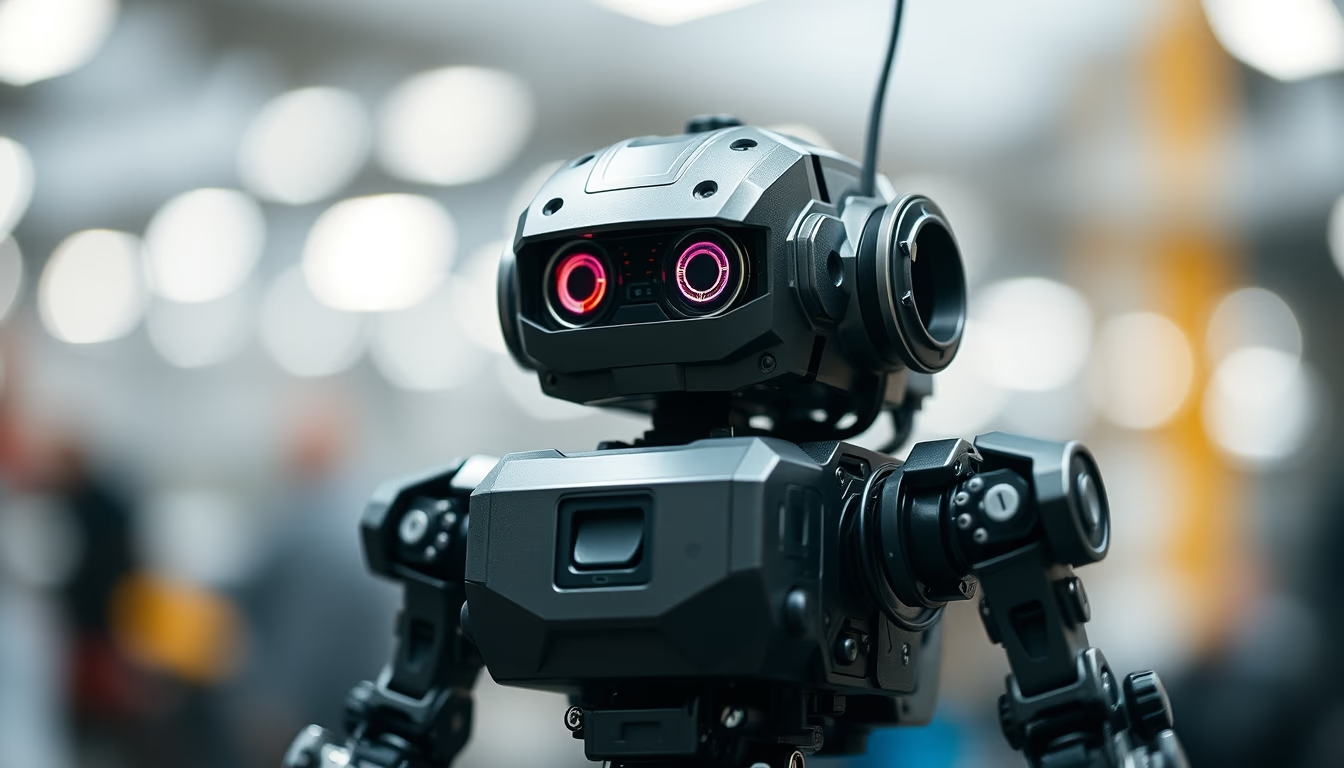
Mech robot industrial
1344×768 · AVIF · CC BY 4.0
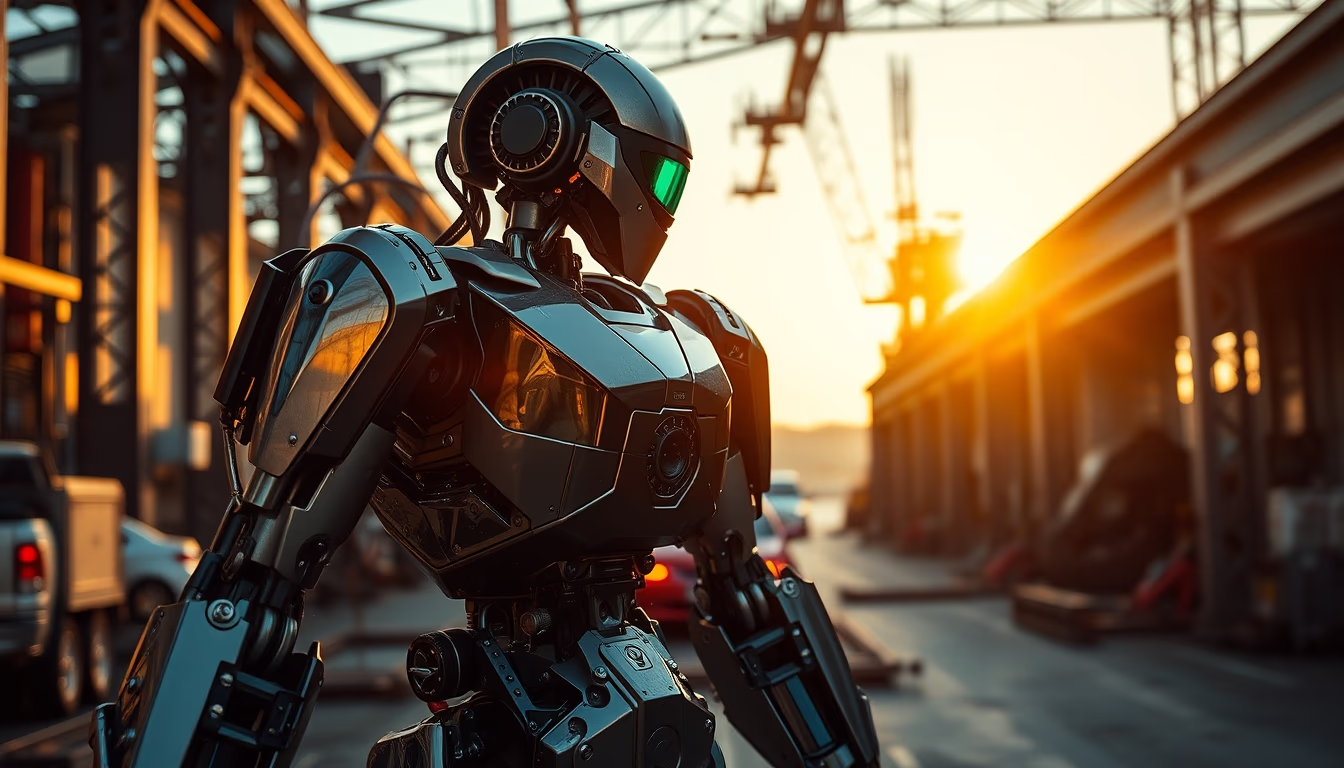
Industrial mech robots blend science fiction and heavy engineering, representing the future of automation in factories and construction.
About this subject
Industrial mech robots are anthropomorphic or bipedal machines designed to perform heavy-duty tasks in factory and construction environments. Unlike traditional robotic arms fixed to the floor, mechs offer mobility and the ability to handle loads of several tons. The concept gained traction in pop culture through works like 'Robotech' and 'Mobile Suit Gundam', but also finds real-world parallels in projects such as Hyundai's exoskeletons and Boston Dynamics' logistics robots.
In the automotive industry, giant robots have been used for decades in welding and painting, but they are stationary. Mechs propose a revolution: they could navigate construction sites freely, assemble structures at height, or assist in disaster response. Japan's Kawasaki Heavy Industries has developed mech prototypes for construction, capable of lifting steel beams with precision.
A practical example is the 'Adam' robot from Apptronik, designed for heavy industrial work with a payload capacity of up to 500 kg. It operates semi-autonomously, combining remote control with balance algorithms. Countries like China and Japan lead research in this area, aiming to address labor shortages in hazardous sectors.
Despite the potential, challenges such as energy consumption, battery costs, and control complexity still limit mass adoption. However, science fiction continues to inspire engineers, and each new generation of sensors and actuators brings mechs closer to the industrial dream.
Frequently Asked Questions
What is the difference between mech robots and conventional industrial robots?
Mech robots are humanoid or bipedal, mobile machines for heavy tasks, whereas conventional industrial robots are usually fixed base articulated arms.
Do mech robots exist in real life?
Yes, functional prototypes exist such as the Adam robot from Apptronik and Hyundai's exoskeleton, but they are not yet widely adopted due to cost and complexity.
How has science fiction influenced the development of industrial robots?
Works like 'Gundam' popularized the idea of robots as working tools, inspiring engineers to pursue anthropomorphic designs for real-world applications.
Direct URL
https://pub-c7d6a6ea828543ac903a74a341ccb2e1.r2.dev/imagens/mech-robot-industrial-cinematic-wide-shot-fresh1.avifHow to credit
Include a visible link back to UtilizAí. Copy one of the snippets below:
<a href="https://xn--utiliza-eza.com/en/midia/imagens/mech-robot-industrial-cinematic-wide-shot-fresh1">Mech robot industrial</a> by <a href="https://xn--utiliza-eza.com">UtilizAí</a>, licensed under <a href="https://creativecommons.org/licenses/by/4.0/">CC BY 4.0</a>.
[Mech robot industrial](https://xn--utiliza-eza.com/en/midia/imagens/mech-robot-industrial-cinematic-wide-shot-fresh1) by [UtilizAí](https://xn--utiliza-eza.com), CC BY 4.0
License: CC-BY-4.0