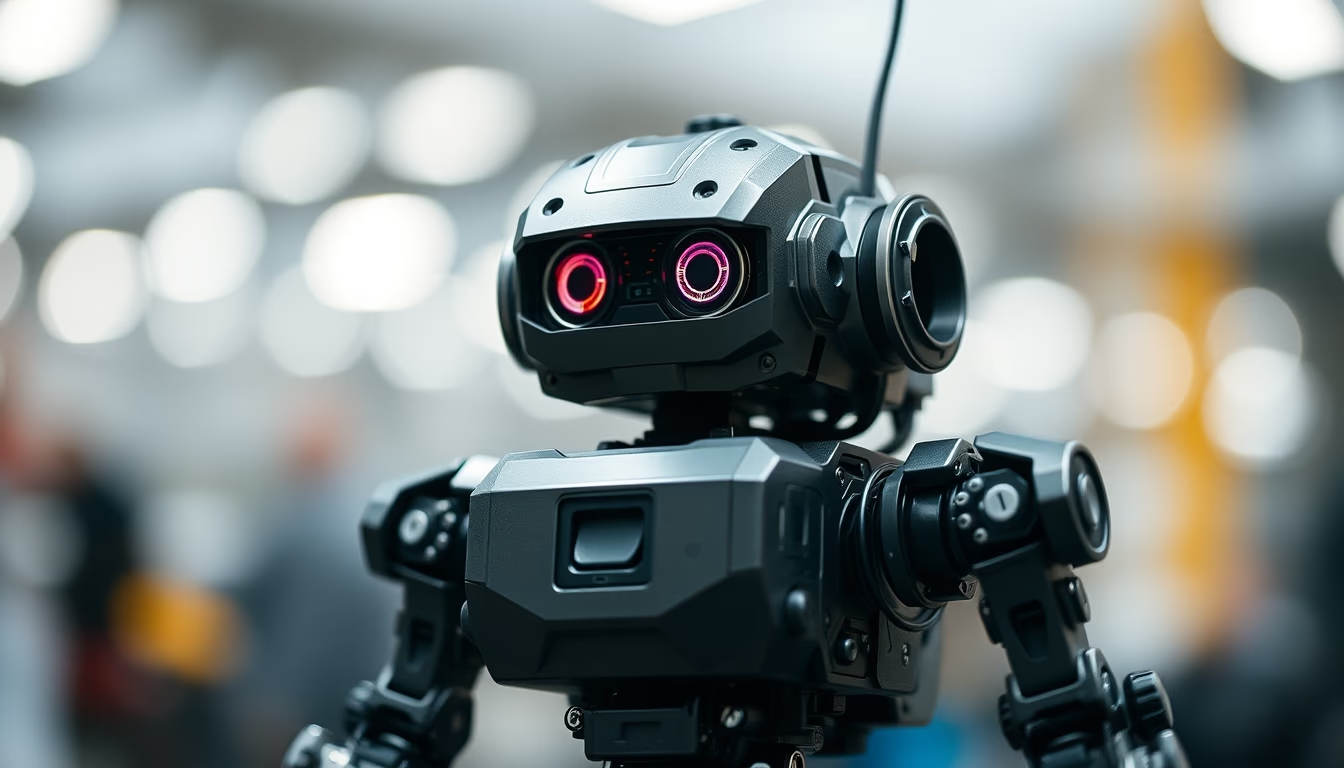
Mech robot industrial
1344×768 · AVIF · CC BY 4.0
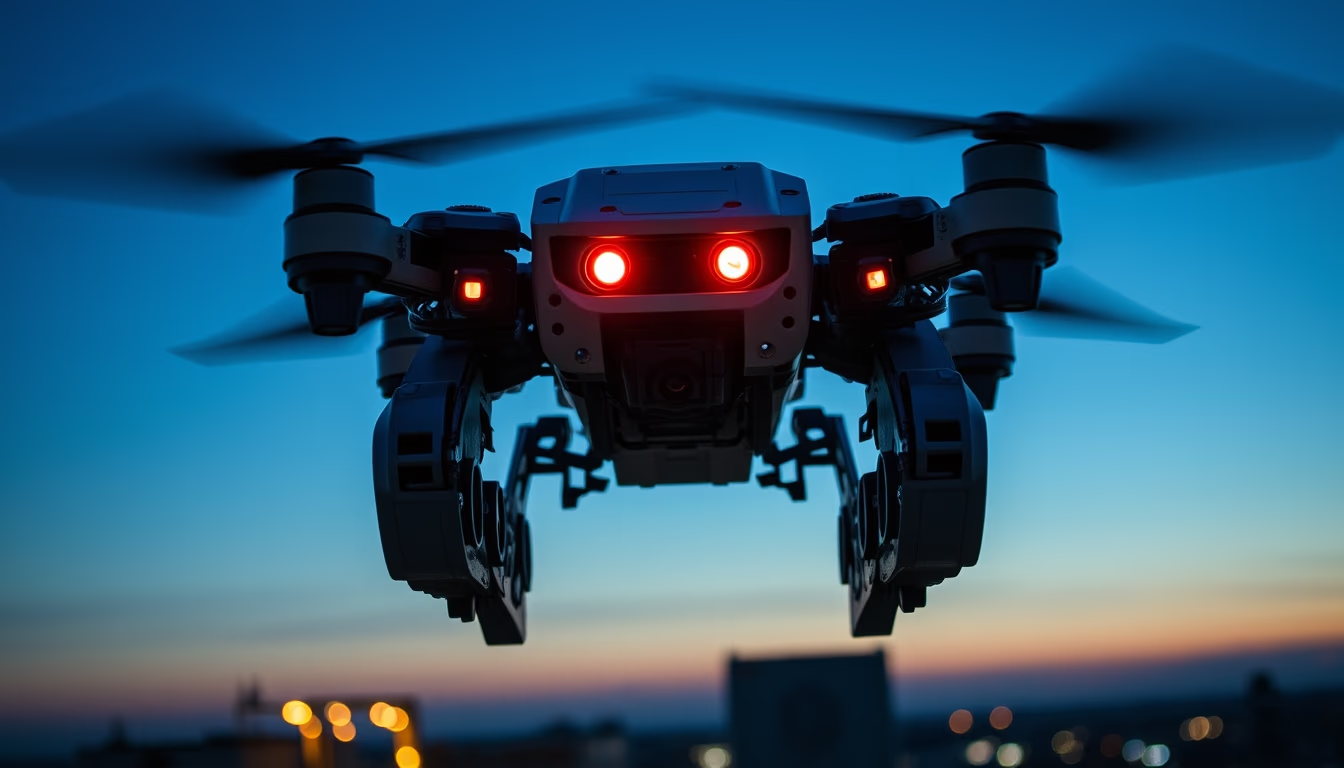
Industrial mech robots combine heavy engineering and artificial intelligence for extreme tasks in mining, construction, and space exploration.
About this subject
Industrial mech robots are humanoid machines or powered exoskeletons designed to amplify human strength or operate autonomously in harsh environments. Unlike fixed assembly-line robots, these vehicles are mobile and versatile, navigating rugged terrain, lifting tons, and performing precise tasks with specialized grippers or tools. The concept originated in Japanese science fiction in the 1970s, but found real-world application in sectors like underground mining, where robots such as Caterpillar's 'Mech' are used for drilling and ore removal without exposing workers to cave-ins. Today, offshore oil and gas industries deploy remotely controlled mechs for pipeline inspection and maintenance at ocean depths, reducing fatal accident risks.
In Japan, development of robotic exoskeletons for medical rehabilitation and assistance to aging workers advances rapidly. Cyberdyne markets the HAL (Hybrid Assistive Limb), an exoskeleton that reads neural signals and amplifies movements, used in factories and hospitals. In construction, Komatsu's 'Robo-Operator' is a teleoperated mech for demolition and site preparation in disaster zones after earthquakes. The global market for heavy industrial robots is estimated to grow 15% annually until 2030, driven by automation demands in mining and space exploration.
Space exploration also adopts mech concepts. NASA tests 'Valkyrie', a 1.88m, 125 kg humanoid robot designed for Mars tasks before astronaut arrival. SpaceX uses mechanical arms (Mechazilla) to catch rockets on the landing pad. These machines face radiation, thermal variation, and low gravity challenges, requiring shielded electronics and adaptive AI systems.
Culturally, mechs permeate anime like Mobile Suit Gundam and games like Titanfall, popularizing the idea of pilots controlling steel giants. This influence accelerates public acceptance and investment in heavy robotics, turning fiction into real tools for productivity and safety.
Frequently Asked Questions
What are the main real-world applications of industrial mech robots?
Underground mining, offshore drilling, construction in disaster areas, medical rehabilitation with exoskeletons, and space exploration such as humanoid robots for Mars.
How do mechs differ from traditional industrial robots?
Mechs are mobile, often humanoid or exoskeletons, designed for unstructured environments, while traditional robots are fixed assembly-line units for repetitive tasks.
What is the cultural impact of mechs on real technology?
Anime and films like 'Gundam' and 'Aliens' inspired engineers and investors, accelerating development of military exoskeletons and rescue robots, such as HAL in Japan.
Direct URL
https://pub-c7d6a6ea828543ac903a74a341ccb2e1.r2.dev/imagens/mech-robot-industrial-aerial-drone-shot-fresh3.avifHow to credit
Include a visible link back to UtilizAí. Copy one of the snippets below:
<a href="https://xn--utiliza-eza.com/en/midia/imagens/mech-robot-industrial-aerial-drone-shot-fresh3">Mech robot industrial</a> by <a href="https://xn--utiliza-eza.com">UtilizAí</a>, licensed under <a href="https://creativecommons.org/licenses/by/4.0/">CC BY 4.0</a>.
[Mech robot industrial](https://xn--utiliza-eza.com/en/midia/imagens/mech-robot-industrial-aerial-drone-shot-fresh3) by [UtilizAí](https://xn--utiliza-eza.com), CC BY 4.0
License: CC-BY-4.0