Maya glyphs codex
1344×768 · AVIF · CC BY 4.0
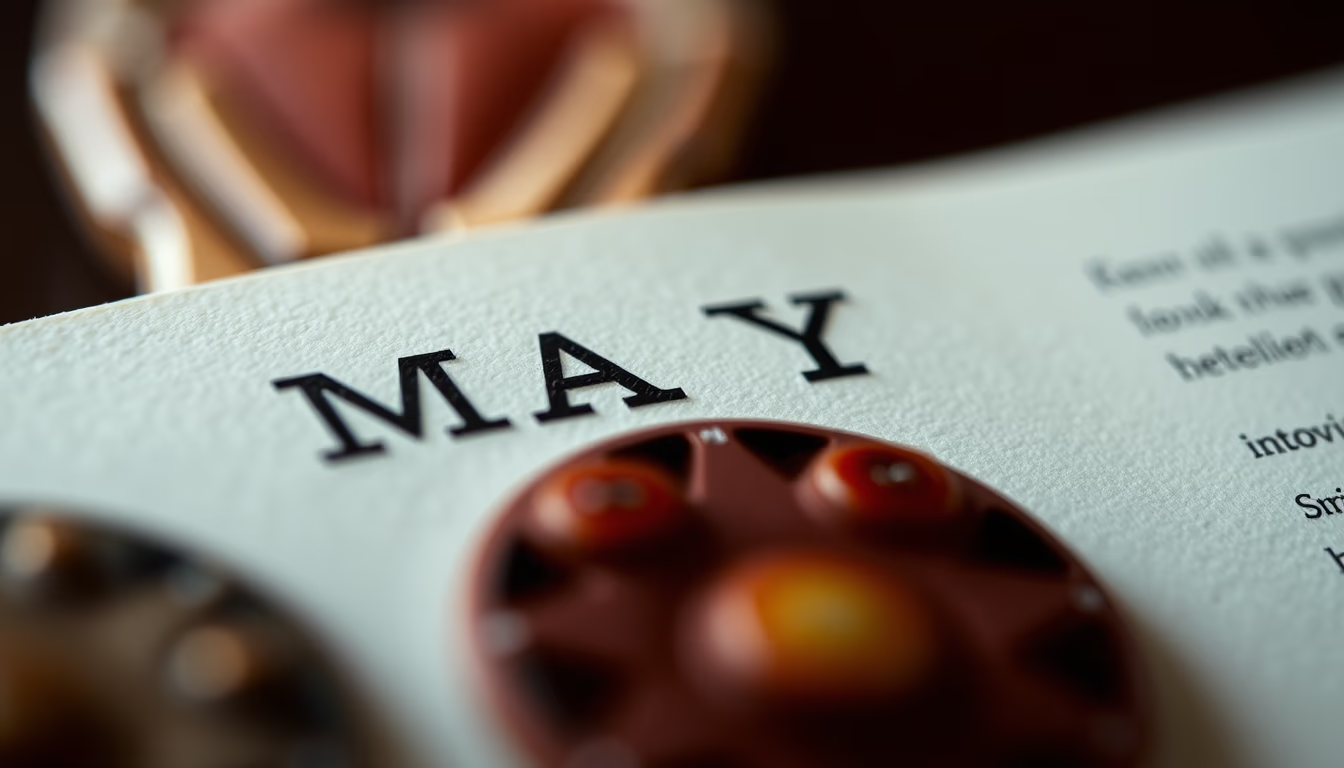
Maya glyphs carved in one of the few surviving codices, revealing the complex logosyllabic script of this Mesoamerican civilization.
About this subject
Maya writing is one of the most sophisticated scripts of the pre-Columbian Americas, combining logograms (symbols representing whole words) and syllabograms (signs for syllables). The glyphs were carved on stone monuments, painted on pottery, and crucially recorded in codices made from fig bark (amate) or deer hide. Unfortunately, only four Maya codices survived colonial destruction and time: the Dresden Codex, the Madrid Codex, the Paris Codex, and the Grolier Codex (authenticity debated). These manuscripts contain calendars, astronomical tables, rituals, and agricultural practices, representing a treasure trove of knowledge.
The Classic Maya script (c. 250-900 AD) used about 800 glyphs, many still not fully deciphered. Progress in decoding, initiated by Yuri Knórosov and continued by epigraphers, revealed that the script recorded languages of the Mayan family, such as Yucatec and Chʼolan. Glyphs often appear in pairs or blocks, read left to right and top to bottom. Each block can contain a main logogram with phonetic affixes.
Codex production required highly specialized artisans, usually scribes of noble lineage. They prepared the surface with a layer of gesso, applied vegetable and mineral paints (red, Maya blue, black), and traced glyphs with fine brushes. The Dresden Codex, for instance, is the most complete and includes a 260-day almanac, the Tzolkin, and tables for predicting eclipses. These books were so valuable that Maya priests consulted them for ceremonies and political decisions.
Today, the study of Maya glyphs helps understand political history, dynasties, and religious beliefs. Decipherment continues to reveal details about wars, alliances, and rituals, such as the ballgame and sacrifices. Although many glyphs remain enigmatic, each new discovery brings researchers closer to the Maya worldview, a civilization that flourished for over two millennia.
Frequently Asked Questions
How many Maya codices still exist?
Currently, only four Maya codices are known: the Dresden Codex, the Madrid Codex, the Paris Codex, and the Grolier Codex, the latter with authenticity still debated.
How are Maya glyphs read?
Maya glyphs are read left to right and top to bottom, usually in pairs or blocks. Each block may contain a main logogram and phonetic affixes indicating pronunciation.
What is the importance of Maya glyphs today?
Maya glyphs allow the reconstruction of the political history, dynasties, and religious beliefs of the Maya civilization. Ongoing decipherment reveals details about wars, alliances, and rituals.
Direct URL
https://pub-c7d6a6ea828543ac903a74a341ccb2e1.r2.dev/imagens/maya-glyphs-codex-macro-closeup-fresh7.avifHow to credit
Include a visible link back to UtilizAí. Copy one of the snippets below:
<a href="https://xn--utiliza-eza.com/en/midia/imagens/maya-glyphs-codex-macro-closeup-fresh7">Maya glyphs codex</a> by <a href="https://xn--utiliza-eza.com">UtilizAí</a>, licensed under <a href="https://creativecommons.org/licenses/by/4.0/">CC BY 4.0</a>.
[Maya glyphs codex](https://xn--utiliza-eza.com/en/midia/imagens/maya-glyphs-codex-macro-closeup-fresh7) by [UtilizAí](https://xn--utiliza-eza.com), CC BY 4.0
License: CC-BY-4.0