Maya glyphs codex
1344×768 · AVIF · CC BY 4.0

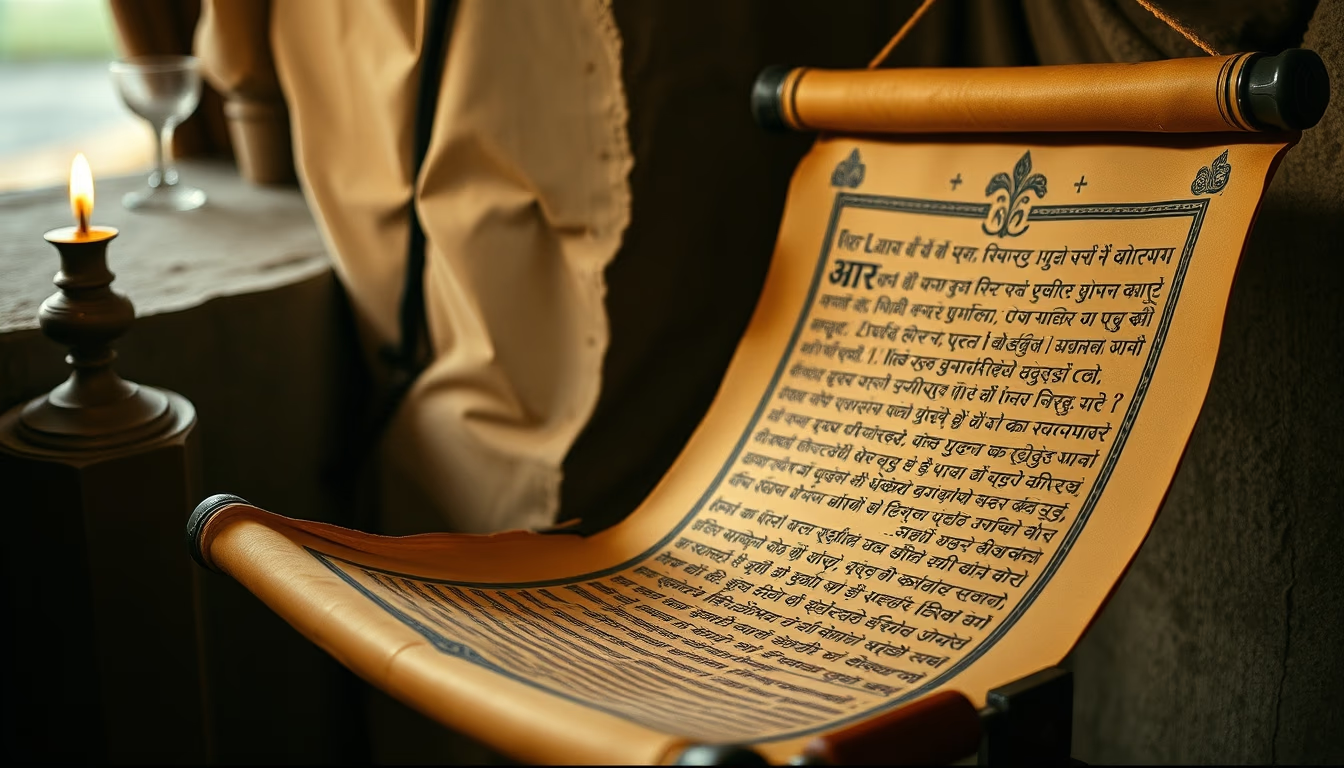
Maya glyphs from one of the few surviving codices, recording astronomical knowledge and calendars of this Mesoamerican civilization.
About this subject
Maya glyphs form one of the most complex writing systems of pre-Columbian America. Unlike modern alphabets, Maya writing is logosyllabic: each glyph can represent an entire word (logogram) or a syllable. This combination allowed recording everything from historical events to intricate astronomical calculations. The image depicts a fragment of a Maya codex, of which only four survived colonial destruction: the Dresden, Madrid, Paris, and Grolier codices (the latter's authenticity debated).
The codices were made of fig tree bark (amate) coated with stucco, folded into screenfold books. The most complete, the Dresden Codex, contains Venus tables, eclipse predictions, and lunar cycles, revealing the Maya's advanced mathematical knowledge. Glyphs were painted with fine brushes using mineral and plant pigments: red (hematite), blue (palygorskite), and black (charcoal). The fish-eye perspective emphasizes the curvature of the support and the density of characters.
Decipherment of Maya glyphs began in the 19th century with Yuri Knorosov's phonetic hypothesis and progressed through epigraphic finds at sites like Palenque and Tikál. Today, about 80% of known texts can be read, though many ritual and calendrical aspects remain under study. Maya writing was used continuously until the 16th century, coexisting with Spanish during the conquest.
Glyphs are not merely decorative: each element carries specific meaning. For example, the glyph "Ahau" denotes a lord or ruler, while "Kin" symbolizes the sun or day. Their combination in historical texts has allowed reconstruction of dynasties and wars, such as the rivalry between Tikál and Calakmul. Recent infrared studies revealed hidden ink layers, indicating some codices were reused or corrected.
Frequently Asked Questions
What do Maya glyphs represent?
Maya glyphs represent words or syllables in a logosyllabic writing system. They record everything from ruler names and dates to astronomical events and religious rituals.
How many Maya codices survive?
Only four Pre-Columbian Maya codices are known: the Dresden, Madrid, Paris, and Grolier. They date from the 13th to 15th centuries AD and cover calendars, astronomy, and divination.
How were Maya glyphs deciphered?
Decipherment advanced in the 20th century with Yuri Knorosov's phonetic hypothesis. Since then, epigraphers like Linda Schele have helped read about 80% of known texts.
Direct URL
https://pub-c7d6a6ea828543ac903a74a341ccb2e1.r2.dev/imagens/maya-glyphs-codex-fish-eye-wide-angle-fresh0.avifHow to credit
Include a visible link back to UtilizAí. Copy one of the snippets below:
<a href="https://xn--utiliza-eza.com/en/midia/imagens/maya-glyphs-codex-fish-eye-wide-angle-fresh0">Maya glyphs codex</a> by <a href="https://xn--utiliza-eza.com">UtilizAí</a>, licensed under <a href="https://creativecommons.org/licenses/by/4.0/">CC BY 4.0</a>.
[Maya glyphs codex](https://xn--utiliza-eza.com/en/midia/imagens/maya-glyphs-codex-fish-eye-wide-angle-fresh0) by [UtilizAí](https://xn--utiliza-eza.com), CC BY 4.0
License: CC-BY-4.0