Maya glyphs codex
1344×768 · AVIF · CC BY 4.0

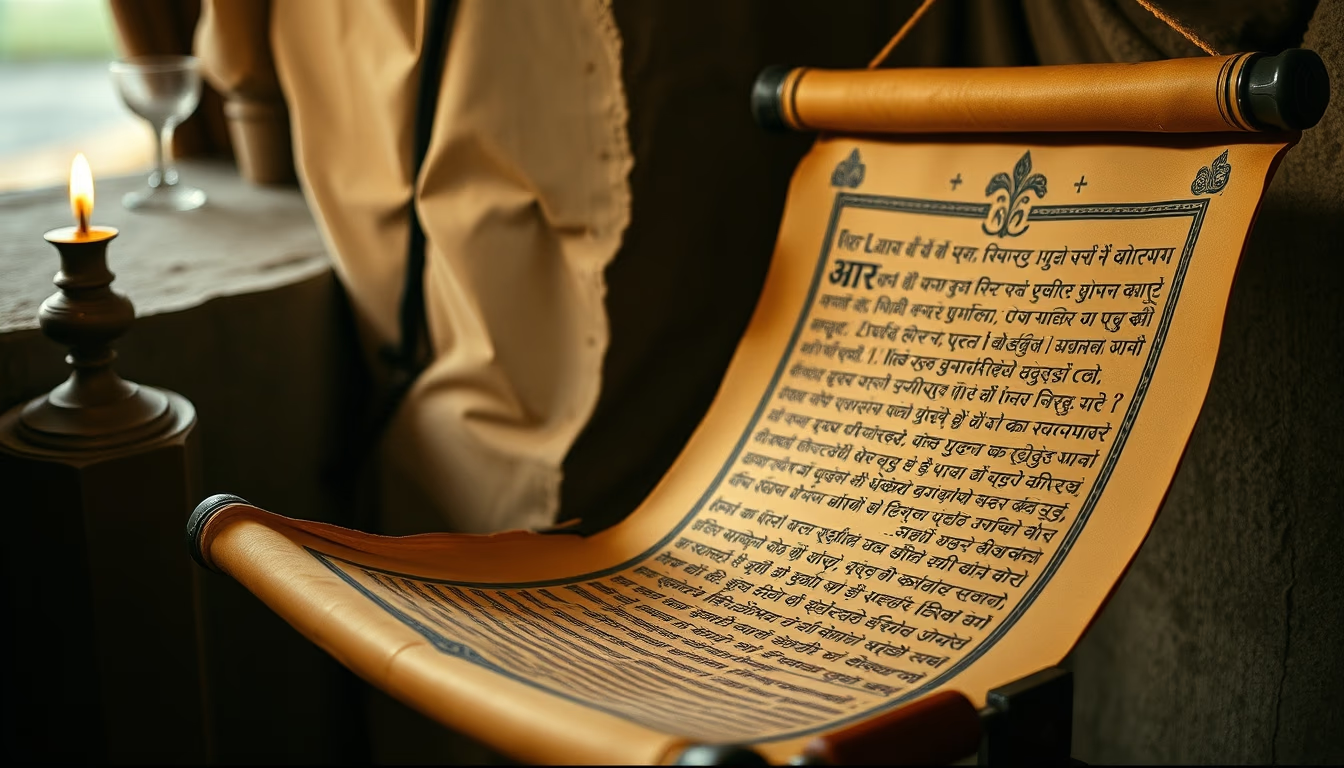
Maya glyphs in an ancient codex, revealing the hieroglyphic writing of one of the most advanced civilizations in Mesoamerica.
About this subject
Maya glyphs make up one of the most complex and sophisticated writing systems of pre-Columbian America. Used for centuries in the region that now includes Mexico, Guatemala, Belize, Honduras, and El Salvador, these symbols recorded historical events, religious rituals, astronomical observations, and administrative data. Unlike many writing systems, Maya glyphs combined logograms (symbols representing words or ideas) with phonetic syllables, allowing precise representation of the spoken language.
The term "codex" refers to books made from treated fig bark, folded in an accordion style and coated with a thin layer of lime to receive paint. Unfortunately, only four Maya codices survived colonial destruction and the passage of time: the Dresden Codex, the Madrid Codex, the Paris Codex, and the Grolier Codex (the latter's authenticity is contested). These documents are invaluable sources of knowledge about Maya culture, including precise astronomical tables and complex calendars.
Maya writing was gradually deciphered over the 20th century, with major contributions from epigraphers such as Yuri Knorozov, Tatiana Proskouriakoff, and Linda Schele. Knorozov demonstrated that the glyphs had a phonetic component, revolutionizing modern understanding. Today, about 90% of surviving texts can be read, revealing details about rulers, dynasties, and historical events previously lost.
Glyphs were not only functional but also artistic. Maya scribes held high social status and often signed their works. Each glyph was drawn with aesthetic care, incorporating elements of gods, animals, and everyday objects. The written tradition continued after the Spanish conquest, with some Maya adapting the Latin alphabet to record their own histories, such as in the Popol Vuh.
Frequently Asked Questions
How many glyphs are in the Maya writing system?
The Maya writing system is estimated to have about 800 to 1,000 different glyphs, though only about 300 were commonly used at any given time.
Can Maya glyphs be read today?
Yes, approximately 90% of Maya texts can be read thanks to the work of epigraphers. Decipherment continues, but current knowledge allows interpretation of most inscriptions.
What did the Maya codices record?
The Maya codices contained information on astronomy, calendars, rituals, divination, and mathematical accounts. For example, the Dresden Codex includes tables for Venus phases and solar eclipses.
Direct URL
https://pub-c7d6a6ea828543ac903a74a341ccb2e1.r2.dev/imagens/maya-glyphs-codex-documentary-nature-style-fresh12.avifHow to credit
Include a visible link back to UtilizAí. Copy one of the snippets below:
<a href="https://xn--utiliza-eza.com/en/midia/imagens/maya-glyphs-codex-documentary-nature-style-fresh12">Maya glyphs codex</a> by <a href="https://xn--utiliza-eza.com">UtilizAí</a>, licensed under <a href="https://creativecommons.org/licenses/by/4.0/">CC BY 4.0</a>.
[Maya glyphs codex](https://xn--utiliza-eza.com/en/midia/imagens/maya-glyphs-codex-documentary-nature-style-fresh12) by [UtilizAí](https://xn--utiliza-eza.com), CC BY 4.0
License: CC-BY-4.0