Maya glyphs codex
1344×768 · AVIF · CC BY 4.0

Maya glyphs and the surviving codices reveal the sophistication of writing and astronomy in the pre-Columbian Maya civilization.
About this subject
Maya glyphs form a logosyllabic writing system, composed of over 800 signs representing syllables and words. This system was used for more than two millennia in Mesoamerica, primarily to record history, rituals, and astronomical knowledge of the Maya civilization. The decipherment of the glyphs, begun in the 19th century and intensified in the 1950s and 1960s, made it possible to understand aspects of Maya political and religious life that were previously unknown.
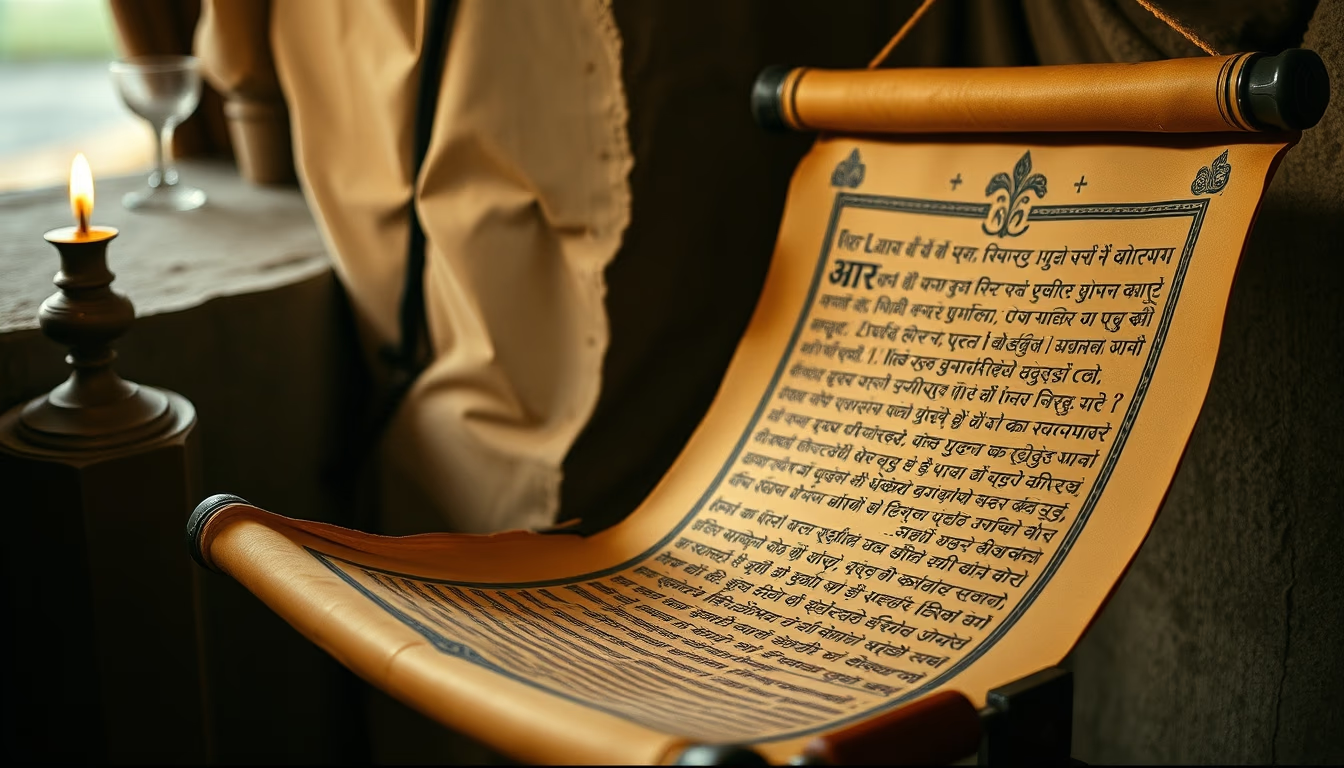
Of the thousands of Maya books that existed before the arrival of the Spanish, only four codices survive today. They are the Dresden Codex, the Madrid Codex, the Paris Codex, and the Grolier Codex. The most famous is the Dresden Codex, which contains detailed astronomical tables, including predictions for Venus and eclipses. The Madrid Codex, the longest, deals with rituals, ceremonies, agricultural practices, and astronomy. The Paris Codex focuses on prophecies and end-of-cycle rituals, while the Grolier Codex, whose authenticity was recently confirmed, centers on the Venus calendar.
The destruction of most codices occurred during the Spanish conquest, especially under the orders of Bishop Diego de Landa, who burned a large number of Maya books, considering them pagan. This act of iconoclasm eliminated a vast cultural heritage, leaving only fragments of Maya knowledge. The study of the surviving codices, combined with inscriptions on stelae and monuments, has allowed partial reconstruction of Maya history, such as the dynasties of city-states like Tikal, Palenque, and Copán.
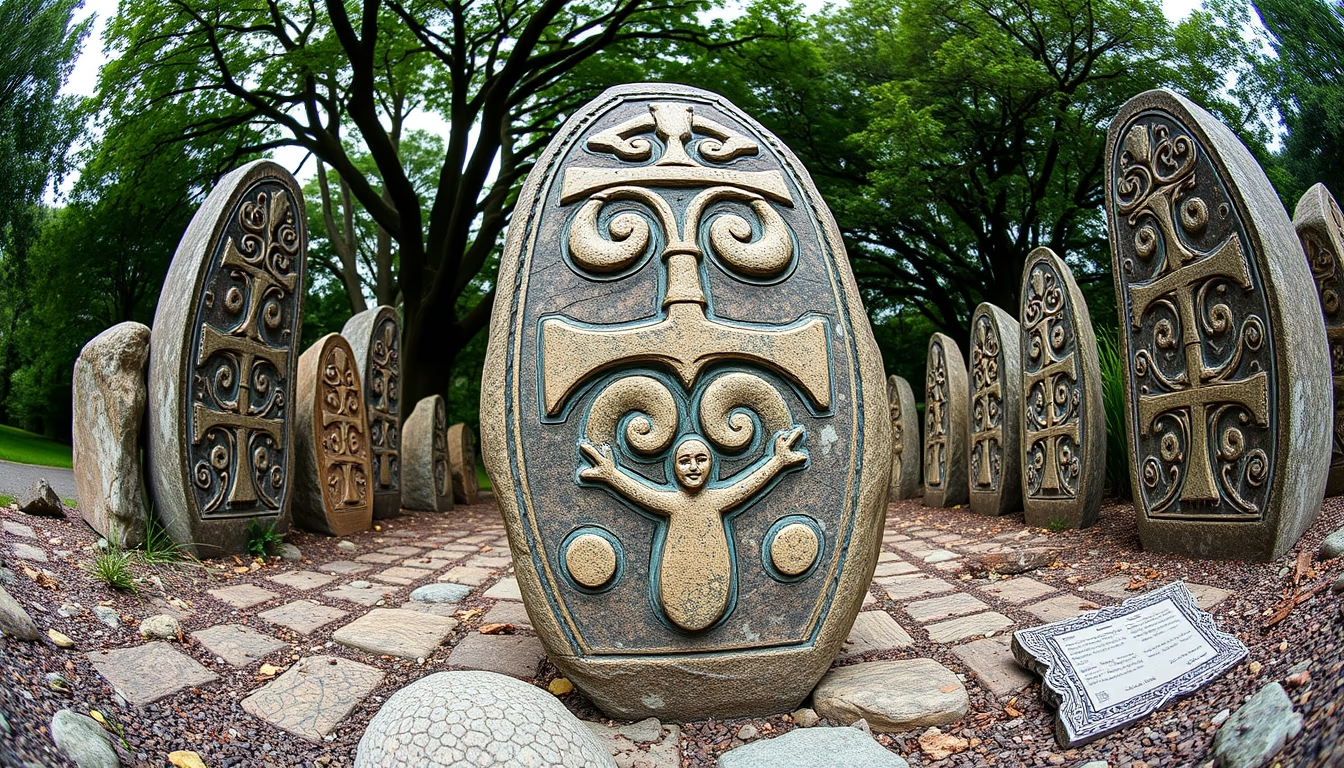
A notable curiosity is that Maya glyphs were also carved on stone, wood, and pottery, and their writing was often accompanied by artistic representations of rulers, gods, and events. The Maya writing system is considered one of the most complex in the ancient Americas, alongside Zapotec and Mixtec writing. Continued study of the glyphs and codices still reveals new information about the Maya worldview, such as the importance of celestial cycles and the relationship between political power and religion.
Frequently Asked Questions
What are Maya glyphs?
Maya glyphs are the symbols of the Maya writing system, a logosyllabic script combining logograms and syllabic signs. They were used to record historical events, religious rituals, and astronomical knowledge on monuments, pottery, and codices.
How many Maya codices still exist?
Only four Maya codices are known to survive: the Dresden Codex, Madrid Codex, Paris Codex, and Grolier Codex. Most Maya books were destroyed during the Spanish conquest by colonizers and missionaries.
What do the Maya codices contain?
The Maya codices contain information on astronomy, calendars, rituals, prophecies, and agricultural practices. The Dresden Codex includes Venus tables and eclipse predictions, while the Madrid Codex covers ceremonies and daily activities.
Direct URL
https://pub-c7d6a6ea828543ac903a74a341ccb2e1.r2.dev/imagens/maya-glyphs-codex-cinematic-wide-shot-fresh4.avifHow to credit
Include a visible link back to UtilizAí. Copy one of the snippets below:
<a href="https://xn--utiliza-eza.com/en/midia/imagens/maya-glyphs-codex-cinematic-wide-shot-fresh4">Maya glyphs codex</a> by <a href="https://xn--utiliza-eza.com">UtilizAí</a>, licensed under <a href="https://creativecommons.org/licenses/by/4.0/">CC BY 4.0</a>.
[Maya glyphs codex](https://xn--utiliza-eza.com/en/midia/imagens/maya-glyphs-codex-cinematic-wide-shot-fresh4) by [UtilizAí](https://xn--utiliza-eza.com), CC BY 4.0
License: CC-BY-4.0