Maya glyphs codex
1344×768 · AVIF · CC BY 4.0

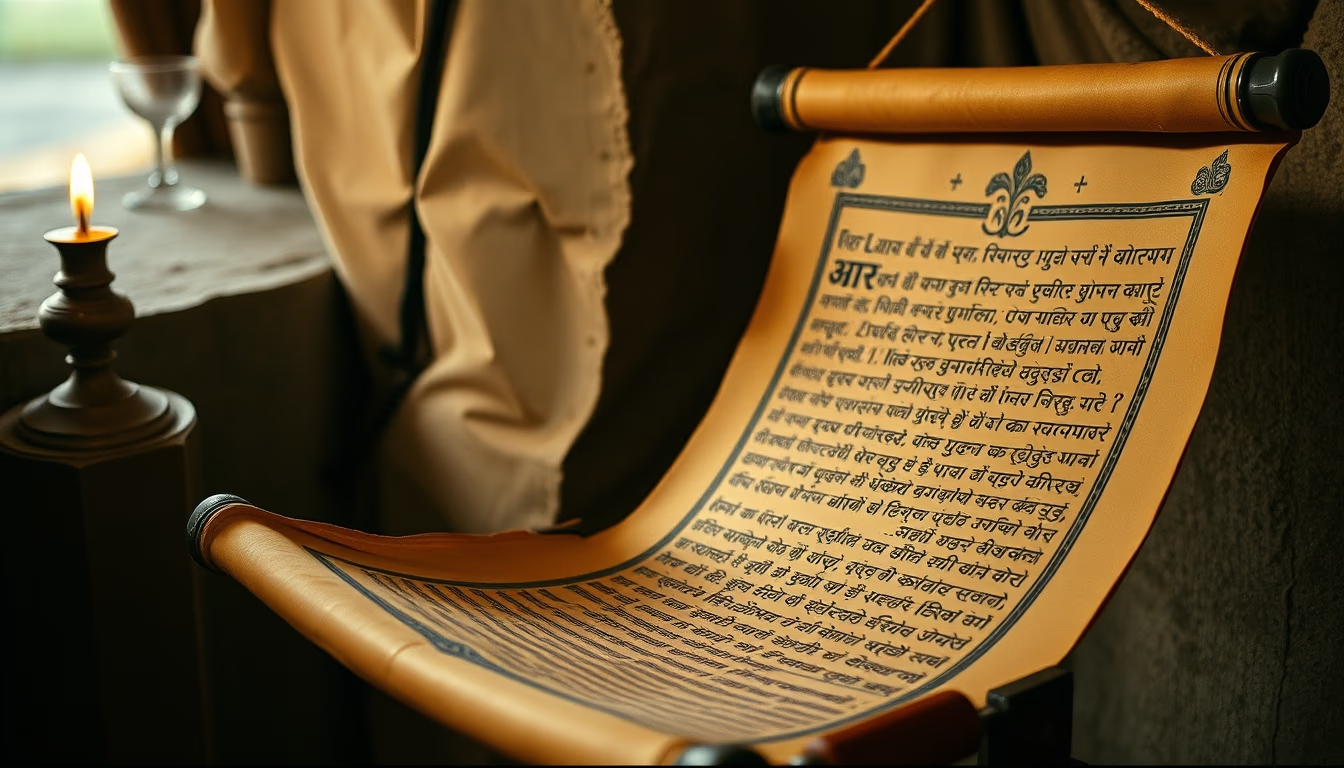
Maya glyphs from an ancient codex, revealing the complex logosyllabic writing system of the Maya civilization, used to record calendars, astronomy, and rituals.
About this subject
Maya glyphs are the written expression of the Maya civilization, one of the few pre-Columbian societies to develop a complete writing system. This system is logosyllabic, combining logograms (symbols representing whole words) and syllabic signs (representing syllables). An estimated 800 distinct glyphs exist, though many remain only partially deciphered. Maya writing was used on stone monuments, pottery, and especially in codices, books made from fig bark or deerskin, folded in a screenfold format.
Of the thousands of codices that existed before the Spanish conquest, only four survive: the Dresden Codex, the Madrid Codex, the Paris Codex, and the Grolier Codex. The Dresden Codex is the most complete, containing detailed astronomical tables including eclipse predictions and the cycles of the planet Venus. The Madrid Codex, the longest, focuses on rituals, ceremonies, and agricultural practices. The damaged Paris Codex deals with prophecies and New Year rituals. The Grolier Codex, discovered in the 1960s, is controversial regarding authenticity but contains a Venus calendar.
Decipherment of Maya glyphs advanced significantly in the 20th century, thanks to contributions from Yuri Knorozov, who demonstrated the phonetic nature of the script, and epigraphers such as Linda Schele and David Stuart. Today, about 60% of glyphs can be read, enabling understanding of Maya history, mythology, and science. Each glyph may consist of a main sign with affixes that modify its meaning, a complexity reflecting the intellectual sophistication of this culture.
Maya glyphs are not only a communication system but also visual art. Scribes were highly trained elite members of society. Use of colors like red, blue, and black added symbolic depth. Unfortunately, the burning of codices by Spanish missionaries in the 16th century destroyed most of this knowledge, but the surviving examples continue to fascinate scholars and the public, offering a window into the Maya world.
Frequently Asked Questions
How many Maya codices have survived?
Only four pre-Columbian Maya codices survive: the Dresden Codex, the Madrid Codex, the Paris Codex, and the Grolier Codex. All date from the Postclassic period (c. 900, 1500 AD).
How are Maya glyphs read?
Maya glyphs are read in double columns, from left to right and top to bottom. Each glyph block can represent a word or a syllable, following a 'block-by-block' pattern. The script is logosyllabic, combining logograms and syllabic signs.
What do the Maya codices contain?
The Maya codices primarily contain astronomical information, calendars, eclipse tables, Venus cycles, rituals, agricultural ceremonies, and prophecies. They were used by priests to guide religious activities and daily practices.
Direct URL
https://pub-c7d6a6ea828543ac903a74a341ccb2e1.r2.dev/imagens/maya-glyphs-codex-aerial-drone-shot-fresh6.avifHow to credit
Include a visible link back to UtilizAí. Copy one of the snippets below:
<a href="https://xn--utiliza-eza.com/en/midia/imagens/maya-glyphs-codex-aerial-drone-shot-fresh6">Maya glyphs codex</a> by <a href="https://xn--utiliza-eza.com">UtilizAí</a>, licensed under <a href="https://creativecommons.org/licenses/by/4.0/">CC BY 4.0</a>.
[Maya glyphs codex](https://xn--utiliza-eza.com/en/midia/imagens/maya-glyphs-codex-aerial-drone-shot-fresh6) by [UtilizAí](https://xn--utiliza-eza.com), CC BY 4.0
License: CC-BY-4.0