Martian colony dome
1344×768 · AVIF · CC BY 4.0
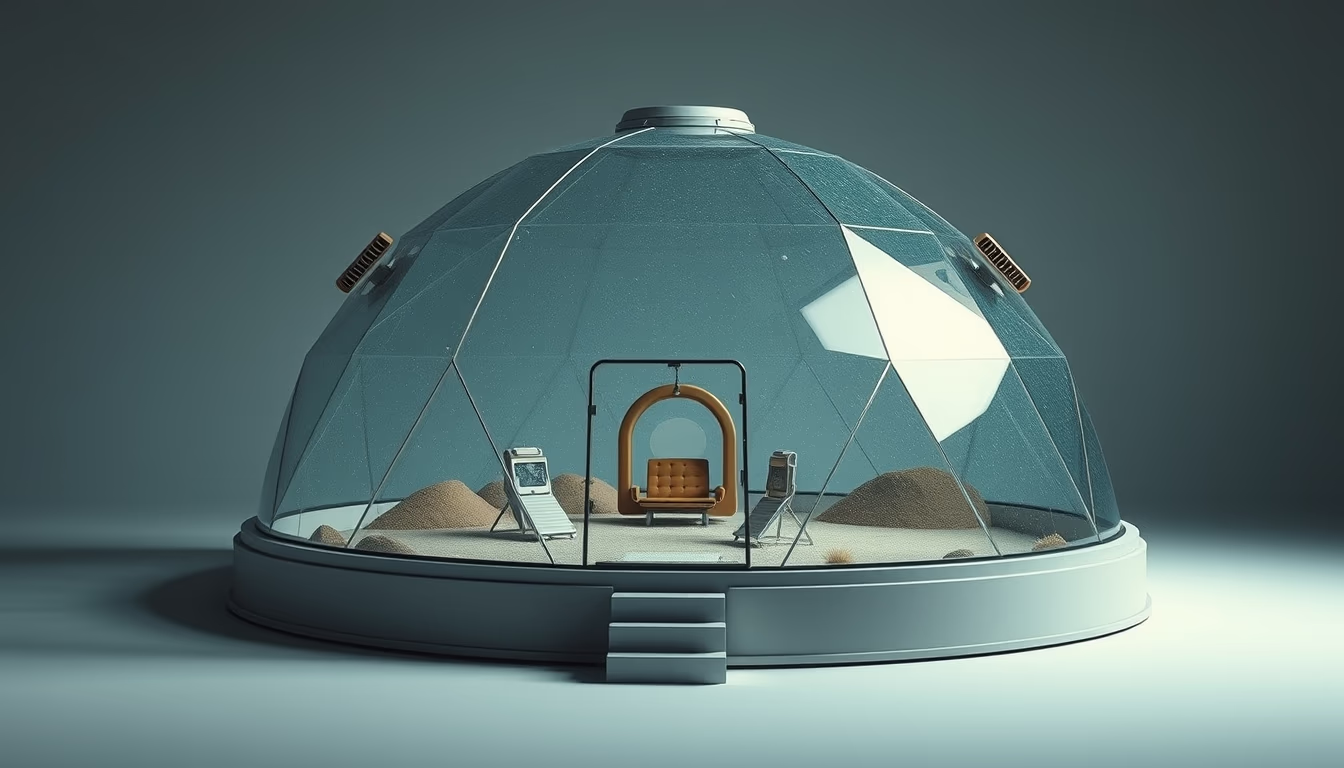
Martian colony domes are pressurized structures essential to protect future colonists from the thin atmosphere, radiation, and extreme temperatures on Mars.
About this subject
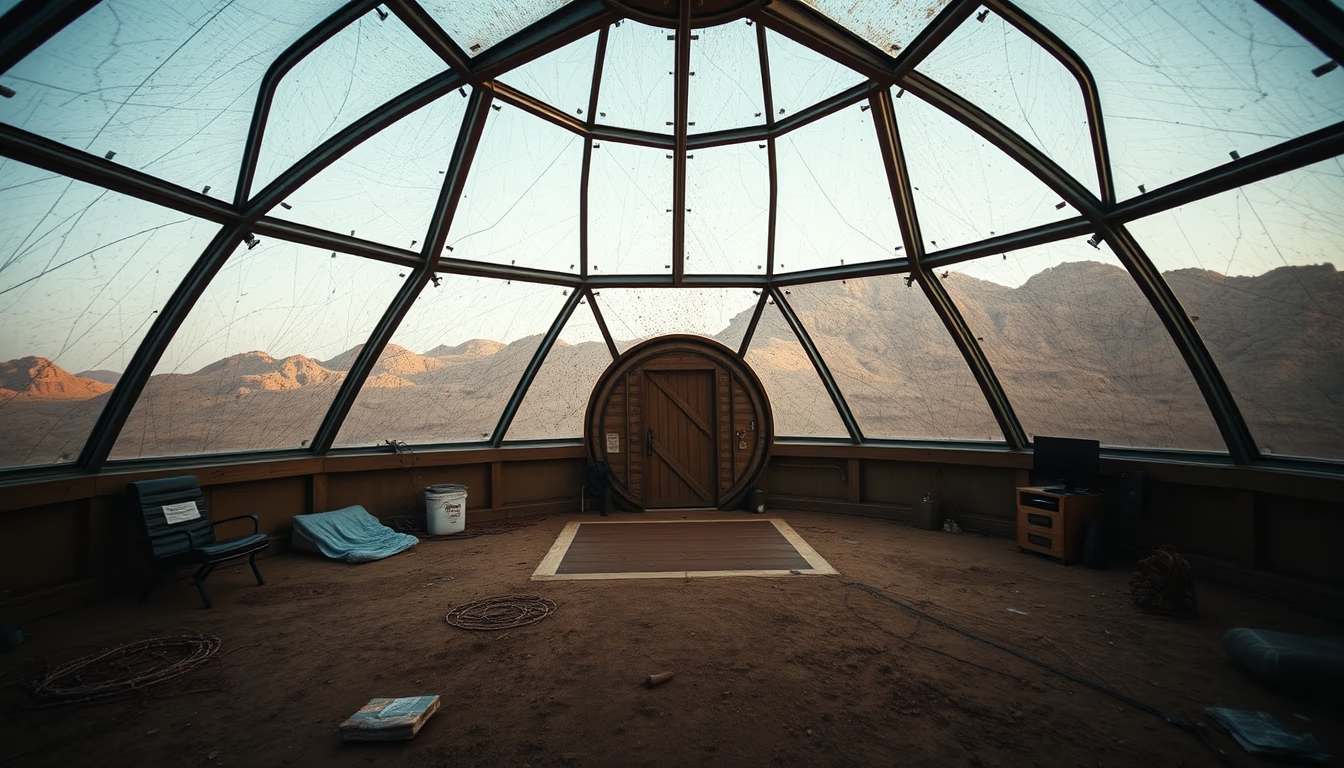
Martian colony domes are among the most iconic concepts in future space exploration. On Mars, the atmosphere has only 1% of Earth's pressure and consists mainly of carbon dioxide, making breathing impossible without support. Moreover, the lack of a global magnetic field exposes the surface to high levels of cosmic and solar radiation. Therefore, pressurized habitats are indispensable for any permanent settlement.
These domes must combine structural strength with lightness to minimize transport costs from Earth. Materials such as aluminum alloys, reinforced polymers, and eventually composites made from Martian regolith (local soil) are studied for building these cupolas. NASA, for example, develops concepts like the Mars Ice Home, which uses water ice as a radiation shield. SpaceX, on the other hand, proposes using inflatable modules and metal structures to create geodesic domes.
Culturally, the idea of a Martian dome has permeated science fiction since the 1950s, with works like Ray Bradbury's 'The Martian Chronicles'. In real science, the Marsha (Mars Habitat) project by AI SpaceFactory won a NASA competition by designing a 3D-printed vertical structure made from simulated Martian basalt. Energy autonomy would come from solar panels or compact nuclear reactors like the Kilopower.
A critical challenge is maintaining internal pressure: any leak could be catastrophic. Therefore, domes would be built with multiple layers and failure detection systems. Additionally, local oxygen production via water electrolysis or CO2 extraction (as in NASA's MOXIE experiment) would be vital. In the long term, Martian colonies could grow food in LED-lit greenhouses, recycle water, and even generate artificial gravity through rotation, though that requires much larger structures than simple domes.
Frequently Asked Questions
Why are domes necessary on Mars?
Mars has a very thin atmosphere (1% of Earth's pressure) that is toxic (95% CO2) and offers no radiation protection. Pressurized domes provide breathable air, temperature control, and radiation shielding.
How would Martian domes be constructed?
Initially with materials brought from Earth (metal alloys, polymers), and later with processed local regolith. Techniques like 3D printing with Martian basalt and inflatable structures are studied by NASA and SpaceX.
What environmental challenges must domes overcome?
Pressure leaks, dust storms that can block sunlight, temperatures ranging from -140°C to 20°C, and cosmic radiation. Solutions include multiple layers, backup systems, and using ice or regolith as shielding.
Direct URL
https://pub-c7d6a6ea828543ac903a74a341ccb2e1.r2.dev/imagens/martian-colony-dome-studio-still-life-fresh12.avifHow to credit
Include a visible link back to UtilizAí. Copy one of the snippets below:
<a href="https://xn--utiliza-eza.com/en/midia/imagens/martian-colony-dome-studio-still-life-fresh12">Martian colony dome</a> by <a href="https://xn--utiliza-eza.com">UtilizAí</a>, licensed under <a href="https://creativecommons.org/licenses/by/4.0/">CC BY 4.0</a>.
[Martian colony dome](https://xn--utiliza-eza.com/en/midia/imagens/martian-colony-dome-studio-still-life-fresh12) by [UtilizAí](https://xn--utiliza-eza.com), CC BY 4.0
License: CC-BY-4.0