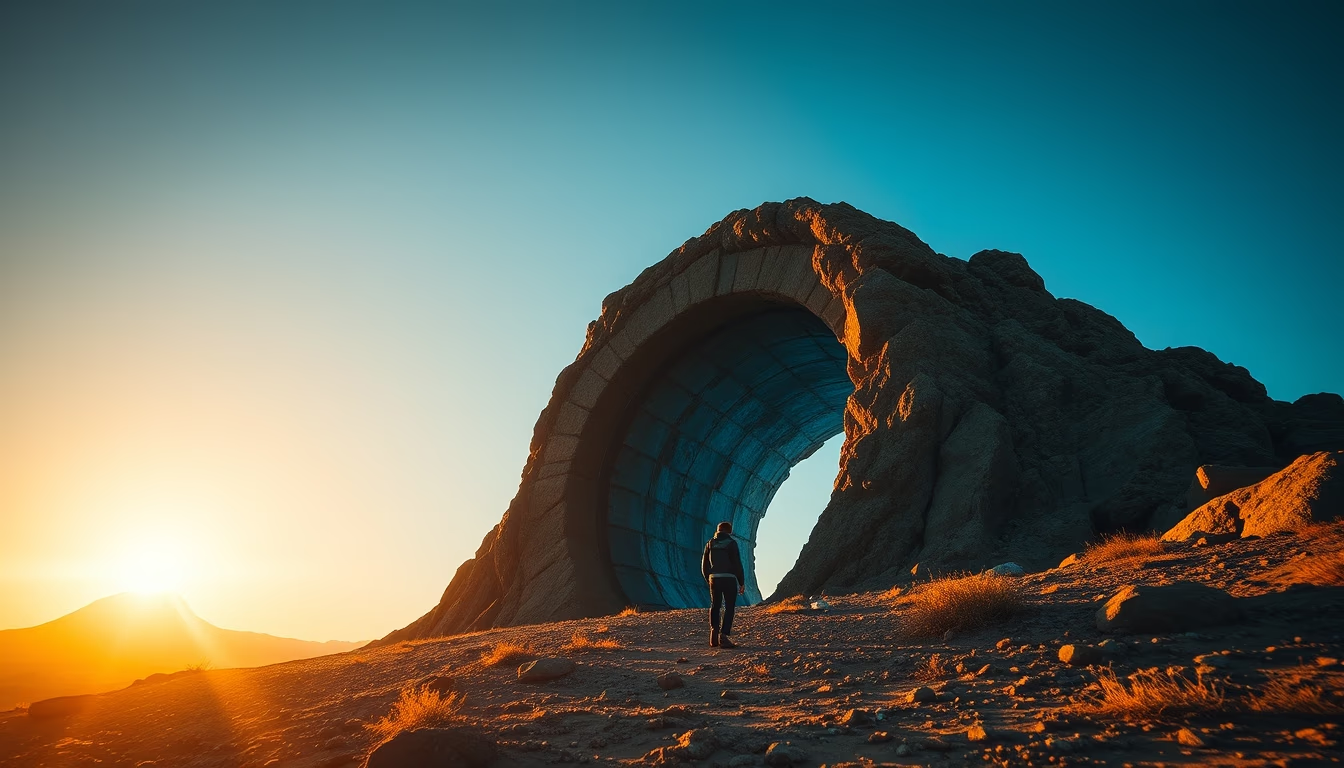
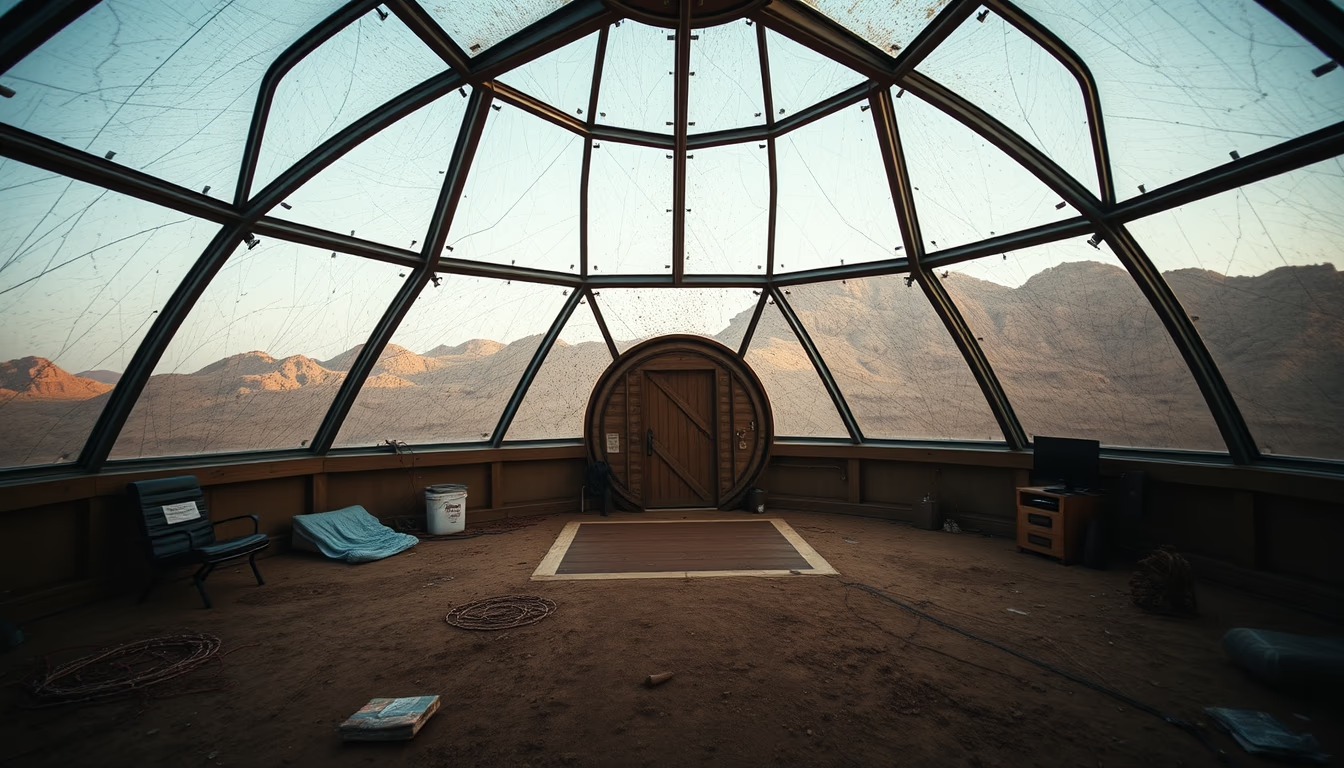
Martian colony dome
1344×768 · AVIF · CC BY 4.0
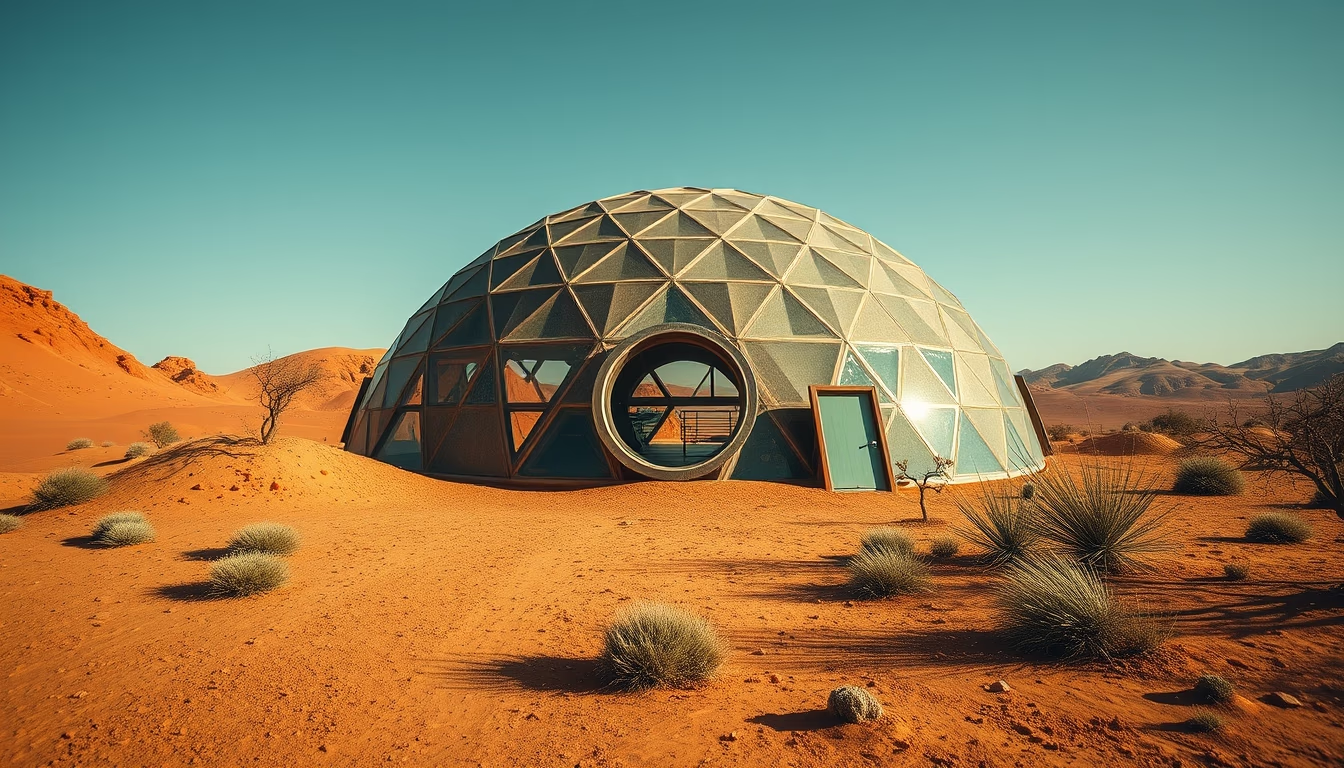
Martian colony dome: concepts of pressurized habitats to sustain human life on the surface of Mars.
About this subject
Colonizing Mars is one of the most ambitious goals of space exploration. Unlike the Moon, Mars has a thin atmosphere (about 1% of Earth's pressure) composed mainly of carbon dioxide, making human breathing impossible without equipment. Therefore, any permanent habitat would need to be pressurized and shielded against radiation and extreme temperatures, which range from -140°C to 20°C at equatorial regions. Domes are a frequently proposed architectural solution, as they allow large internal volumes without central supports, maximizing usable space.
The design of a Martian dome must consider multiple factors. The structure needs to withstand the low external pressure (which exerts outward expansion forces) and micrometeorite impacts. Materials such as carbon fiber, aluminum alloys, and reinforced polymers are candidates. To protect against cosmic and solar radiation, a layer of Martian soil (regolith) at least 1 meter thick would be needed over the dome, or the use of special hydrogen-rich plastics. Additionally, the interior must provide oxygen, water, and thermal control, possibly through life support systems based on recycling and in-situ resource utilization (ISRU).
Historically, the idea of domes on Mars dates back to the 1950s, with writings by Wernher von Braun and scientist Carl Sagan. More recently, space agencies like NASA and private companies like SpaceX have studied concepts of inflatable habitats or those built with sintered regolith. The dome in the image likely represents an optimistic vision of a self-sustaining colony, with areas for agriculture, research, and community living. Real challenges include food production in a closed environment, waste management, and the psychology of isolated groups over long periods. Despite the difficulties, Mars remains the logical next step for human expansion into the Solar System.
Frequently Asked Questions
How would a Martian dome protect colonists from radiation?
Protection can come from layers of regolith (Martian soil) on top of the dome, or from hydrogen-rich materials like polyethylene, which are effective against cosmic and solar radiation. The required thickness is at least 1 meter of regolith.
What materials would be used to build a dome on Mars?
Materials like carbon fiber, aluminum alloys, reinforced polymers, and even sintered regolith (melted by microwaves or lasers) are being studied. They must be lightweight for transport and resistant to Martian conditions.
Is it possible to grow food inside a Martian dome?
Yes, with controlled environment agriculture systems like hydroponics or aeroponics, using LED lights and recycling water and nutrients. This is already tested in space stations and terrestrial labs.
Direct URL
https://pub-c7d6a6ea828543ac903a74a341ccb2e1.r2.dev/imagens/martian-colony-dome-documentary-nature-style-fresh7.avifHow to credit
Include a visible link back to UtilizAí. Copy one of the snippets below:
<a href="https://xn--utiliza-eza.com/en/midia/imagens/martian-colony-dome-documentary-nature-style-fresh7">Martian colony dome</a> by <a href="https://xn--utiliza-eza.com">UtilizAí</a>, licensed under <a href="https://creativecommons.org/licenses/by/4.0/">CC BY 4.0</a>.
[Martian colony dome](https://xn--utiliza-eza.com/en/midia/imagens/martian-colony-dome-documentary-nature-style-fresh7) by [UtilizAí](https://xn--utiliza-eza.com), CC BY 4.0
License: CC-BY-4.0